My father’s business was custom tailoring and he was both a manufacturer and a retailer. He was unique in operating on a cash basis. So, instead of accounts receivables he was invested in inventory. Specifically, British woollens.
And he used a freight forwarder called Thomas Meadows of London, to arrange all the various shipments of bolts of cloth from fine English flannel to Irish and Scotch tweeds. Not an easy task but a complex combination of trucking and shipping to bring goods all the way to Toronto, Canada.
Then in the 1970s they developed container shipping that we are all familiar with. Those standardized shipping containers that will fit on trucks, rail or ships.
Now those bolts of cloth that my father had bought from the manufacturer were arriving in Montreal on container ships for wool wholesalers. And to may father’s surprise it became cheaper to buy form the wholesalers than direct. 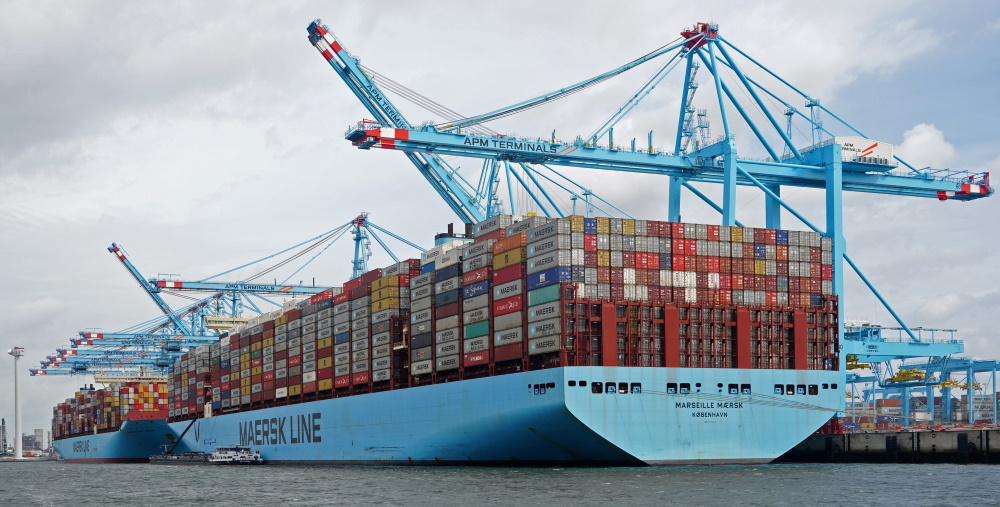 if there is any form of transportation that underpins globalism it is container shipping. And these specially designed monster ships can carry as many as 18,000 containers.
Now you are either ordering a full container load (FCL) or a less than container load (LCL). 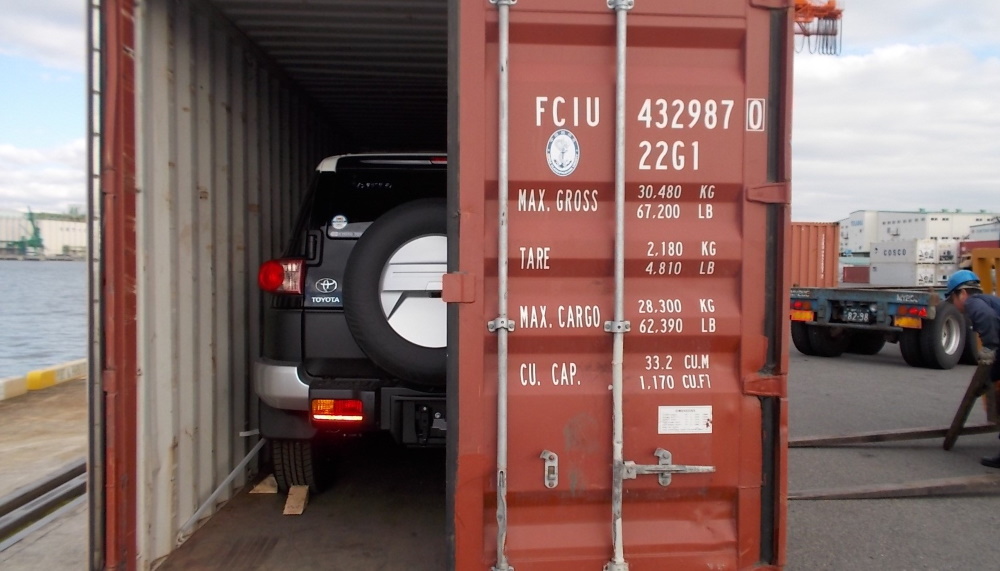 These containers are either 20’ or 40’ long, and in the photo a car is well packed into a 20’ container. It was container shipping that made Japan a global supplier of automobiles.
Container shipping has become the most economical form of shipping and accounts for China as a economic power.
But today with China in some form of conflict with the developing world and rising tariffs and other restrictions, China production is shifting to nations like Vietnam and Cambodia. And, this is only possible if these nations have container shipping capabilities.
02-05 Container Shipping
(blank) » John Bulloch » 29 Quirky Globalism » 02 Transportation »
Large specially constructed container ships can carry as many as 18,000 containers. They have made container shipping the most economical form of transportation.