A delegation from Turkey made a proposal to the governing body of the International Small Business Congress in the late 1980s. We asked them to come back with a delegation of both Kurds and Turks plus a letter from their President. It never happened.
It helps to understand the water crisis in Syria today to understand something about Turkey. The north and eastern areas of Syria are dominated by the Kurds. And historical conflict between Kurds and Turks in Turkey is a huge piece of their history. And today water for Kurdish controlled Syria is being restricted by Turkey.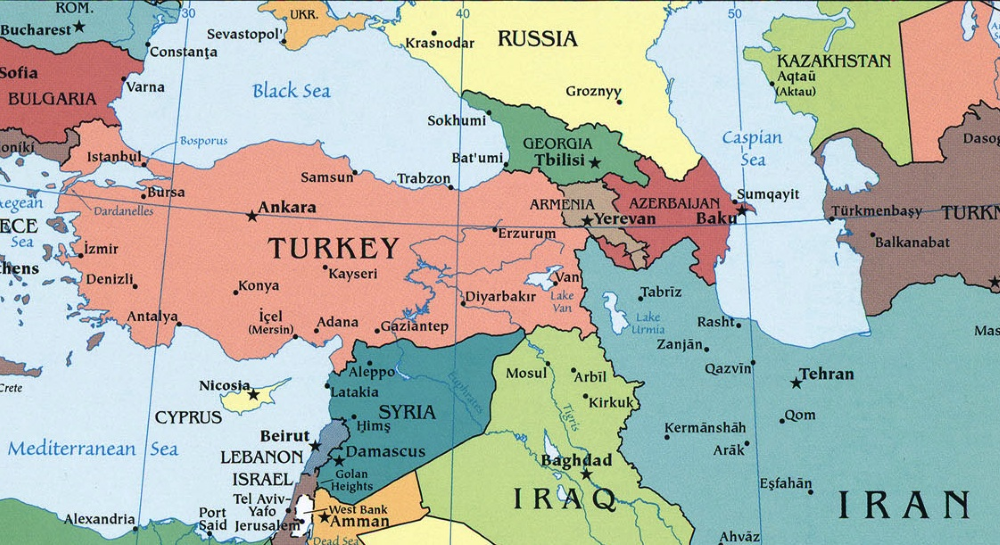 The map is helpful because it shows the River Euphrates that originates in Turkey running through Syria. The river separates land controlled by the Syrian government in Damascus, and the land controlled by the Kurdish led Syrian Democratic Forces or SDF.
Turkey has something like nine dams on the Euphrates River in Turkey and is curtailing the flow of water down river into Syria. This is illegal under international law. No problem. Just say it is because of drought in Turkey. 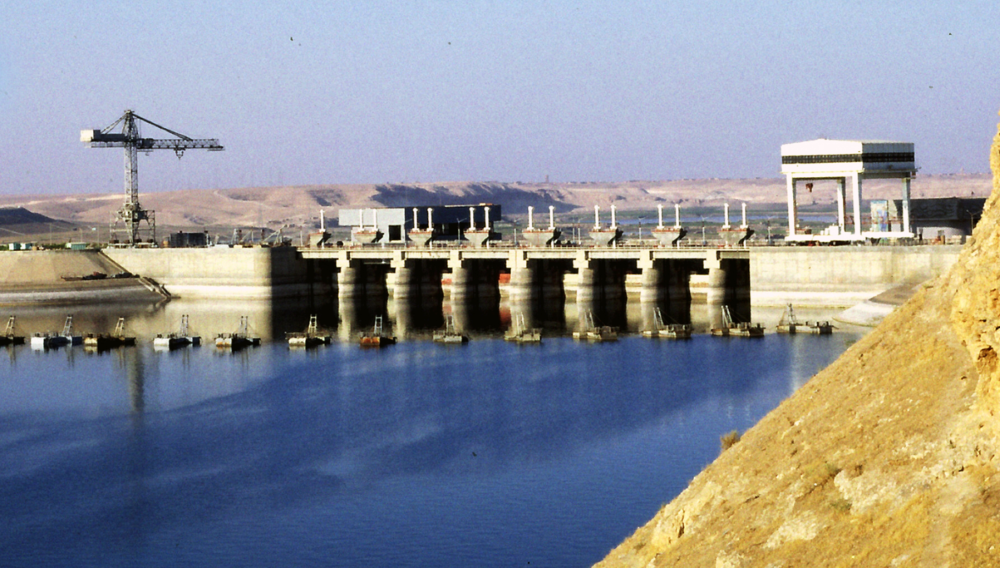 Talking about dams, we have the huge Tabga Euphrates dam in Syria which creates an artificial lake called Lake Assad. This facility provides water through a system of canals, and hydro power.
But with Turkey cutting back the flow of water down the river, the hydro facilities are not fully functionional.
This puts pressure on Kurdish farmers who need the water and the electricity. But they are resourceful and are using diesel generators to operate drip irrigation for their crops. Drip irrigation providing water in drops per plant was a technology developed by Israel. Diesel provided power is also being used to drill wells.
I see solar powered greenhouses in their future. An unstable grid, lots of sunhine, water shortages and political conflict. This is what decentralized power and water is all about.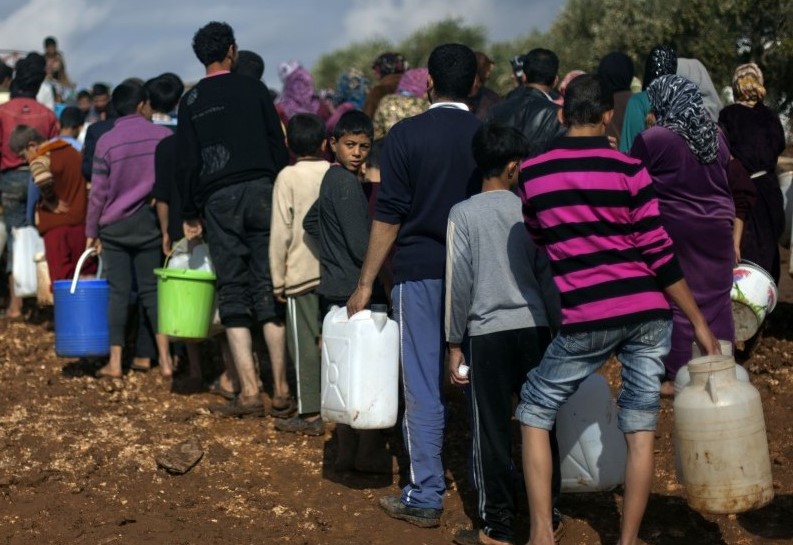 Another part of the Syrian tragedy is that Turkey now controls a significant piece of Syrian geography close to its border and is able to control the pumping stations that send water into the refugee camps. The photo shows people lining up for water.
The issue of water and climate change impacts the world and each nation differently. Syria like a third of the world is a semi-arid nation, with a growing population and inadequate facilities for treating sewage.
But armed conflict makes it impossible to properly deal with the issues of water shortages and climate change. The little people get it in the neck.
02-10 Syria
(blank) » John Bulloch » 27 Quirky Water » 02 Nations »
Syria is a semi-arid nation suffering from political instability, civil war and its neighbour Turkey playing water politics. 88 percent of the water from the Euphrates that runs through Syria originates in Turkey.