It was 1985, and our 30th wedding anniversary, that we enjoyed a three-week tour of China. Our only hint of water issues facing the nation was the need everywhere to drink bottled water supplied by the tour operators and the hotels. We were warned by our guide not to buy bottled water from street vendors.
China is a nation with 20% of the world’s population but with only 7% of the world’s fresh water. All the projections point to a water crisis by 2030.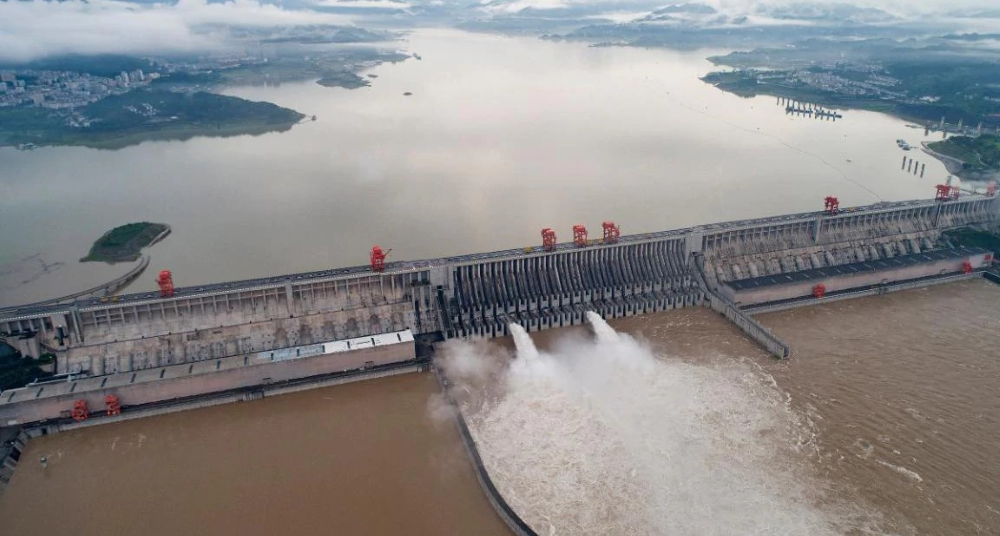 This does not mean China is unaware of the issues of a warming climate, and a shrinking of its great river systems like the Yangtze. Rather China is a nation of 87,000 dams all designed to control water flow for purposes of generating electricity, irrigating crops and supplying local drinking water. The photo is of the Three Gorges Dam.
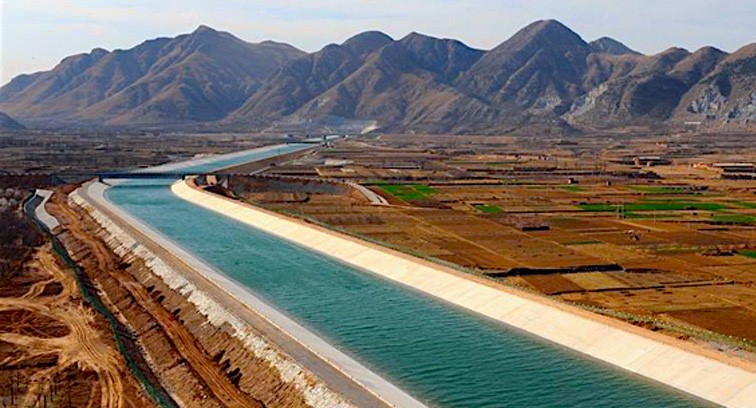 One thing we did learn on our tour in 1985 was that most of China’s agriculture is the northern provinces, but its major sources of fresh water are in the south. So it should be no surprise that China has build massive systems of canals to send the water north.
Part of the solution to water shortages in the northern provinces is desalination, and China has 115 desalination plants in the coastal areas. There is something like 400 northern cities facing a water crisis.
Not unlike the problem the US is facing in Southern California which has relied on water from the Colorado River. But the Colorado River system is shrinking so California is relying on the construction of a number desalination plants.
One of the most interesting things about water is that river systems do not respect national boundaries. So a river system like the Brahmaputra which starts in China but runs through Bangladesh and India is a source of real tensions.
China is planning to build a dam on the Brahmaputra which will impact water supplies for its neighbours. And this kind of issue can lead to conflict.
A warming climate and water conflicts is what the world will be dealing with in the future.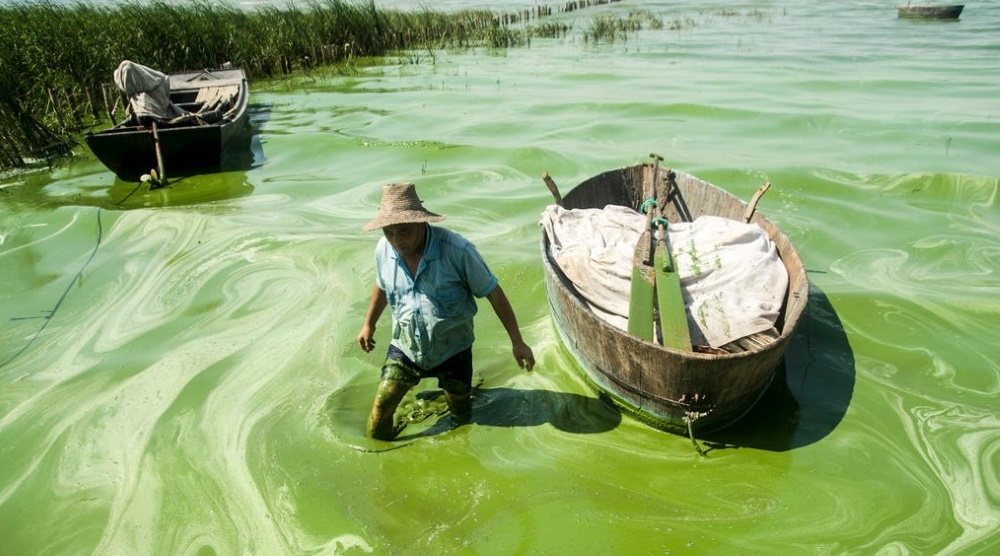 It is no surprise to me that with a population of over a billion people, water issues are linked as much to pollution as to global warming. Some of China’s river systems are so polluted with industrial waste that they are unsuitable even for agriculture.
China is also a nation that subsidizes water, but at some point when water prices rise, so will the cost of a lot of agricultural and mining products that are water-intensive.
For all the large economies from the USA to China to India to Europe, the big issue for the future is not just the supply of clean water but the cost of clean water.
02-03 China
(blank) » John Bulloch » 27 Quirky Water » 02 Nations »
A nation with 20% of the world’s population has only 7% of the world’s fresh water. And China is also a nation with most of its agriculture in the north but its supplies of fresh water in the south. Something like 400 cities in the north face a future water crisis.