A two-week tour of Japan in 1987 helped me understand its people and its culture. It was in advance of an International Small Business Congress held in Nagoya.
Part of tour was a two-hour visit on a weekend with three young women sharing a small apartment. They all spoke English, were highly educated, and held good jobs. I could not believe that they all slept on mats in the main room which were rolled up during the day. There was no bedroom.
The big surprise was that none of them were even dating, and they were all attractive young ladies. Their jobs were more important to them than getting married and having a family.
Our tour guide was also the bus driver and he spoke three languages fluently. He said that for a large portion of Japanese society, “Marriage is a woman’s grave.” Japan’s shrinking population is of national concern, with the burden of funding an aging society a huge growing Japanese financial burden. Everywhere there are photos of women with young children. It a “date and mate” campaign, that is not very effective in large cities like Tokyo and Nagoya where living costs are so high.
At the Congress, we were given more insight into the shrinking Japanese population. Today it is about 127 million but is projected to be closer to 106 million in 2050. It is a nation of work addicts, with men working late and then visiting some form of pub after work.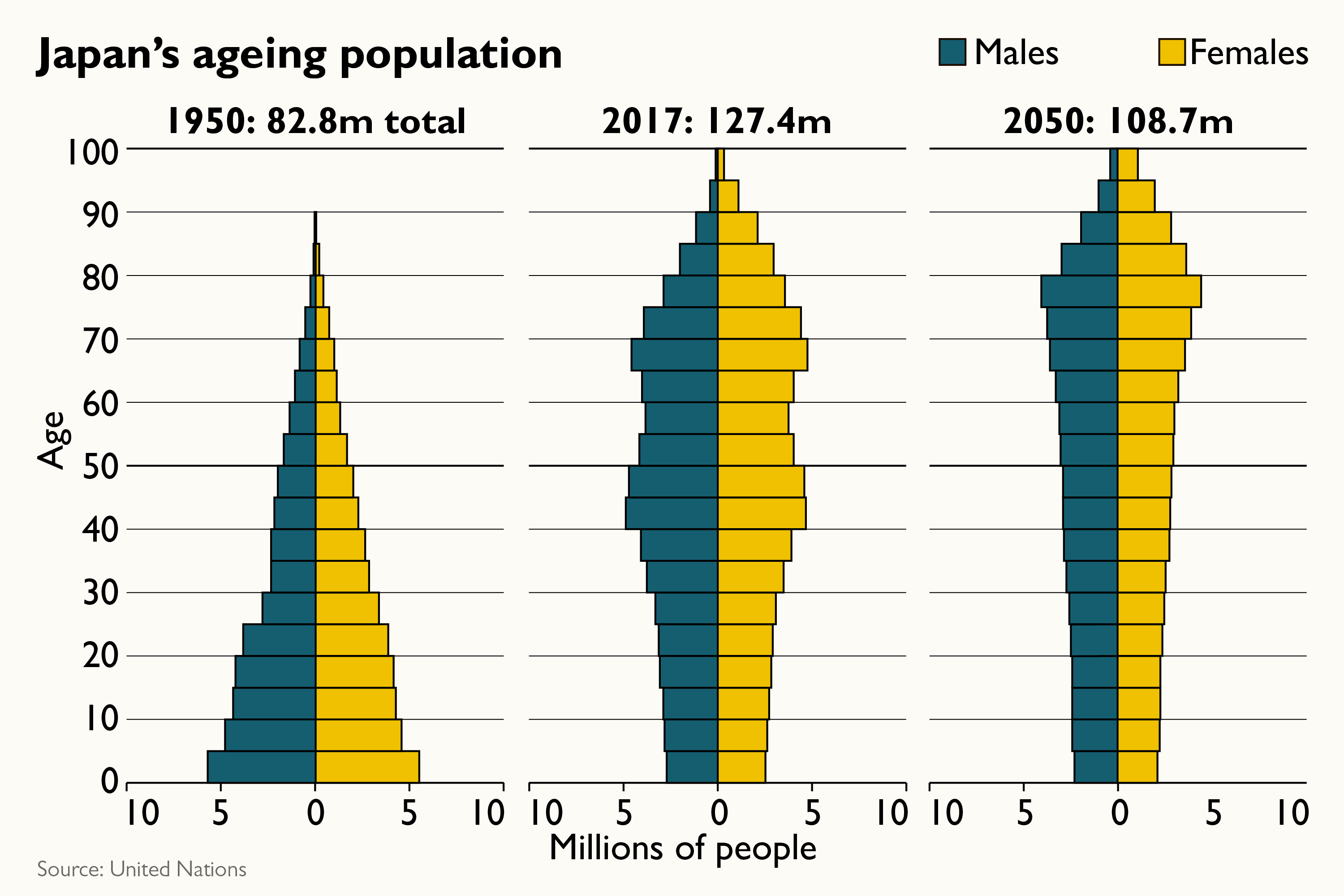 The graph shows just how Japanese society will look in the future when there are more deaths than births every year.
We learned that Japan has been a leader in developing new labor saving technologies like Robotics and Artificial Intelligence because they have known that labor shortages would plague their economy well into the future.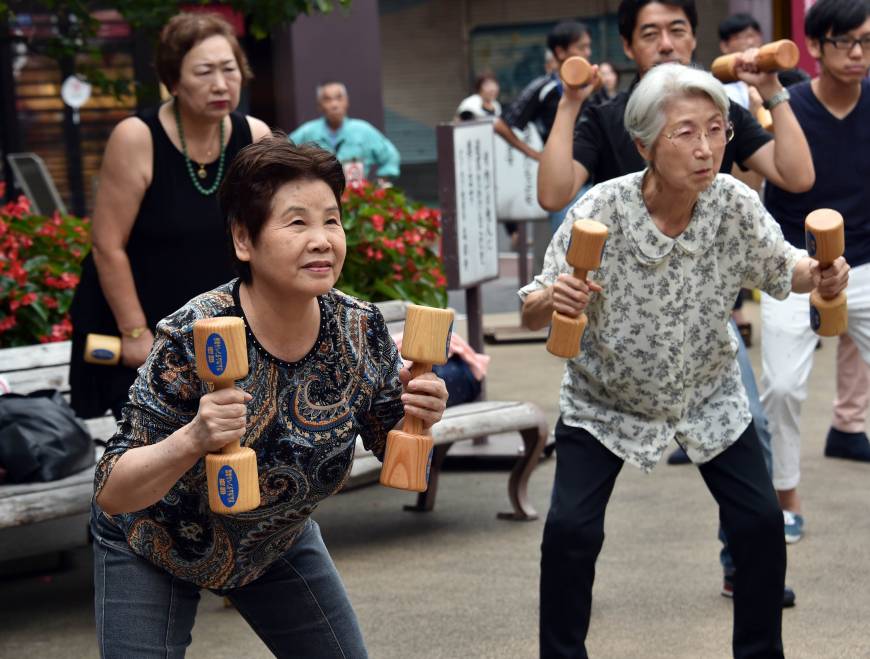 We visited a senior living establishment during our tour, and were amazed at the number of Japanese that were over a 100 years old. More centurions than any other society. They believe it is a product of eating fish instead of meat, and walking instead of driving.
The obvious Japanese solution to a shrinking population is to encourage immigration, and back in 1987 that was not an option. They worried about immigrants threatening their particular culture.
But that is changing because their shrinking population is a Japanese crisis. It is now easier for skilled workers from nations like Korea and China to get the right to work and live in Japan. Visa rules have changed.
But if an outside couple has a child in Japan it will not automatically become a citizen. Good workers after five years, however, can become citizens.
I have learned to love my many trips to Japan and the hard working Japanese people. But they are a nation dealing with both a shrinking population and long-term economic stagnation. They go together.
03-01 Japan
(blank) » John Bulloch » 26 Quirky Population » 03 Under Population »