 There are some things you see when you travel that you never forget. Insight into how communities and families treat children and child poverty is one of them.
How about children selling one cigarette at a time in Bogota, Columbia. Or kids selling gum on the streets of Rio de Janeiro, Brazil. And I will never forget this child, no more than eight years old, shining shoes outside our hotel in Jakarta, Indonesia. Then coming off a tour bus in Milan, Italy watching children as part of a family enterprise begging for money.
Naturally, I think of our own children, and how blessed they were growing up with pre-school, music lessons, the best in education and health care, summer cottage adventures and of course the security of a home and a loving family.
And what is child poverty? It often means kids living on the streets, kids without schooling, training, disciple and health care. And, worst of all, kids without clean water that are subject to all kinds of diseases.
And how about the economics of kids growing into adulthood that are not productive and living off crime. This spins off in terms of the high costs of policing and incarceration.
In 1989, my wife and I spend five days in Rio de Janeiro, Brazil ahead of the 16th International Small Business Congress in San Paolo.
We were exposed to a situation where millions of children had been abandoned and were essentially “living by their wits”. Many of them were functioning as members of gangs that preyed on tourists, sold drugs and whatever.
There was a scandal that was publicized when we were there about a merchant that had hired someone to kill kids that hung out near his shop and scared away customers.
I remember thinking at the time, whether human society had really advanced beyond the animal kingdom that procreates each year but counts on only a small portion of their offspring reaching adulthood.
Our trade commissioner warned us to leave all jewellery, watches, cameras and anything of value in the hotel safe if we wanted to see the town.
It was discouraging seeing so much child poverty. It was an issue that seemed beyond what any individual could do to make a real difference.
But somehow groups over the years found my address and mailed me offers to sponsor a child in a developing nation. One was World Vision and they wanted $39 a month to bring food and clothing to a needy child.
I am sure these charities are all worthwhile and associated with people of good will. Nevertheless, my instincts are that societies must solve their own problems if lasting solutions are to be found.
Nothing wrong with welfare if it is blended with innovative changes in the way we do things.
Well, some real innovation took place in Brazil starting in 2003. Having seen child poverty first hand back in Rio in 1989, I sensed something serious was going on.
They called it “family scholarships” which was a form of state support to families only if children are kept in school and given proper preventative health care such as vaccinations. And Brazil greatly increased public spending on education with the focus on primary school education.
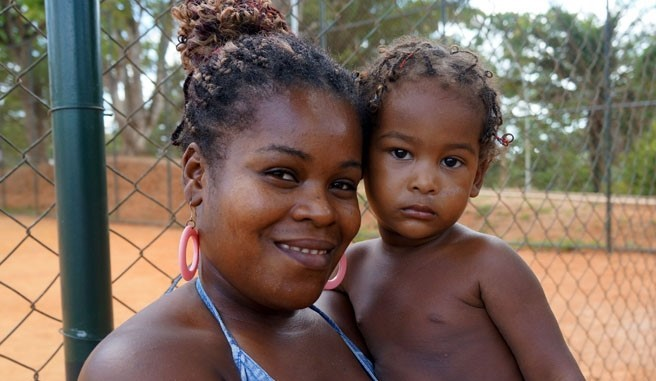
The photo shows a mother and child promoting the “family scholarship” program with the message being the elimination of child poverty is a family issue. And Brazil has reduced child poverty in half.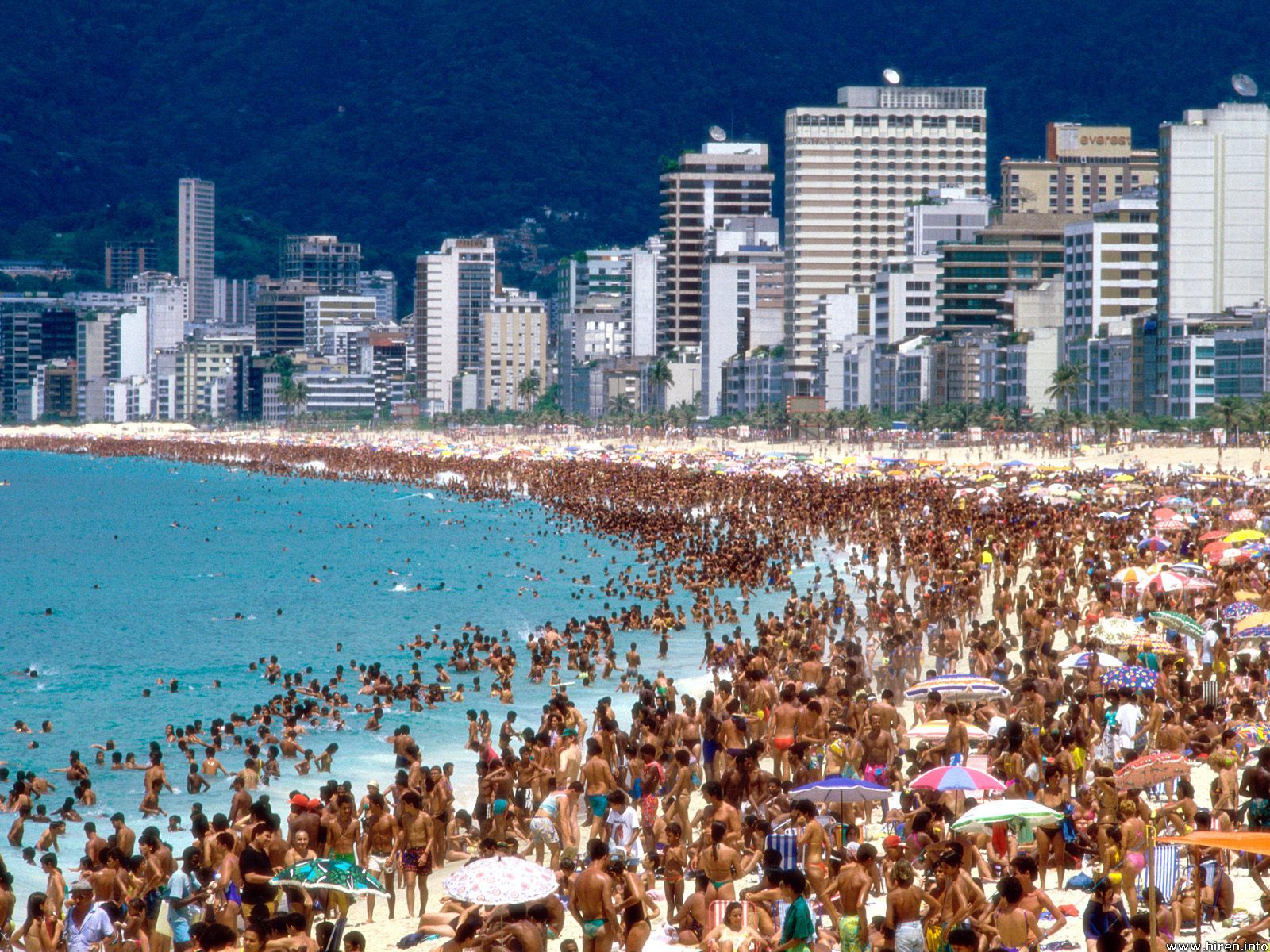 It is hard to imagine a more exciting place to visit than Rio de Janeiro. It is famous for its Carnival, and its magical beaches. Who hasn’t heard of Copacabana and Ipanema?
And now, it is a society trying to deal with its former curse, child poverty.
The lessons are obvious. Child poverty is a societal issue and a family issue. It can only be eliminated if societies strengthen families.
That’s the way I see it anyways.
16-02 Poverty
(blank) » John Bulloch » 25 Quirky Opinions » 16 Children »
Kids living on the streets. Kids without schooling. It means kids in gangs and living on drugs.