 Like most people, I have taken our oceans for granted. Yes, they are a food source. Yes, they are transportation routes. And damn it, they are a dumping ground for waste.
I had a couple of major shocks that had me thinking. Shocks that made me realize that the health of our oceans has to do with life on earth as we know it.
The first shock was during a visit to Fiji in 1980, which was just a stopover on the way to Australia for the 7th International Symposium on Small Business. I was with a member of the Board of the Canadian Federation of Independent Business.
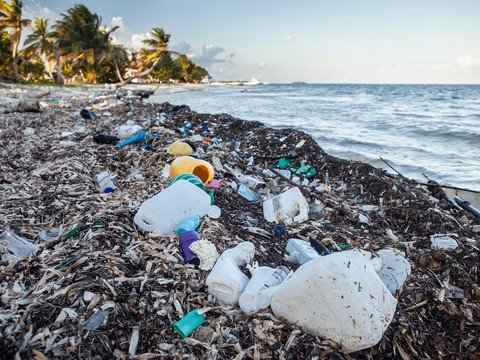
We rented a car to travel about the island and discovered a remote beach which was covered with plastic garbage. It looked very like the photo. I had no concept at that time just how much plastic was being tossed into the sea.
All through the 1980s when my wife and I holidayed in places like Florida and Maui we were insensitive to ocean garbage, because early in the morning local municipal workers with special vehicles scoured the beaches. So, we never saw how much crap was washing up on shore.
The next big shock occurred in Canada in 1992, when the Minister of Fisheries closed the cod fishery in Newfoundland. It was a case of overfishing and the livelihood of thousands were impacted.
Back in high school we had heard stories of the cod on the grand banks being so plentiful that you could almost walk on the water with the thickness of fish swimming below the surface.
And so many romantic stories of fishermen from France, Spain and Portugal that made their livelihood fishing on the grand banks of Newfoundland for hundreds of years.
And during our visit to China in 1985, I tasted “shark-fin soup” for the first time, and it was bloody delicious. Apparently, humans kill 100 million sharks each year just for their fins.
So, before I tried to get my head around the issues of our oceans and their role in the survival of mankind, I at least started to understand the pollution of our oceans and how many people made their living off the sea.
But trying to get my head around all the “techy” issues, I soon discovered that oceans absorb the carbon dioxide and the heat that mankind produces through the burning of fossil fuels. But that there are limits to this key role in keeping our planet liveable.
Scientists call the oceans “climate regulators”, by taking in carbon dioxide and giving off oxygen. And, these same scientist, are trying to understand what it means for mankind in general with the oceans becoming warmer and more acidic.
I am reminded what the scientists from the Polish Antarctic research centre told us on our cruise to the area.
“That during every recorded period in the geological record when we have experienced global warming, we have experienced massive specie loss.”
So, of the many hundreds of thousands of species that live in our oceans, how many are threatened? And what does it mean if a key food source for about a quarter of civilization goes into decline?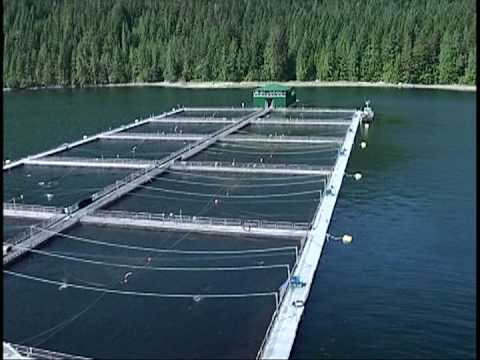 We had another big debate in Canada, linked to salmon fish farming in British Columbia. Those opposed to fish farming claimed that farmed salmon were escaping from their pens and breeding with the general fish population. The result is a weakening of the wild species.
So, the natural habitat of our oceans is being threatened by more than just overfishing.
The health of the oceans is simply everyone’s business. Everyone’s serious business.
That’s the way I see it anyways.
15-01 The Issues
(blank) » John Bulloch » 25 Quirky Opinions » 15 Oceans »
The oceans are floating in plastic garbage. Oceans absorb heat and carbon dioxide. They are a food source.