 It is amazing what you can learn from your own family experiences. I had two immigrant grandparents on my mother’s side that raised themselves out of poverty through hard work.
And then there were the two Irish grandparents on my father’s side that were raised with wealth and privilege. Their story during WW2 was special.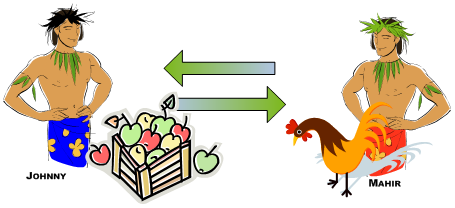 They worked with about eight other families creating a kind of underground economy, trading fruit, vegetables, eggs, chicken, rabbits and honey. Everyone’s garden was used for some form of enterprise. They lived on Maryville Park, in one of the more affluent areas of Belfast.
What was obvious from visiting my grandparents two years after WW2 was that no one felt powerless during the war. No one was apathetic. And the people on Maryville Park made their own decisions about cooperating to feed themselves. It was a kind of “development 101” story.
There was nothing to buy in the grocery stores during the war. And nothing to eat at the restaurants unless you enjoy eating seagulls.
And as I matured and travelled around the world it became obvious that in every society the issue of development reducing poverty was complex. There is a recorded economy of governments, self-employment, and small and large-scale enterprises. And then there is the black economy.
Most of what we would refer to as the poor in society function in both the recorded and unrecorded black economy. So, you might have a job working in a factory, but you were still not earning enough to feed your family. So, you free-lance on the side for cash. Or you barter goods for goods.
Of course, a lot of unrecorded activity exists everywhere because people do not trust their governments. And then there is always an element of criminal activity. Like the kindly mafia that murders people but looks after the poor.
The economists refer to development as both macro economics and micro economics. Or large-scale and small-scale enterprise. Like funding roads and ports or fighting disease alongside self-employment and local enterprise.
I treasured a meeting in the 1970s with Dr. E. F. Schumacher, the author of Small is Beautiful. He was big on what was called appropriate technology for societies and communities that lacked the self-discipline and organizational skills to lift themselves out of poverty.
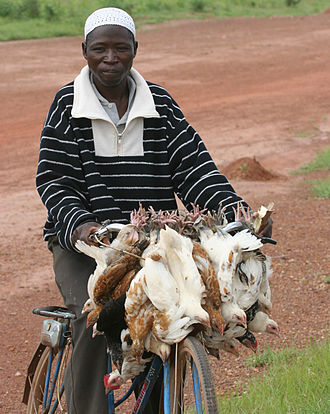
Amongst other things he was big on the bicycle as one of these magical technologies which could be used to pump water or to bring products to market. The photograph makes this point beautifully. This is an example of seriously small-scale enterprise.
The large-scale stuff is usually about multi-national corporations engaging in trade and investment. This kind of development all started in the 1970s to prevent developing nations from going communist. The result today is what we call the global economy.
And just as large firms evolve so do small firms. Enterprise can start as underground self-employment and progress to legitimate enterprise.
There is no long-term solution to poverty unless there is some combination of education, training. enterprise formation and economic growth all happening at the same time. That is what I learned visiting both developing and developed economies.
I remember an official from the Indonesian government showing me how they explain government policy in remote villages using puppet shows because the people in the villages could not read or write. Not much recorded enterprise there.
Or the governor of an Island in the Philippines singing to the voters to win elections because, again, the people were illiterate. Needed outside investment to create jobs there.
And how about the entrepreneur in India that secures a grant to expand his business; but is forced to use half the money to pay bribes to secure needed permits.
We need all forms of enterprise: small, large, and unrecorded to reduce poverty. And as an economy evolves we find small enterprises working in tandem with larger enterprises as both supplies and distributors. This is a sign of growth and economic maturity.
Most importantly, development initiatives always work best in a free market. Have you ever heard of a well functioning free market, where government officials or criminal gangs are on the take?
That’s the way I see it anyways.
12-02 Big and Small
(blank) » John Bulloch » 25 Quirky Opinions » 12 Poverty »
Nations with foreign investment and people bartering. Economic activity recorded and unrecorded. Big and small solutions for dealing with poverty.