 Mother and dad married in 1932 during the depression when both were working for The T Eaton Company or what we called “Eaton’s”. Mother hid her wedding ring on a string around her neck because father was told by his boss that if he married that Jewish girl he would never be promoted.
I was born in 1933 and for a crib mother used a drawer of their dresser. One day, dad had to borrow a dime to get to work and back. They were so tight for money on only one income. Mother organized the family budget and always had a hot meal for my father.
I used to run down the street to meet him when he arrived home at night. We lived in a three room flat out near the Beaches in Toronto.
No one was talking about equality for women. Everyone was talking about survival. Mother always had a little food that she saved when starving people knocked on our door looking for a hand-out.
Father opened the family business in 1938, the year after my brother Ian was born. And despite two children, mother came down to the clothing store on a Sunday with me and my younger baby brother and cleaned the washrooms and vacuumed the rugs. The family business was a partnership and mother at home also did the books.
Before the War, women had received the right to vote and the right to own land, but I was too young to appreciate these changes. I just saw a mother doing work of all kinds all the time.
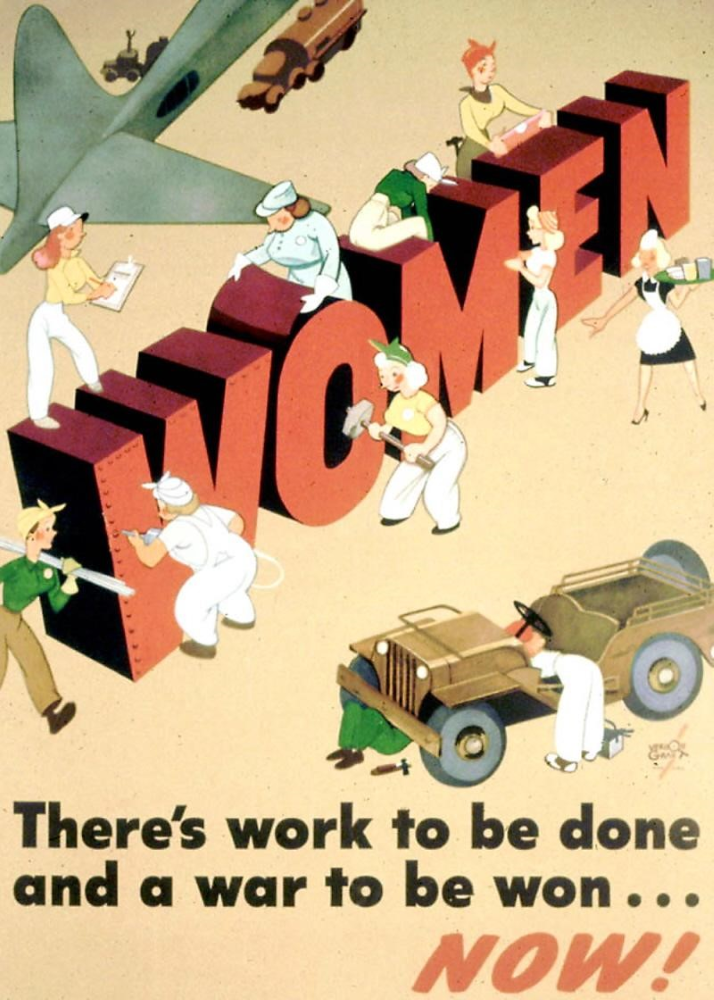
Our father went into the officer’s uniform business during WW2, and he travelled with me to the camps taking orders for uniforms.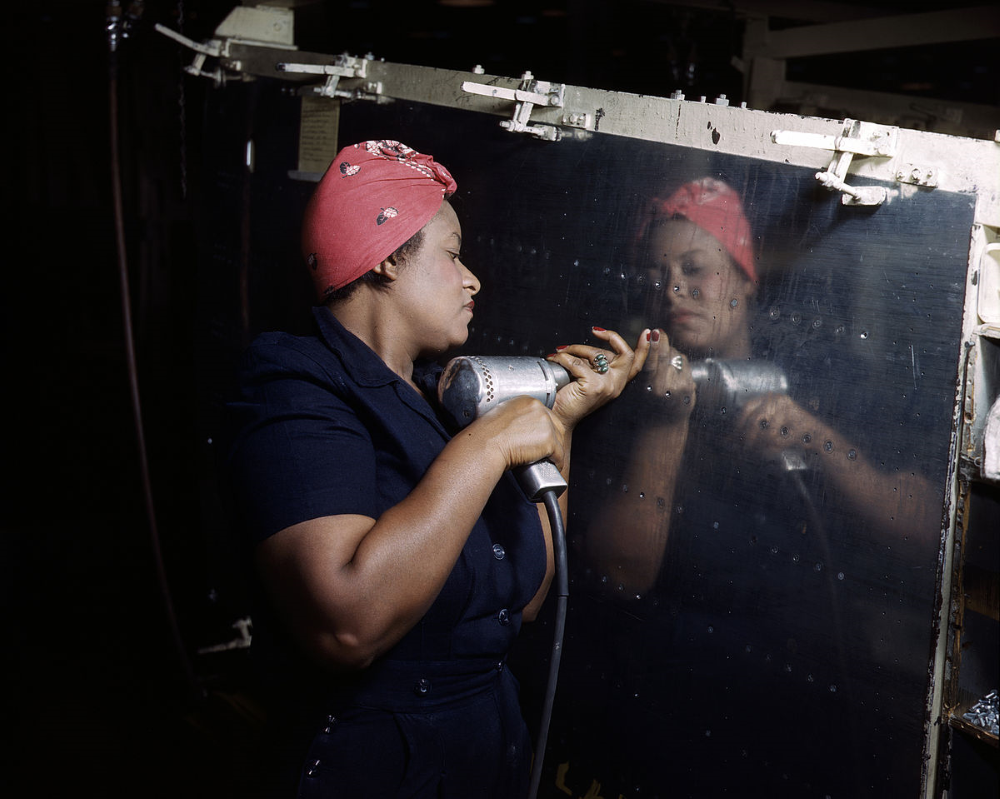 Women were everywhere in the news, and the cartoon shows the call for women to do men’s jobs. I remember photographs of women in uniform, women in factories and women doing the heavy lifting on farms. They used to refer to working women as “Rosie the Riveter”.
My mother worked for the Canadian arm of the “Women’s Land Army” something started in Britain during WW1. She led an exercise class one night a week to help women strengthen themselves to do heavy farm work replacing men now in uniform.
It was not a women’s movement but a patriotic movement. Everyone, down to young children were part of the war effort. I collected bits of scrap iron calling door to door. Mother helped me.
It was around 1960 that women had the use of contraceptive pills and more women were free to gain a higher education or work at higher level jobs.
I remember asking mother if she used any form of birth control because my brothers came about five years apart. She was always up front talking about “privatey” things, and said it always took her two to three years to get pregnant.
She said I was the exception, which made me feel special. Not sure why though.
Then when the war was over, and husbands and fathers came home there was a huge baby boom that impacted the economy for the next forty years.
Women’s lives became very domesticated with the movement to the suburbs, young growing families and the pressure of meeting day to day budgets.
There is no doubt that the powerful role women played during the war impacted public policy for generations.
But nothing changed at our home. Mother was the centre of everything, working in the family business, raising children, giving a day a week as a volunteer at her favourite charity, and in later years teaching English to new Canadians.
Our amazing mother was a one-woman feminist movement. She was a marriage partner that still did her own thing.
That’s the way I see it anyways,
08-02 Mothers
(blank) » John Bulloch » 25 Quirky Opinions » 08 Feminism »
They lived through the Great Depression and WW2. Life was about survival not equality.