 It was a big deal. Two of the elders of the Plymouth Brethren came to our home when I was in grade 12, and prayed with my father and myself that I would not go to university. They said that I would be lost to the world.
And only weeks later when I got my year end report card, the Principal of Forest Hill Secondary School had written, “John is university material”. And because of all the tests I had been subjected to and my interest and aptitude for science, I had been directed to a career in engineering.
But, even before I understood what is called the “scientific method” for inquiring into the behaviour of the natural world based on evidence, I was full of questions about everything.
And I was already lost to the world, from their perspective, and used the “breaking of bread”, which is the Sunday morning brethren meeting to work on my French vocabulary.
What enabled me to continue into university in 1952 was my father’s belief that if it was good for his grandfather Devon’s career, then it could be good for my career. His grandfather had a university degree in chemistry, and had built a company with a thousand employees, back in 1910. But more importantly he was a leader of the Plymouth Brethren in Belfast. He was my father’s hero, and I owe him a lot. Christian fundamentalism could not explain to me even in my early years why the Tasmanian Devil only exists in Tasmania, why the monkey-faced bat only exists in Fiji, why there are so many species of birds that only exist in the Hawaiian Islands, and the examples of evolution are endless.
What a lot of people do not understand about higher education, is not just the skills and knowledge you develop, but more importantly the pattern of living you acquire where what you believe is based on evidence.
In my case, the more I advanced towards a degree in engineering, and later towards a Master’s Degree in Business the more I realized I did not know. I developed a thirst for knowledge.
One great moment in my life was a cruise around the Horn and stopping off at the most southerly city of Argentina called Ushuaia and the most southerly city of Chile called Punta Arenas.
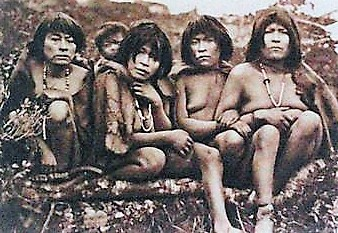
In both cities, I was exposed to the now extinct Yaghan people. They had existed for over 10,000 years and had adapted to live in a cold hostile climate. But they wore few clothes because they had evolved to the cold weather and had a body temperature a degree higher than other humans.
And looking at all the photos it was obvious that after thousands of years of living off the sea, they had developed short legs relative to their body length, another evidence of evolution. The photo is from 1883. They all died of diseases like small pox and measles brought to them by the explorers of their day.
To be fair, a significant number of the world’s religions have had to deal with the reality that evolution is no longer a theory. For many it is a tortured process. I still find it hard to rationalize both religious faith and science.
But what is even more interesting is hearing the Dalai Lama proclaim that his religion is kindness. So, religion is not just belief in a supreme being but something that can give people a sense of purpose. I can buy that kind of religion.
That’s the way I see it anyways.
03-03 Science
(blank) » John Bulloch » 25 Quirky Opinions » 03 Atheism »
Why does the Tasmanian Devil exist only in Tasmania? The examples of evolution are endless.