 I had never heard of FinCEN, the Financial Crimes Enforcement Network, which is a bureau of the US Department of the Treasury, until I got into author Noel Hynd’s series on FinCEN agent Alexandra LaDuca.
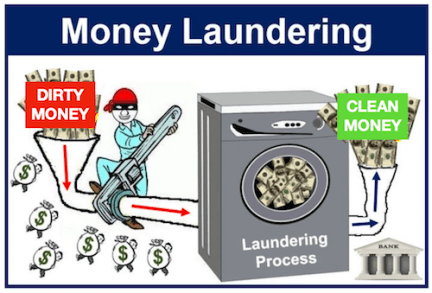
These are great reads, because tracking down criminal organizations that are laundering money is deadly and exciting work. It was fascinating to see how Columbian drug cartels transfer billions into Panama banks, which wire transfer these funds into dozens of other banks in other nations in other currencies, which wire transfer the funds into the bank accounts of legitimate businesses. So drug money ends up as shares in publicly listed corporations or as mortgages on hotels or office towers.
The United Nations Office on Drug and Crime suggest money laundering globally could be as high as $2 trillion per year or 5% of the global economy. Obviously curtailing money laundering is the key to curtailing crime.
What makes this all so difficult is the number of nations that have bank secrecy laws that are essentially designed to facilitate money laundering. So dirty money goes first into account “A Inc.” in secret bank nation A, then into account “AB Inc.” in secret bank nation B, then into account “ABC Inc.” in a big name bank nation C. The same criminal network working via front men own the three bank accounts in the three nations. Pretty complex and pretty weird.
Most people will remember the Godfather movies. And when the mafia moved into Los Vegas and Cuba, their investments in hotels and casinos were actually about laundering large amounts of cash that they earned from illegal activities, such as gambling and prostitution. The important issue is that laundering money is taking place in every nation of the world and in large and small amounts. In the US, for example, something like 80,000 people per year are convicted of money laundering. Watch out for that friendly guy in the laundromat.
It can be something as simple as stealing $20,000 from your own business and putting the money in three different bank accounts. Banks do not have to report small deposits under $10,000. Or by taking a holiday to the Cayman Islands and putting the cash hidden in your briefcase into one of their bank accounts under a corporate name.
During my active years in international development, it was discouraging to learn what it is required to do business in many of these undeveloped nations. Pure upfront bribes are not the norm. But what you are often required to do is pay an “agent fee” which goes into a special bank owned by the government, and of which some portion is transferred into another bank account owned by the dictator, which is then wired to special accounts in banks in tax havens around the world.
All the developed nations have multiple laws to stop money laundering, but hiring a clever crook seems all you need to do to beat the system.
01-05 Money Laundering
(blank) » John Bulloch » 24 Quirky Economics » 01 Unknowable Times »
Converting dirty money into clean money is a $2 trillion global business. Unless societies can curb money laundering they cannot control criminal organizations.