There was never a day as a young boy that my mother wasn’t swabbing hydrogen peroxide on the cuts and scrapes of myself and my brothers. Scrapes were about ripping about on our scooters and tricycles.
Of course, at that time, none of us understood hydrogen as the most plentiful element on earth with a thousand applications.
But as a young engineering student in the 1950s, I learned about producing hydrogen from natural gas, and using it to make fertilizers, petroleum products and a whole range of industrial chemicals.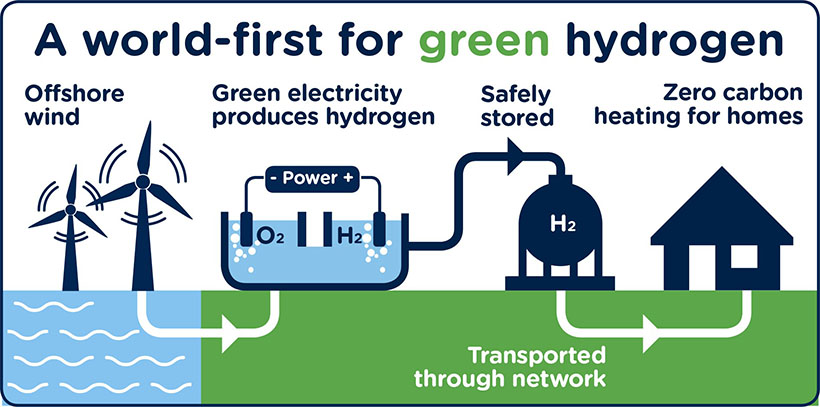 The attached explains how we produce green hydrogen, which is regular hydrogen produced from water using electrolysis. Electrolysis is a process that uses an electrical current to break water into its two component parts, hydrogen and oxygen.
This gives us a gaseous energy source that can be stored or transported via natural gas pipelines. It is already being blended with natural gas.
The world is examining green hydrogen as part of the solution to climate change. It burns like any high temperature fuel and could replace coal for producing things like cement, glass and iron.
And if it was ever economical to produce hydrogen from water instead of natural gas, its demand globally would explode.
What is so interesting about technology as a solution to climate change is that you can never predict the future. It is all so quirky. There will be all kinds of surprises and breakthroughs in the production of hydrogen.
And, when you see major corporations committed to producing green hydrogen, like Royal Dutch Shell, you know they are anticipating changes in the technology that will bring down costs.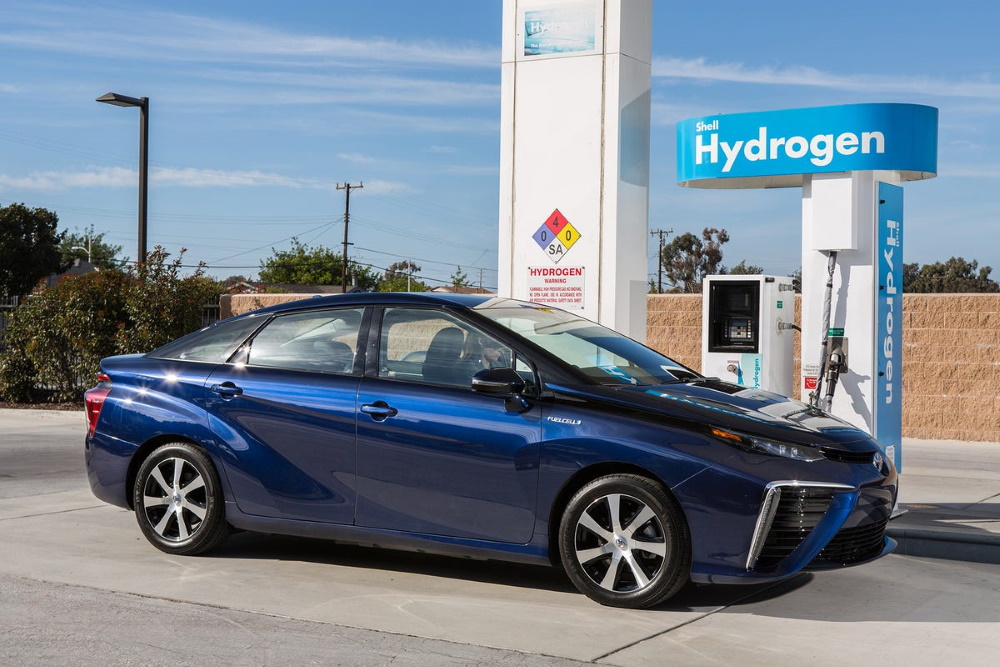 It was at a recent auto show in San Jose, California, that I saw major Japanese and Korean companies with hydrogen automobiles.
They use what is called a “fuel cell” which works like a battery to convert the chemical energy in hydrogen into electricity to drive the car.
At one time, hydrogen cars were toted as the car of the future, but electrical cars powered by batteries seem to have won that battle. It may be all the space taken up by those hydrogen tanks.
But, looking at hydrogen as part of the bigger climate change puzzle, there is hope that hydrogen will help meet the global goal to replace fossil fuels with renewables by 2050. My bet is that solar, wind and nuclear will be required to do the job. But keep your eye on the costs of green hydrogen.
03-08 Green Hydrogen
(blank) » John Bulloch » 20 Quirky Climate » 03 Technology »
Producing hydrogen from water rather than natural gas will impact climate change. Green hydrogen is like wind and solar.