Loved learning about the “Periodic Table” in high school. Hydrogen was called H and it had one proton in its atom. And copper was called Cu and it had 29 protons. Then lead was called Pb and it had 82 protons. Every element had a proton number or atomic number. I remember finally understanding why some things are so heavy.
Then during my years as an engineering student, we got heavily into the different elements in the Periodic Table, and the way they were organized as metals, non-metals, gases and so on.
And then we discussed elements referred to as rare earth elements or REEs which had special electrical and magnetic properties. Someone asked why they are called “rare”, and the answer was not about being scarce but hard to mine.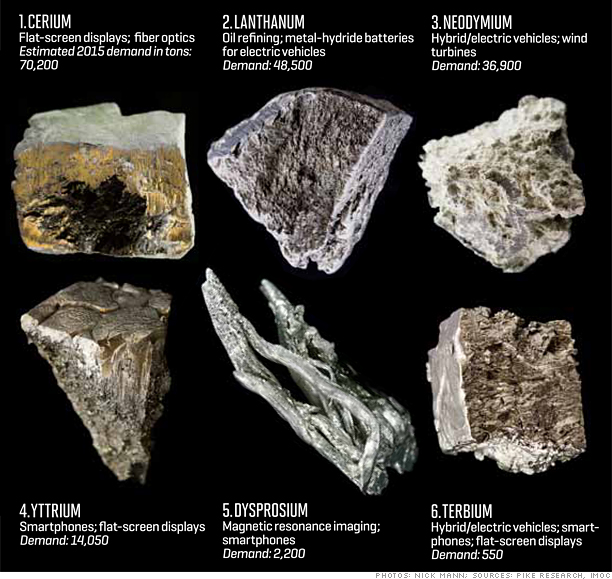 Our photograph provides background information on six of the more common REEs. The important information is the market these scarce materials serve. Like the magnets needed to generate electricity in wind turbines. And the batteries needed to operate electric vehicles.
I did not know that the motors in an electric vehicle contain 3kg of neodymium. Great word to drop at a cocktail party.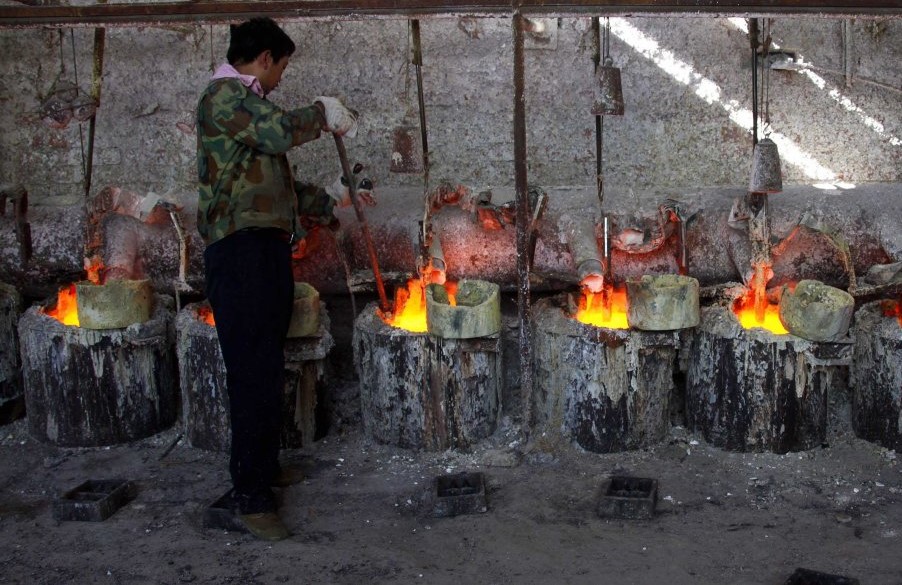 There is bad news, however, because most of the production of rare earths takes place in China. And there, they not only have cheap labour, but no costly labour or environmental laws. They can, therefore, undercut anyone challenging their market dominance. China has a weapon that they hold over the world.
  And, in a dispute with Japan, back in 2010, they held back a critical supply of rare earth elements Japan needed to produce smart phones and computers. It was a warning.
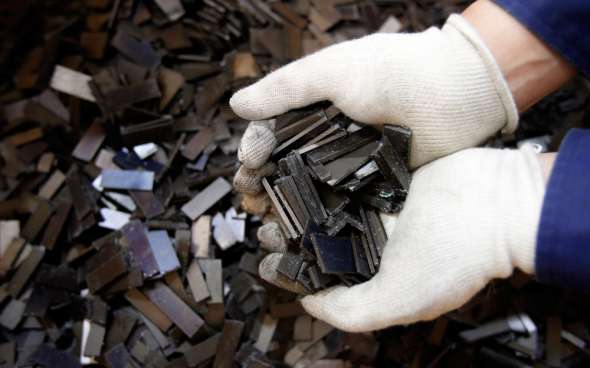
And Japan began a massive national recycling effort. They wanted to recover the rare earths in used equipment. The photograph shows rare earth magnets recovered from recycled compressors.
The rest of the world is paying attention, especially with the current trade dispute between the US and China. And the big players are exploring for new sources of REEs. And two of the most promising geographies are Canada and Alaska. Let’s hope they find rare earths in Alberta.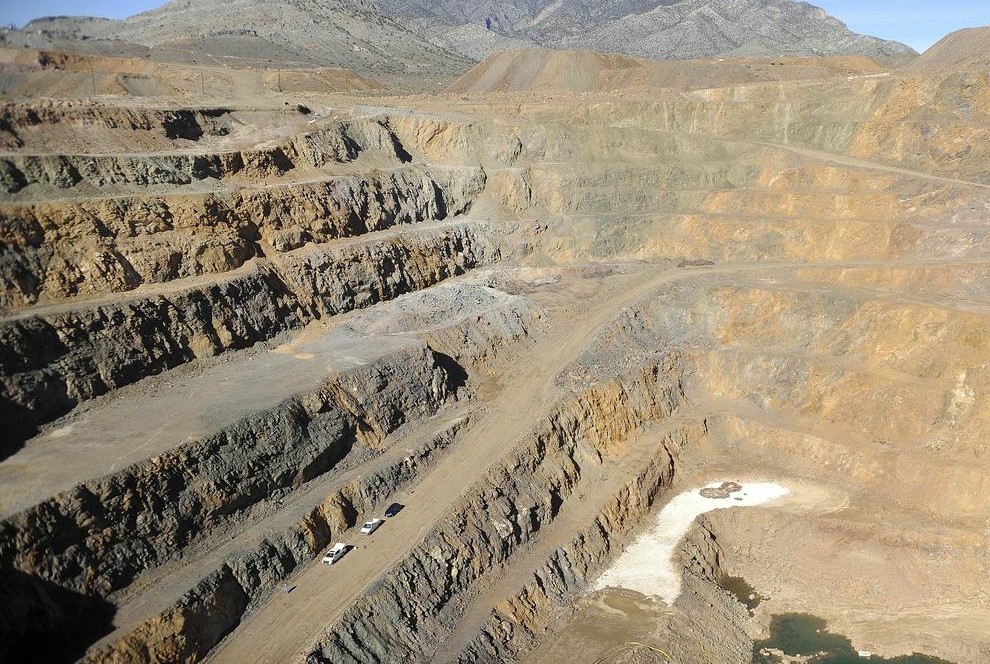 The environmental downside of rare earths is the mining and extraction operation. The mining operation from Mountain Pass gives you the ore, which can contain a lot of other goodies like radioactive material. The extraction of rare earths is a messy process.
But in terms of national security the US and Canada need their own sources of rare earths to prepare them for climate change and the exploding market for green technologies. They also need public support so they can compete with China.
They did this kind of thing together to create the Seaway canal. They should also partner to open the Northwest passage and to build a North American supply of rare earths.
03-05 Rare Earths
(blank) » John Bulloch » 20 Quirky Climate » 03 Technology »
China’s control of rare earths holds the world at ransom. Time for a new Canada-US partnership.