A toaster and real toast. And I could read in bed at night. This is about coming onto the grid at our cottage at age 14. It was 1947. Being off the grid meant coal oil lamps, an ice box, and a wood stove. Loved sucking ice from the ice box.
And I really enjoyed watching our mother ironing with irons warming on the stove. She worked with two. And as one cooled, she put it down and grabbed the other.
It was two years after the war before hydro was brought to our beach. And, this kind of thing was happening all across Canada. How lucky we were.
Apparently, about a third of the people in the world still do not have electricity. And in Africa, it is something like seven out of ten.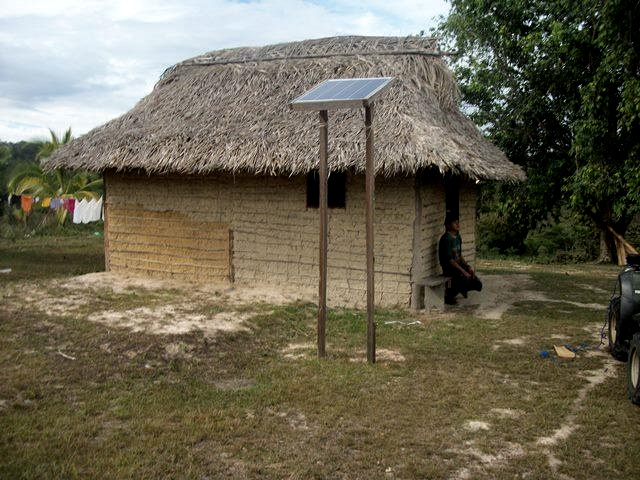 Our photo shows a hut in Africa that is off the grid. But enjoying electrical power from a solar panel. One good thing. These folks will now be able to charge their cell phones.
A little oversimplified techy talk here. Batteries can only store what is called Direct Current (DC), which is current that only goes in one direction. And the power needed to operate motors in refrigerators is Alternating Current (AC), the kind of current that can move in two directions. 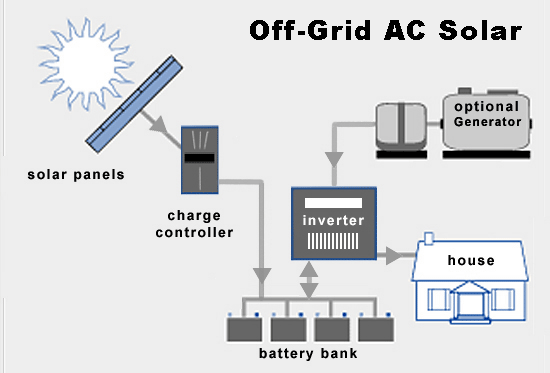 Our diagram is helpful. It shows a home with a solar system. These installations are costly in terms of equipment and labour. Nevertheless, they can be found in remote off grid locations in every nation in the world. The charge controller is there to ensure the batteries are not overcharged and damaged. And the inverter converts the DC from the batteries into AC for the home appliances.
Most people with computers and cell phones are used to the boxy thing where you plug it in. That is an adapter that is converting the AC to DC.
During my travels across Canada, it was common to find remote areas without grid power. Power lines are just too expensive for bringing power to small and remote communities. What you usually find instead, are diesel generators providing electricity. But bringing diesel fuel to remote areas is also costly.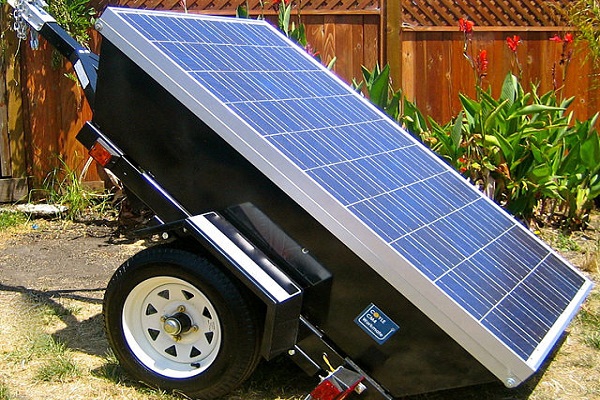 A new sexy option is community solar projects, and they take many forms. Some larger solar panels required to charge the whole community can simply be wheeled in.
But what is common for communities that are off the grid is to find both solar and diesel generators. The diesel provides power at night when the solar does not work.
But what is so quirky about solar is that what seems right today will be wrong tomorrow. Expect the unexpected because the scientific community of the world is researching new solar and battery technologies.
The future is smaller, cheaper off grid solar panels with miracle batteries. And no diesel generators. We are talking about millions of communities located in every nation of the world. Should be good for cell phone sales.
03-02 Off the Grid
(blank) » John Bulloch » 20 Quirky Climate » 03 Technology »
Millions around the world will soon be able to charge their cell phones.