Our visit to Amsterdam in 1984 to attend the International Small Business Congress was one of the most memorable experiences of my life.
The Dutch love Canadians and in 1984 there was a generation that still remembered the Canadian liberation of their nation in 1945 and Canadians dropping food by air when the people were being starved by the occupying Nazi forces.
I was honoured to have an audience with Queen Beatrix who said she wore her gold Canadian pin no matter what she was wearing, including her dressing gown in the mornings. She said she remembered living in Ottawa during the war and having ice cream every day.
But the other great memory, besides visiting their famous Rijksmuseum, was seeing how concentrated the living conditions were with so many people occupying such little space. Tiny hotel rooms, and crops growing right up to the edge of the highways and railways.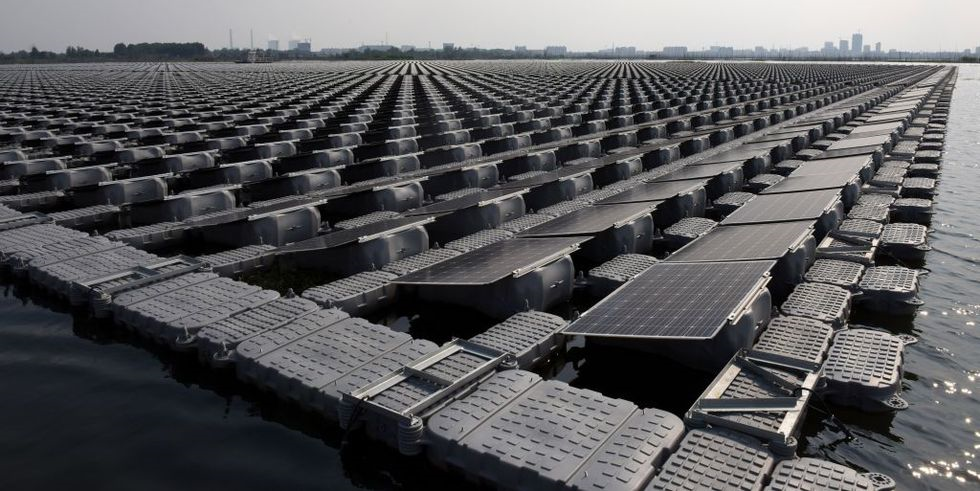 This is the basis for the energy conflicts facing the Netherlands. It’s the shortage of space for any form of renewable technology. A recent announcement of plans to build a large solar farm on the ocean makes sense.
And how do you place noisy wind farms in a nation with so few open spaces. Again, offshore facilities are the only solution.
The reason the Netherlands deserves special focus is that it has the highest usage of fossil fuels in Europe, because it has its own source of natural gas that is winding down. Almost 90% of Dutch homes are heated by natural gas.
Recently, the government announced a policy to eliminate the use of natural gas by 2050. Sounds ambitious and difficult to achieve without a lot of sacrifice and conflict between the people and the state.
Without getting techy, they will have to use electrical driven heat engines. It is the same technology that makes refrigerators cool stuff. Instead heat engines heat stuff.
The Dutch make a lot of biofuels out of waste plant material, but that will not replace natural gas. But it is of special interest that they hope to replace jet fuel with biofuel.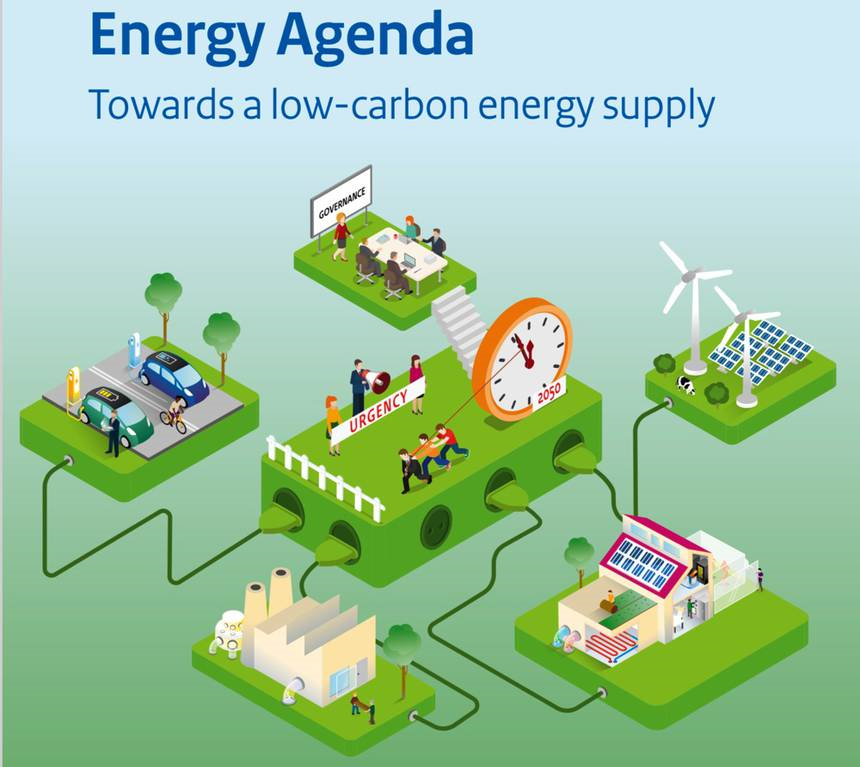 The diagram shows government plans to change Dutch society by moving to energy renewables. Electric cars and power fueled by wind and solar. And like Germany, the Dutch are going to close their sole nuclear facility.
And by the way, each year the Dutch send 10,000 tulip bulbs to Canada.
10-04 The Netherlands
(blank) » John Bulloch » 19 Global Issues » 10 Energy Conflicts »