It’s funny, the things you remember from high school. But I remember clearly our English teacher in grade 12 reading the poem called “The Rime of the Ancient Mariner”. And this part of a verse has stayed with me over the years, “Water, water everywhere, and nor a drop to drink.”
It was about a ship that got lost in the Antarctic with the crew running out of fresh water. And the poem was about a sailor’s musings looking out at the vast salt waters of the Antarctic Ocean.
A student asked her why the ocean is so salty so that it could not be used as drinking water. She said she did not know.
But a few years later as an engineering student, this issue was raised again, and a professor made the point that the great lakes pick up salt from rocks but drains out into the ocean through the St. Lawrence river. But oceans have nowhere to drain. The water in the ocean evaporates and a lot of it falls on land, leaving the salt behind which gets stronger and stronger over time.
We are back in the 1950s but aware as young engineers how lucky we were to have access to the largest body of fresh water in the world, and that was the great lakes system.
Although the world is supposed to be made up of 70% water, only about 3% of the world’s supply of water is fresh water. And most of that is in the form of glaciers and ice-shelves in the Arctic and Antarctic.
It was not until at least another thirty years when I started travelling around the world that I discovered that over a billion people do not have access to suitable drinking water, and that two million children die each year from diseases linked to diarrhea.
As a young engineering graduate in 1956, I thought the most exciting industry to be part of was the petroleum industry. The world needed oil, and lots of it. But if I was a young graduate today, my focus would be on water. Water is the new oil. The world needs fresh water and lots of it.
It was only about 15 years ago that I bought a home in the country, and the big decision was not the design of the house, the size of the lot and that kind of thing, but instead the quality of the water. Our well was 90 feet deep and dipped into a massive aquifer. Then we sent a sample of the water to a lab to be tested for bacteria and other contaminants.
What a different story for millions of people living in undeveloped areas of the world where the major challenge for women and children is walking miles to access drinking water.
I became a “water nutmeg” after travelling around the world. The first trip where water was a subject was travelling through China in 1985. The guide tried to explain that water shortages led to the decline of the Tang dynasty.
And how about the visit to San Paulo in 1989 and hearing our local board member express his concern that they were going to impose water rationing at some point if they were going to continue to meet the needs of a population of 20 million.
Then there was the visit to Chichen Itza, a Mayan city in Mexico and a discussion of how this civilization disappeared. The most likely threat was the shortage of water, which is so basic to growing food.
Then there was the visit to Ephesus in Turkey in 2007, where we were told that silt from the hills choked the harbour and cut off the city’s access to the Aegean Sea.
Then a couple of days later we are in Greece and a guide is telling us how the shortage of water led to the destruction of ancient Greece.
Very educational. So, you start to think about parts of the world that are threatened today with water shortages and whether it means large parts of the world becoming uninhabited. Certainly, climate changes must make the issue of drinkable water a future crisis.
Of course, if you have the means, costly technology like desalination can be used to take the salt minerals out of sea water. And money from oil in the middle east is being used to create drinkable water from the Arabian Sea.
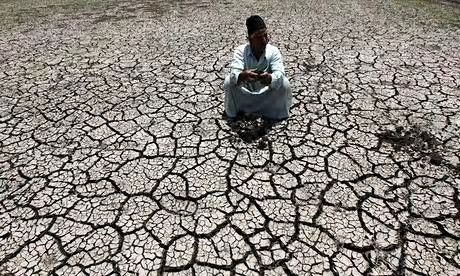
And if you want to know what a drought stricken area looks like just study the photo taken from an area of Egypt that no longer gets water from the Nile river. There is nothing more controversial than the building of dams and diverting water for usage usually in agriculture.
And agriculture is the big user of drinkable water. I live in a farming area where modern equipment carefully measures the watering of vegetables so there is no waste.
Canada is one of the most blessed nations on earth because of its abundant sources of fresh water. California in the future is going to have to rely on expensive desalination for its water supply if the area is plagued with droughts.
So, expect long-term US investment and emigration into Canada. Trump is not the threat, but water is.
14-01 The Issues
(blank) » John Bulloch » 19 Global Issues » 08 Water »