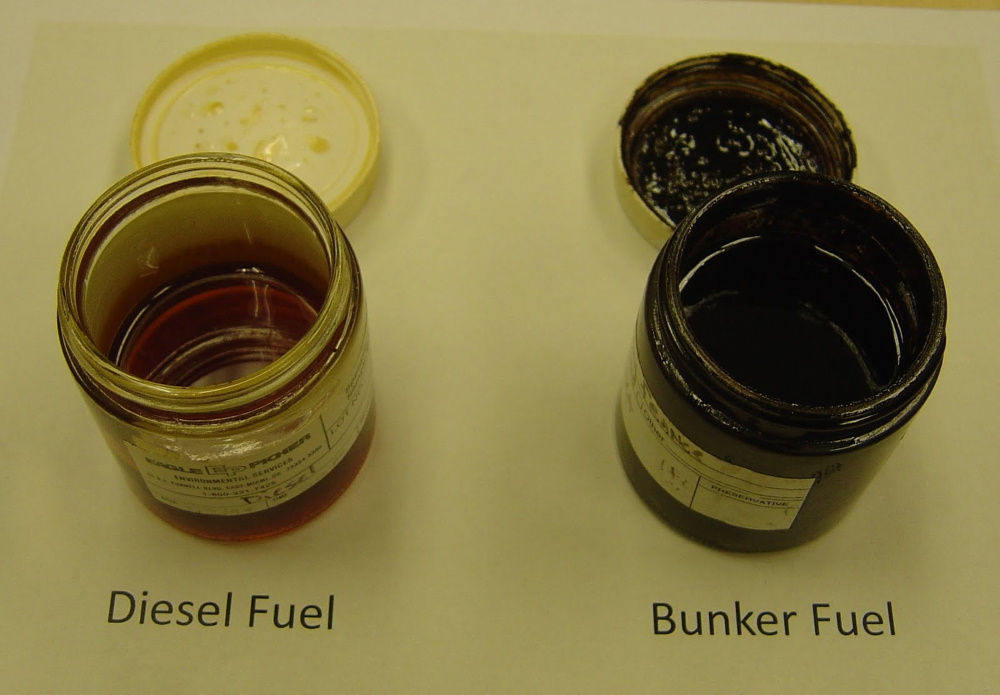
 If you were a non-technical person you would describe Bunker Fuel Oil as yucky and gooey. Not like diesel fuel which you can buy at a service station.
But being technical, Bunker fuel or Heavy Fuel Oil (HFO) is the residual after you have distilled all the good stuff to make diesel fuel, jet fuel and gasoline. It must be kept hot if you want to pump it from one place to another.
The name “Bunker” came from the term “Coal Bunker” on older ships. Coal that was used for steam engines is, of course, all in the past. Today it is Bunker fuel for operating monster-sized internal combustion engines.
It was my job to find markets for all the Bunker that was a product of the new Cities Service Company refinery outside Bronte, near Burlington Ontario. It was 1959.
My major customers were large factories and commercial buildings that were converting from coal to take advantage of the low-priced Bunker for heating their buildings.
The lesson from my early days is that refineries must get rid of their Bunker fuel no matter what. If necessary, they will bloody well give it away.
But the major Bunker story is about what is happening in shipping as of January 2020 when a new ruling by the United Nations International Maritime Organization (IMO) comes into effect.
Well, cargo and cruise ships will only be able to use bunker fuel with no more than .50% sulphur. It is a ruling that will impact over 50,000 ships that consume about 4 million barrels/day of Bunker.
Today, all the major oil refineries around the world that supply Bunker to the marine industry are scrambling to secure low sulphur crude oil.
Saudi Arabia is a winner. Canada’s tar sands are losers, because this form of crude oil even when cut back with lighter oils has a very high sulphur content. It means the price of Canadian crude from the tar sands will likely be discounted internationally.
It does not mean that refineries cannot remove the sulphur from their Bunker fuel, but it is a costly process.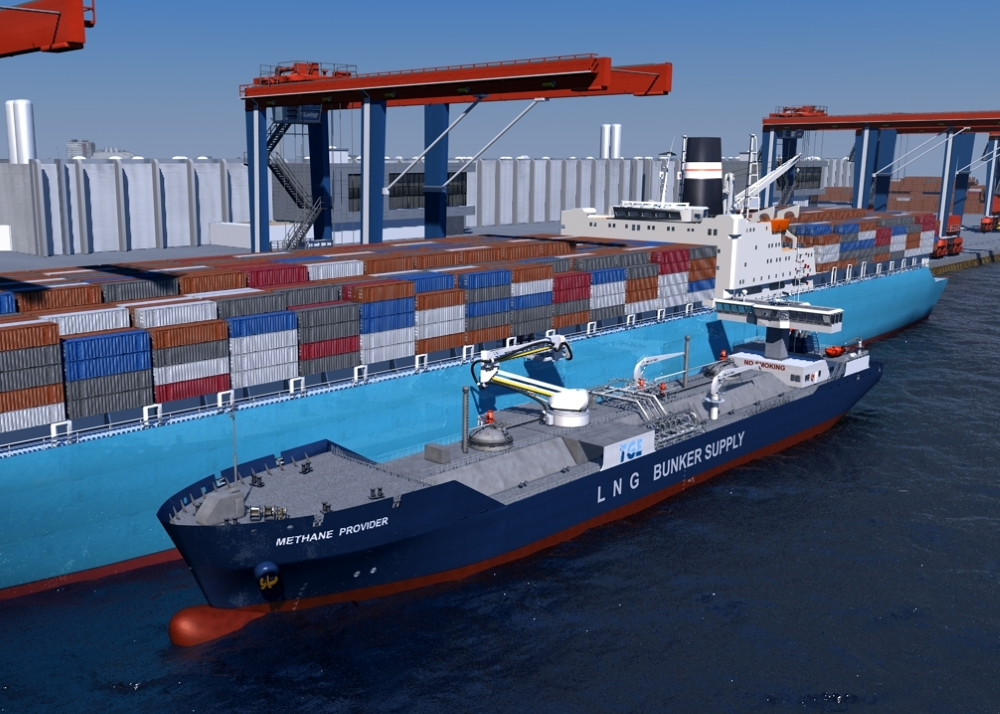 What is happening instead, is a growth in Liquified Natural Gas (LNG) as a new form of marine fuel. The photo shows what they still call “bunkering” and that is a small ship transferring LNG to a larger ship.
So, the overall demand for bunker is going down in the marine industry but the Bunker must go somewhere. People will be hired to do what I had to do, and that is to get rid of the Bunker so refineries can focus on refining and selling the money-makers.
A quick and not so funny story. Bunker I sold to a convent near Hamilton did not have proper loading facilities and a six-foot puddle of Bunker blew back after the hose was removed. Well it snowed and the gooey mess was well hidden when 30 novices walked through it before going into the convent and into their rooms.
Prayers did not help clean up that mess. Anyways, how many men can boast that they have walked through a convent.
03-06 Bunker
(blank) » John Bulloch » 19 Global Issues » 03 Oil and Gas »