It was the fall of 1978 and I put a call through to Premier Alex Campbell of Prince Edward Island. And, son-of-a-gun, if he did not answer the telephone call himself. He invited me down for lunch with his full cabinet.
One of the things we discussed was the need for PEI to develop renewable energies because the island was totally dependent on imported fossil fuels. Wind sources would be natural for them because of the high and constant wind power that is found in so many areas of the province.
The Premier had me visit an experimental home powered by its own solar panels and wind turbine. And this power was stored in batteries hidden under benches.
Everyone I talked to about this research project believed it represented their future. And I am talking 1978. It was a good lesson in politics when a respected political leader conditions his constituents to prepare for change.
I am very sympathetic about the conflicts facing politicians who believe our changing climate is something man made. And yet, at the same time, they are not sure they have the public onside.
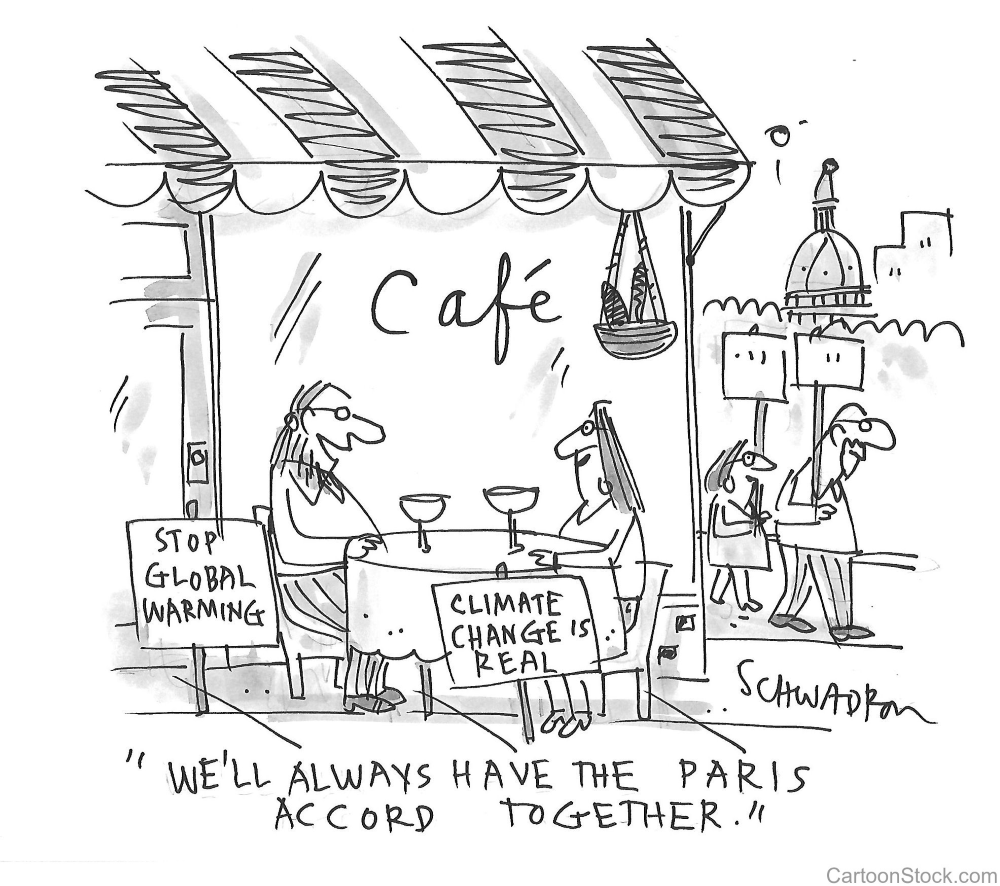
The cartoon illustrates the creation of that “feel-good” feeling which is basic in politics. Remember Casablanca. “We’ll always have Paris.”
Part of the public skepticism associated with any aggressive political action is the belief that politicians will use an issue like climate change to pursue their own agendas. And they are right.
All the nations that are producers of fossil fuels have a renewables agenda, so they look like they are doing something about climate change. The big money is still in exporting coal, oil and gas. This will change.
Climate change is real. I have seen scary evidence in Alaska, Greenland and the Antarctic. The leadership for dealing with climate change will come from both the private and public sector.
One place for public action is in changes to our tax system. How about replacing income taxes with a carbon tax but with no increases in the level of taxation imposed.
I love the concept of aggressive public and private action at the same time. We can develop electric cars, wind, solar and nuclear technologies at the same time we are changing our system of spending and taxing.
It is hard to envisage a clear-cut political culture in any of the developed economies linked to climate change, but one will emerge.
What makes this issue complex is that it is just not a national issue, but a global issue. But if the big boys like the US, China and India tackle climate change the rest of the world will pay attention. Why close down coal fired power plants in developed nations if they continue to build them in undeveloped nations.
And in countries like China and Indonesia, climate change is about being able to breath the air in places where local utilities are burning coal. How about having your eyes burning while sitting around a pool in Jakarta, Indonesia.
President Trump taking the US out of the Paris Accord was interesting politics. And I can support opposition in the US to paying third world nations for replacing fossil fuels with renewables.
I would let cheaper renewables and the free market play that role. There will be lots of agencies willing to finance third world solar and wind projects if they are money makers.
One of the great strengths of democracies is their ability to deal with change, even if the process is delayed and complex. Climate change has the potential to bring out the noble side of politics, because it is linked to building a better future.
07-03 Politics
(blank) » John Bulloch » 19 Global Issues » 01 Climate Change »