My first summer job as an engineering student was in 1953 with “Ontario Hydro”. A funny name, since we get power from hydro, nuclear and natural gas.
And I learned how complex it is to balance the supply and demand for electrical power. Ontario had just installed a coal-fired electrical power generating station in Toronto and it was a source of energy that was not too flexible compared to hydro.
At night or during periods of low energy demand, Ontario Hydro could always regulate the flow of water from the dams in Niagara Falls into the turbines that drove the electrical generators. Yes, Niagara Falls is more than honeymooners.
Managing the demand side was seriously tricky, since some industries like pulp and paper and steel were mega users of electricity with fluctuating demand.
I watched what happened when a white-hot bar of steel hit those huge rollers at the steel mill in Hamilton that flattened the bar over a period of runs into sheets of steel. And each time a bar hit those rollers the total Ontario demand for electricity blipped.
So, providing enough power to meet the demand jumps from industry meant having surplus capacity. And when the rolling mills stopped, some of that surplus power flowed down the grid into Michigan.
This experience is important in understanding what’s happening in Germany today, which is a mega solar producer and consumer. Germany is big because the government pays consumers for each unit of power their solar system sends into the power grid over a period of 20 years. It is a monster subsidy.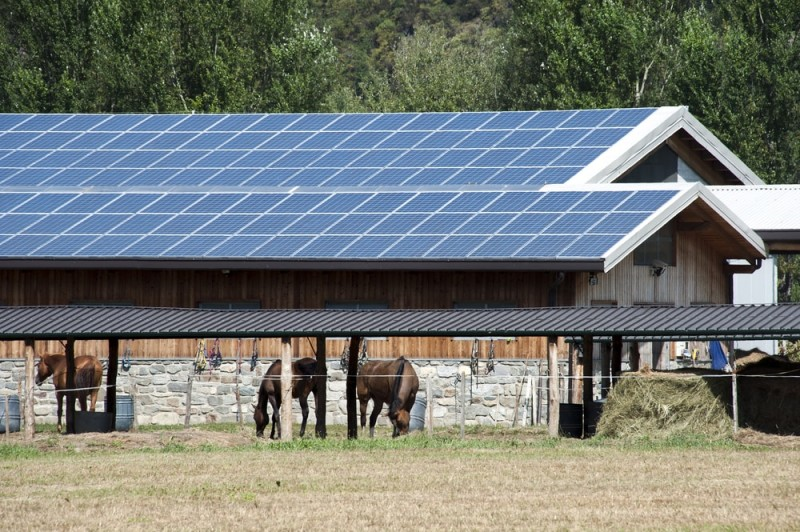 And, an example of this subsidized renewable is the attached photo showing solar on the roof of a modern barn. For some farmers there is more money in solar than there is in horses, cows or pigs.
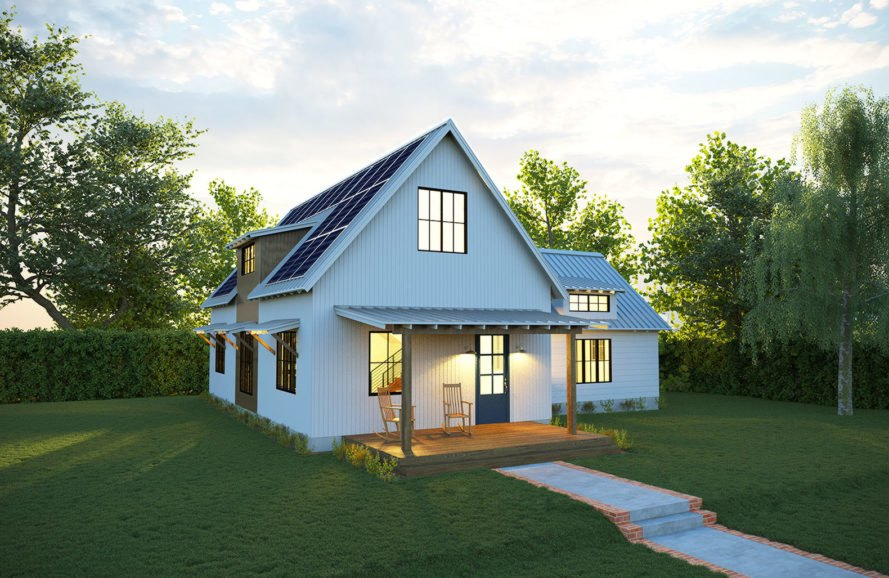 And, there is something like a million and a half consumers selling power to the grid. So, designing beautiful solar homes has become a marvelous mega business.
The complexity with renewables, however, is related to the problems of managing the supply and demand. Like wind in Denmark and solar in Germany.
Sometimes when the wind is seriously windy, or the sun is seriously sunny they produce more power than they can use. So, they send their surpluses into the power grids of their neighbours.
And sometimes the power generated is so cheap that they make power from coal, nuclear and natural gas uneconomical. Uneconomical for say three months of the year. It is all very up and down and very complex. Something not appreciated by the public which sees renewable energy systems as simple.
The German problem is that their solar system is so up and down that they still need a stable source of energy. Fortunately, their coal-fired generating stations are steady and reliable. Coal? What about global warming? What happened to nuclear? Oops. Forgot about the anti-nuclear lobby.
05-02 Germany
(blank) » John Bulloch » 17 Energy » 05 Solar »