In 1987, my wife and I were planning a tour of the Soviet Union in advance of an international conference in Helsinki. And to my surprise, many of the tours had been cancelled for fear of airborne radiation associated with the explosion of a nuclear reactor at Chernobyl in the Ukraine the year before.
Stories of 150,000 people being forced to move and later stories of people dying of cancer from radiation made news around the world. And the same thing happened when nuclear tragedies occurred in Japan and the United States.
My personal reaction was a little different, because the nature of nuclear power generation is “techy, techy” and difficult to explain. This means that emotion and perception would be more important than reality. Or that politics will rule.
Obviously early nuclear power generation was of poor design and potentially poorly operated. The issue for me was whether the technology would improve to the degree that nuclear energy would become a major source of energy for producing electricity.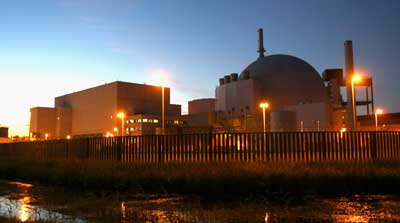 Certainly from the photo of a German nuclear power plant, everything is encased in cement. Safety today is a huge issue and something like 50 nations use nuclear energy to produce electricity.
And yet, Germany is not a major user of nuclear energy. But its neighbour France gets 72% of its electricity from nuclear power plants. The US is a major user of nuclear energy which supplies about 20% of its electricity. The politics of nuclear energy are different everywhere.
All power plants produce pressurized steam which turn turbines which turn generators that produces electricity. Coal, oil and natural gas generators put carbon dioxide and other goodies into the atmosphere which contribute to global warming.
The nasty stuff produced by nuclear generators is called nuclear waste, and something like 88,000 tons of this scary radioactive material is being stored in the US.
So, the big debate over global warming is the degree to which nuclear energy or renewables will replace fossil fuels. It is an engineering challenge.
What occupies the major powers, on the other hand, is the extent to which enriched uranium is being used as a fuel for nuclear reactors or being used to produce nuclear bombs. The focus today is Iran and North Korea.
Apparently, the enrichment process to produce a particular form of uranium called U-235 is the same whether you are producing fuel or bombs. If the final product contains 3% U-235 it is fuel, but if it has 20% U-235 it is bomb material.
03-01 Some Basics
(blank) » John Bulloch » 17 Energy » 03 Nuclear »