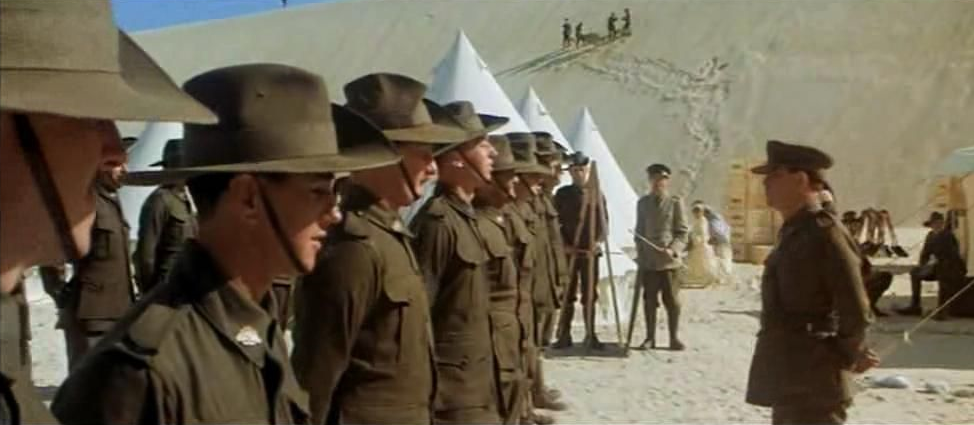
 Love Aussie movies, and Gallipoli is one of my favourites. It came out in 1981 and is about Australian armed forces fighting in Gallipoli, Turkey in WW1.
But the strategic question is why young men from Australia had to give their lives to fight in a foreign war. Do they really love Brits that much or is there a strategic interest?
It’s called geopolitics. A nation’s interests determined by its geography and history. Strategic long-term thinking. And more.
Australia fought with Britain in the South African Boer War in 1899, and in WW1 and WW2. And then with the US in Korea, Vietnam, Iraq and Afghanistan.
The reality is that Australia needs the security umbrella of a great maritime power to protect its shipping lanes. So, their protector was originally Britain and now it is the US.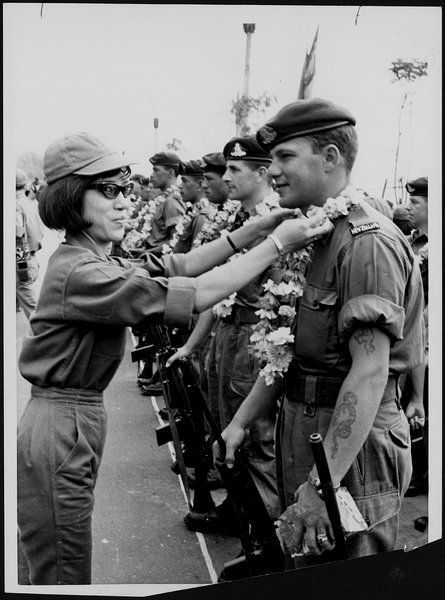 And, it is the same geopolitical issue with NZ, another island nation with a small population, dependent on trade. The photo is of a KIWI fighting force in Vietmam. It seemed that wherever there were Australian units fighting for either Britain or the US, New Zealand forces were equally involved.
The big geopolitical issue for both Australia and New Zealand today is the rising power and influence of China and India.
There is a population of two billion people between these two nations and if we assume five percent of these are university material, there will be 100 million highly educated English speaking Asians entering the workforce each year. This translates into economic, military and political power.
And the threatening reality in China, and thankfully not in India, is a highly subsidized state corporation in every key economic sector. Not hard to understand China’s plans to dominate the changing world’s economy. We are not talking about free enterprise at work.
A US-China conflict is Australia and New Zealand’s worst nightmare. One is their protector and the other is their biggest customer.
In the long-term they will both have to spend more on defense if they want to protect their relationship with the US. The Australia and New Zealand dependence on the US for its security is like the dependence of Europe on America’s support for NATO.
The US is a nation with massive deficits and debts, and China is one of its major creditors. The world cannot depend on the US the way it has since WW2.
And so much for India as a strategic partner. They just put a huge tariff on lentils and chickpeas, which will change the concept of India as a reliable geopolitical partner. And they do not eat New Zealand lamb.
Immigration rather than exports is a better geopolitical strategy for dealing with India.
As for planning your future around the sale of resources to China, a nation that will undoubtedly become involved in a quasi-cold war with the US, the geopolitical options are painful.
Better to stick with the US and those nations that signed the TPP or Trans Pacific Partnership. A trade agreement the Trump administration foolishly refused to sign.
Of course, one must not agree to something negotiated under the Obama administration. In my opinion, it will be signed by the US after Trump is gone. At that time, China will have unloaded its holdings of US debt, and the US will have the trade advantage of a weaker dollar.
02-04 Geopolitics
(blank) » John Bulloch » 14 Australia and NZ »