It was so amusing listening to our tour guide in Moscow introduce herself as a Professor of English at the Moscow State University, and someone who did not know anything about her new job. She was transferred into her new role at the last minute because of the booming tourist trade and the shortage of people who could speak English. It was 1987.
Everywhere we went in the Soviet Union, she read from a prepared text, but when given questions she was surprisingly honest. She was obviously not an agent of the Russian secret service.
When we were in Odessa on the Black Sea, she referred to Crimea as more Russian than Ukrainian. And she called neighbouring Moldova, more Romanian than Russian.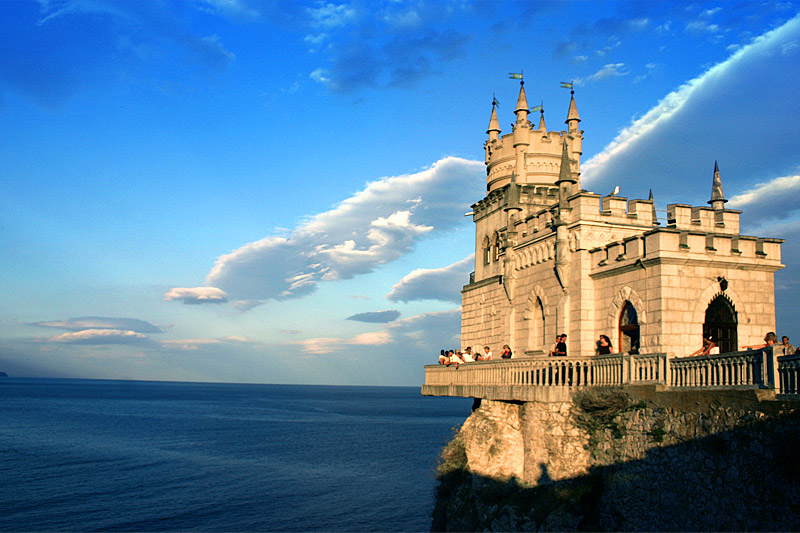 Crimea, which in 1987 was not one of our official visits, was of special interest to one of our colleagues that had Crimean relatives. Well, our guide had holidayed there and was very informed. She commented on the famous “Red Swallow Castle” as a tourist destination, and the fact that most of the population was either Russian or spoke Russian.
But what was more interesting was her comments on the geopolitics of Crimea.
She said Crimea had been part of Russia for 200 years, and was given to the Ukraine by Nikita Khrushchev, after Stalin’s death. It made sense to the people of Crimea, at the time, because Crimea was dependent on the Ukraine, for its water, gas and electricity.
But to her colleagues at the University, it was a questionable move because Crimea and the city of Sevastopol was the home of Russia’s Baltic Sea Fleet.
So, it should not be a surprise when in 1991 the Ukraine voted 90% in favour of separating from the Soviet Union, that the “in favour” vote by the people of Crimea was only 54%.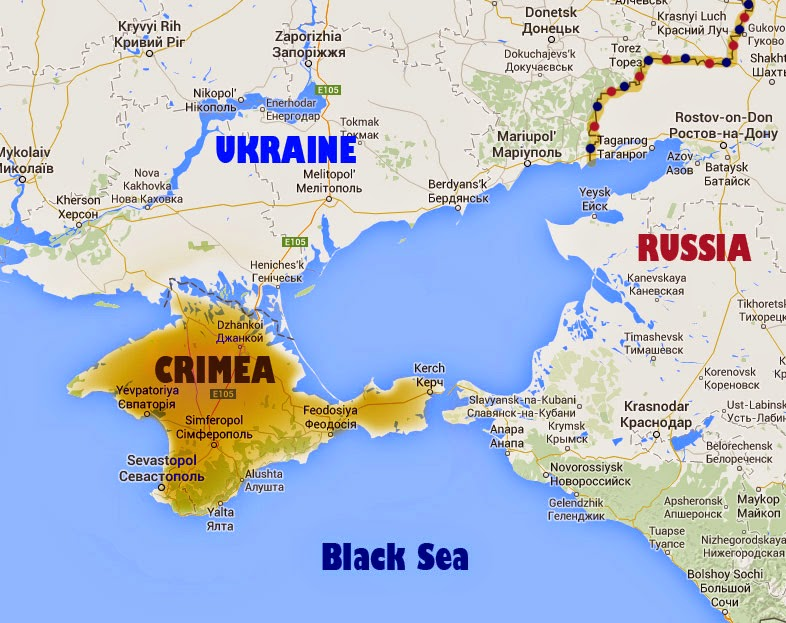 The map shows just how strategic Crimea is for Russian control of the Black Sea area. And why, after the government of Ukraine made overtures to join NATO that Russia would annex the Crimea in 2014. Of course, they had one of those slightly rigged referendums, so it all seemed legitimate. The government of Russia was just a servant of the people.
But, from a geopolitical perspective, Crimea is a strategic interest of Russia. They could not possibly allow this area to come under the military control of NATO.
And then the US, under President Obama, imposed sanctions on some of Russia’s oligarchs, who are all billion-dollar cronies of President Putin. Of course, billionaires have their money scattered about the world, so sanctions have only a limited impact.
And the sanctions have started what is being called “The Second Cold War”. Suddenly Russia is not a US friend in Syria, Iran and North Korea. And their newest cold war weapon is cyber warfare.
And Europe cannot do much to fight Russia because it depends on Russian gas which is shipped through the Ukraine. And China has been strategically quiet on the matter. They are undoubtedly planning a similar move on neighbouring Taiwan.
From a lifetime of political action, I have learned to only believe half of what I hear and read. The real geopolitics of Crimea, in my judgement, is about the trillion dollars of oil and gas that lies below the Black Sea. When they annexed Crimea, they also stole a Ukrainian oil platform built by Singapore.
And it is oil from the Black Sea that has made Romania rich. Romania, by the way, is a member of NATO, and in 2014 asked fellow members to send arms to the Ukrainian army.
01-04 Crimea
(blank) » John Bulloch » 12 Israel » 01 Understanding »