It was a funny feeling meeting government ministers and department heads in Jakarta in 1994 in advance of the 24th International Small Business Congress, and meeting nothing but generals.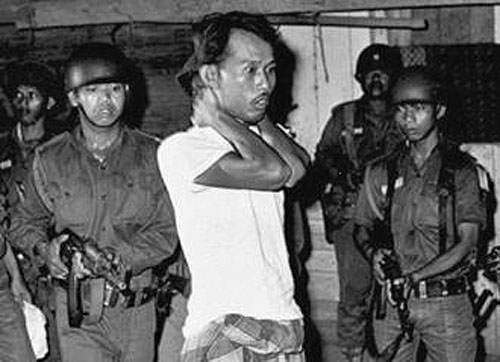 When I asked one general if there was a left-wing party in Indonesia, he said, “No, we killed them all back in 1965 when the world’s attention was on President Johnson’s war in Vietnam. We knew those who were communists because we had membership lists of the Indonesian Communist Party. It was easy. We went from village to village, lined them up and shot them. In most cases we just dumped their bodies in the river. In this way they disappeared, because they would be eaten by the crocodiles.”
I went into shock. But I was able to ask him if the US was aware of this, and he said, “of course”. He talked as if this massacre was normal and what soldiers did as part of the war against Communism, and as an ally of the United States.
And I asked him how many Communists were killed, and he said 600,000. Even today, doing my research, no one knows how large the massacre was and the numbers are between 500,000 and a million.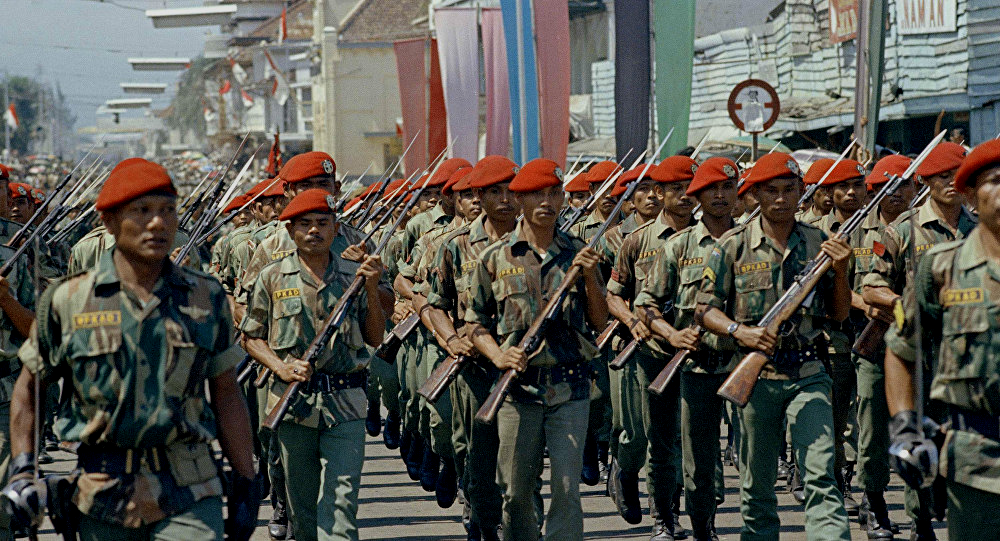 Apparently, the Communists staged a failed coup back in 1965 and this led to the President Sukarno’s socialist dictatorship being replaced by General Suharto’s pro-western military dictatorship. The political party headed by Suharto included representatives of the huge Muslim population that supported the massacre of what they called “atheists and unbelievers”.
I believed the general, because the previous day, when I had arrived in Jakarta, the front page of an English language newspaper had a photo of bodies floating down a river. According to the news story, the army was rounding up members of a gang, that were harassing tourists, and shooting them. And, on page three there was a photo of a line-up of gang members in a hospital waiting to have their membership tattoos removed.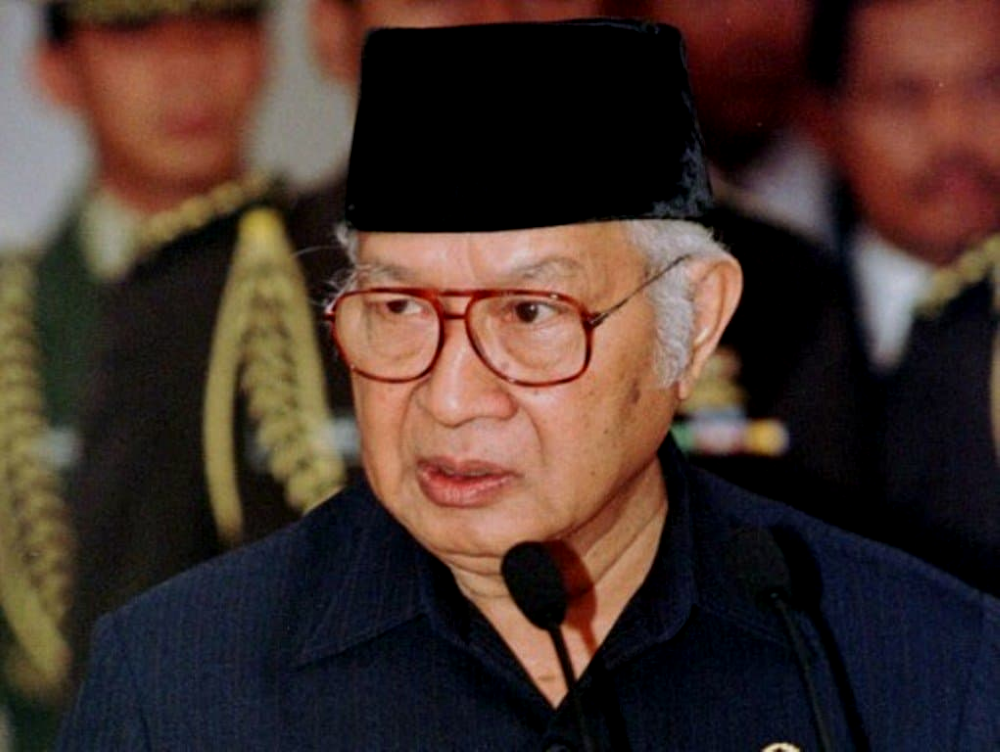 The key-note speaker of the Congress was President Hasi Muhammed Suharto himself, and he looked like the file photo. We were all bused to a special auditorium with reinforced concrete walls, ten feet deep, to hear his address. It was a genuine welcome to the delegates from over 60 nations.
The surprise was the level of security. There was no press allowed, and you could only get in if you had your proper accreditation. Apparently, all attendants at the Congress had been checked by Suharto’s security detail.
And after the President’s address, the ten members of the International Steering Committee were taken to Suharto’s private offices and sleeping quarters about 100 feet below ground. There I was presented with a special commemorative coin by the President.
I had a special dinner after the Congress with the Canadian Ambassador and other Canadians who had investments in Indonesia. And again, I got the sense of the complexity of the economics and the politics of the nation.
It is a country of 17,000 islands and over 200 languages. Lots of people and lots of crocodiles. And the government couldn’t possibly communicate with its diverse and scattered population. So, what they did, was explain their policies in the rural areas using puppet shows.
Even today, remembering my trip to Jakarta, I have difficulty reconciling, in principal, the difference between Nazi ethnic genocide and Indonesian political genocide. Unless you look at the Indonesian dead as casualties of the Cold War between the US and Russia and the US and China.
01-03 Jakarta
(blank) » John Bulloch » 12 Israel » 01 Understanding »