For two summers, in the 1960s, I attended “Teachers College” to become a more effective staff member of the Ryerson University in Toronto. And they told me that my job was to help students understand what they do not know. And this is what I am trying to do with this new series on “cold wars”. 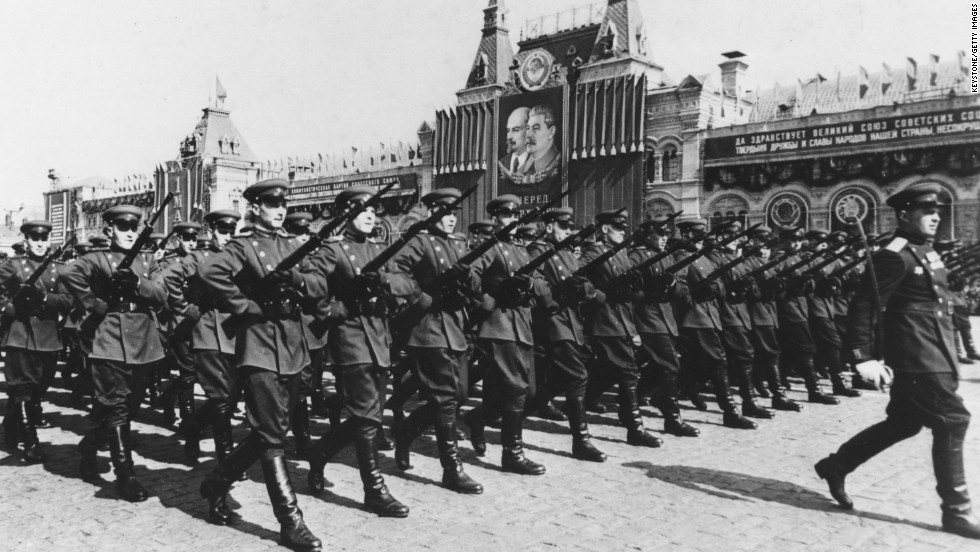 In simplistic terms a “cold war” is something that is not a “hot war”. We are all familiar with the ongoing cold war between the US and the Soviet Union, which is now just Russia. And we have witnessed on TV the annual parade of Russia’s military might. This is a cold war tactic using the threat of war as an alternative to actual conflict.
And it has always been obvious to me that there is a military-industrial complex in both the US and Russia that secures monster-sized funding, while some form of conflict is sustained.
In the same way, in the current times, American sanctions on its enemies is a cold war alternative to a hot war. They seldom work, but in politics it is perception that is important.
Visiting Taiwan, I loved hearing about all those sanctions China imposed on Taiwan, and yet they do billions of dollars in trade shuffling their goods through nations willing to act as intermediaries.
So, a series on cold wars is an attempt to look at something important but complex, something strategic but seldom obvious. And an issue where the public is often being manipulated. But what is the most troubling part about cold wars is that they are so poorly covered by today’s media, which has become a polarized form of entertainment.
Let’s start with what is called geopolitics. Certainly, it is not difficult to appreciate that a nation’s geography impacts what it considers to be a vital national interest. Not hard to understand why Stalin wanted to control all the nations around its borders. Not as big a problem for the Americans with oceans on two sides.
Then, there are other issues that can impact the national interest. Things like climate change, resources, technology and demographics.
Not hard to understand why Australia in history has always needed to ally with a major sea power. They are blessed with lots of things like iron ore and coal, but they need to be able to ship them under the protection of someone’s navy.
And nations like Japan would sink into oblivion if it did not encourage immigration because Japanese women are not having babies, and their population is shrinking by 300,000 people a year. So, when Japanese start intermarrying with people from Korea, Malaysia and Indonesia the geopolitics of Japan will change.
And the geopolitics of Canada will be impacted as the oceans warm and the Northwest passage becomes open to shipping all year around. Canada can become an economic powerhouse with the resource development that will be made possible. As long as our goodies are not being targeted by a powerful nation. Looks like Canada will continue to need the US as an ally.
Geopolitics only become part of what is called a cold war when changes in geopolitics threaten a major power.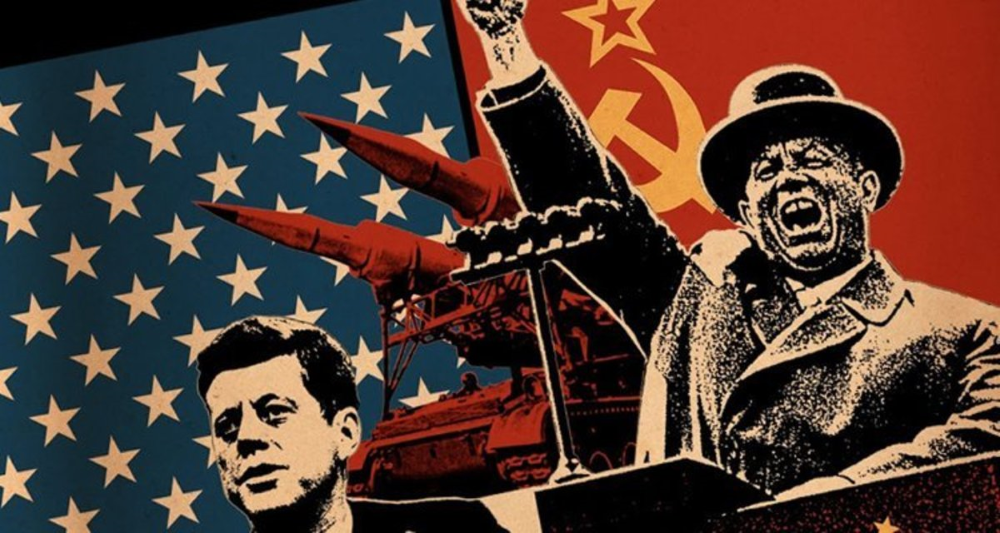 The Cuban missile crisis made everyone understand the cold war between the Soviet Union and the United States. It was easy to understand the conflict as a war between capitalism and communism.
I remember, with humour, my brother building a bomb shelter in his basement packed with canned goods. And the teachers were scaring the wits out of their students practicing war-like drills in case a nuclear missile was headed our way.
But the real purpose of this cold war series is to articulate a warning that we face another long-term conflict between China and the US, with implications for all the world. This is not an ideological war, but something that is subtle, complex and more dangerous. It is also happening at a time when China is getting stronger and America weaker in terms of their geopolitical influence.
My first sense of the coming conflict was a visit to China in 1985 and being approached by young people in different parts of the nation all wanting to practice their English, which they spoke without an accent. It told me that the Communist leadership of China had a long-term, strategic goal to dominate the world. Today about 300 million are learning English. Smells like a cold war.
01-00 Clear As Mud
(blank) » John Bulloch » 12 Israel » 01 Understanding »