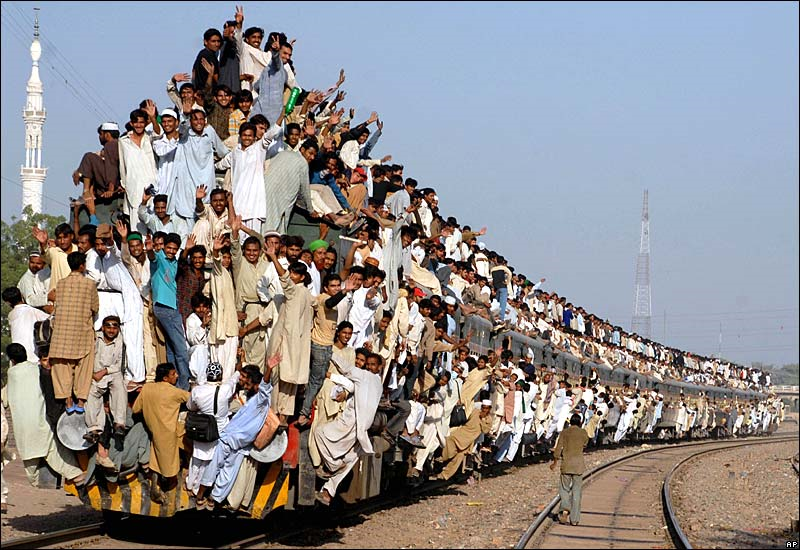
 Consider the photograph a warning to tourists not to travel third class in India. A little humour here. We are talking about the most extensive railway system in the world that carries about 22 million people each day. It’s the way to get about.
All my experiences working with people from India has left me confused because it is such a complex country. So many languages and religions. So many ancient cultures. A monster-sized democracy that seems impossible to govern. A nation plagued by rules, regulations and licensing requirements.
Movies help us understand the country, and I loved The Best Exotic Marigold Hotel, a story of a group of Brits planning their retirement in India. And my first insight into the term "medical tourism" came when Maggie Smith, playing the role of a retired nanny, was planning to have her hip replaced in India. No waiting list and a fraction of the price charged back home.
Well, apparently about 300,000 Americans go to India each year for medical treatment. And I am talking about paying $10,000 US in India for a quality procedure compared to $100,000 US at home.
And back to the movie, we have Judy Dench coaching a group of young people about selling services by telephone to seniors. Telemarketing they call it, and I can usually tell when someone is calling me from India because of the time it takes for the person to come on the line.
What you see in the movie, however, is urban dynamism and educated young people competing for jobs. This is what is so exciting about India. They are a nation with a young population when most of the developed world is dealing with an ageing population.
My ex-son-in-law was an executive for a global manufacturing firm that employed a thousand computer programmers in Mumbai. They all spoke English and worked for 25% of what they would have to pay for similar skills in the US if you could find them.
Hard to focus on India as a global player in manufacturing. So many of their companies are only interested in their domestic market. But what India exports to the world is skilled workers.
And Canada has a huge population of Indians with something like four per cent being people of Indian descent. This number will grow as we deal with the low birth rates of Canadian families.
Back in 1986, at the 13th International Small Business Congress in London, I developed a friendship with an Indian bureaucrat from the State of Pondicherry, in the South of India. Love the name which is now Puducherry. His job was providing funding and advice to small and medium enterprises.
He told me that when they grant say $200,000 US to a company to expand its facilities, they know that the company will have to pay at least half of this amount back to other government agencies as bribes to get the necessary permits.
We got into a discussion of just how much corruption exists in the Indian political system. It was a very confusing subject. He convinced me that it is widespread, and a problem at all levels of Indian society. Lots of money hidden in Swiss banks.
The result is a substantial unrecorded or black economy with Indian entrepreneurs finding ways to function without paying bribes. And, more importantly, a very inefficient public service. Until India engages in massive deregulation, it will never compete with China.
But, he predicted then, and he has been dead right, that tourism and the export of workers would be the big economic drivers of India in the future. Indians working abroad send something like $70 billion US home every year. 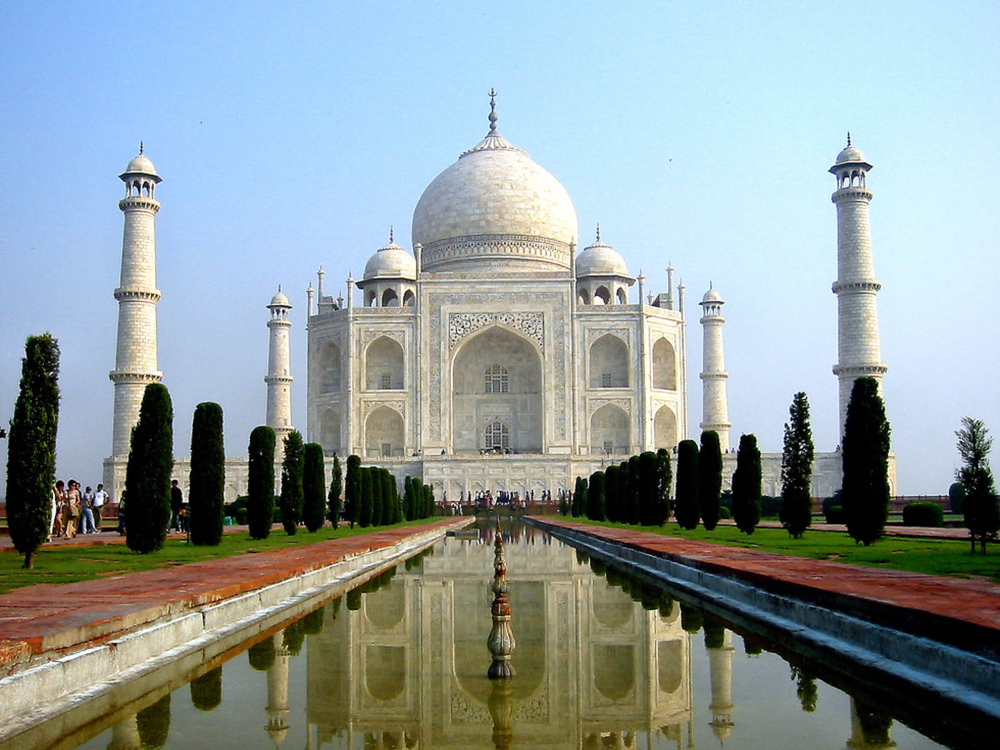 But I was encouraged to visit India and to see the Taj Mahal. Nothing confusing about the tourist spectacles of India.
04-01 Confusing
(blank) » John Bulloch » 11 Emerging Powers » 04 India »