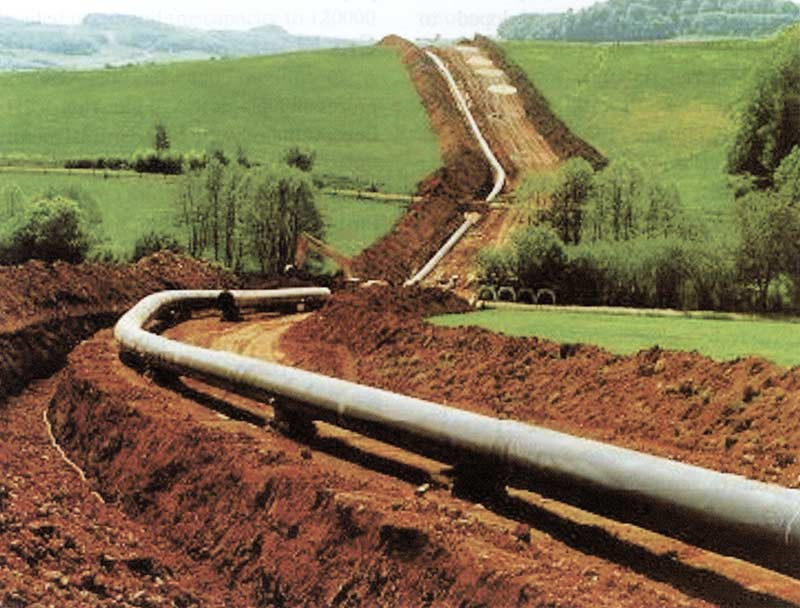
 It was a controversial decision when the government of Canada acquired the Trans Mountain pipeline from the US giant Kinder Morgan, a facility that takes crude from Alberta to the British Columbia coast. The plan is to double the capacity of this pipeline to meet China’s growing need for energy.
And the recent federal government decision to approve the construction of an LNG (liquified natural gas) terminal in Kitimat, BC, again it is all about selling energy to China.
China needs energy, and resources like potash and agricultural products. And of even more significant impact is the growing middle class in China with a desire to live better. And that means Canadian fish and Canadian pork.
The US insisted on a clause in the new USMCA trade agreement that replaced the NAFTA that requires Mexico and Canada to inform the US if they enter into a free trade agreement with China. I am sympathetic to the US demands because free trade agreements are more about investments than trade, and the US is concerned about Chinese state investments in North America that could pose a security threat.
No one really talks publicly about the different ways in which companies can be a security threat. But I remember being warned when I visited Moscow in 1987 that every room in my hotel was bugged by Russian security agencies. So let's assume Chinese state-owned companies located in North America could be used to steal Canadian and American technology.
I have evolved in my thinking about China over the years. Firstly, I see the future potential trade opportunities associated with China to be more substantial than the opportunities afforded by the new trade agreements with the EU or The Trans-Pacific Partnership with a group of Asian nations.
China is a growing economic monster. A monster not just in its manufacturing capacity but in its innovations.
I remember Guangzhou in 1985 and visiting a factory that took illegal ivory and carved all sorts of ivory jewellery. Today, Guangzhou is a leader in the development of blockchain technology.
Not a subject I really understand, but it is digital technology that records transactions of new cryptocurrencies. Each commercial transaction becomes a permanent digital record or block. It is the way we will handle commerce in the future. I remember visiting Hangzhou and the beautiful West Lake. Today it is a centre that manufactures electric automobiles. Not sure if the Chinese electric car in the photo is from Hangzhou. By the way, according to our tour guide, the name means the country of Hang. Thought you needed that bit of trivia.
 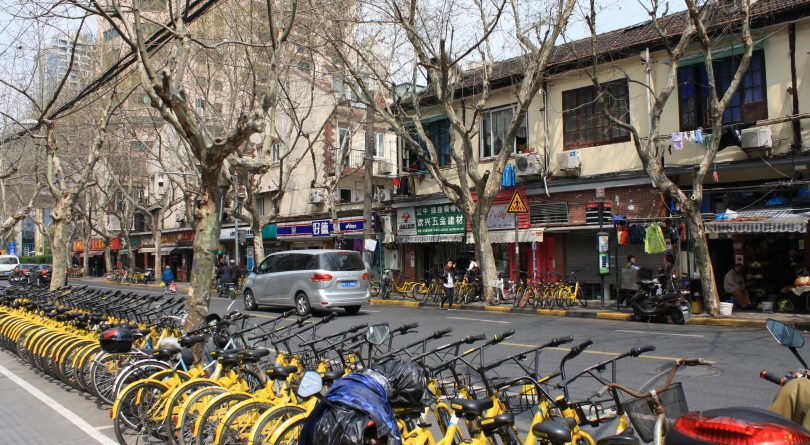 And how about Shanghai, and the factories that make those beautiful hand-woven Chinese rugs. We bought two of them. Now when you walk around the city, you see nothing but rows of yellow bikes that people rent for the ride only. They lock and unlock them with their Chinese I-phones. Some serious technology here.
This city has gone from being a centre of low-tech manufacturing to one dominated by high tech in just twenty-five years. And the city has its own Chinese dialect.
And anyone visiting the capital, Beijing, remembers the Great Wall of China, the Forbidden City and Tiananmen Square. But today Beijing is equally well known for its high-tech innovations and start-ups. Not unlike Silicon Valley in California.
It would be my hope that Canada will evolve a new trading relationship with China not just because we want to sell them resources and foodstuffs, but because we want new investment partners in the evolution of the technologies of the future. And we can do it without posing a threat to the United States.
02-02 Hopeful
(blank) » John Bulloch » 11 Emerging Powers » 02 China »