Those who have travelled to South East Asia know what it’s like to handle eleven time zones. So when we travelled to Australia for the 7th International Small Business Congress, the journey was made pleasurable by the first stop in Honolulu and the second in Fiji. 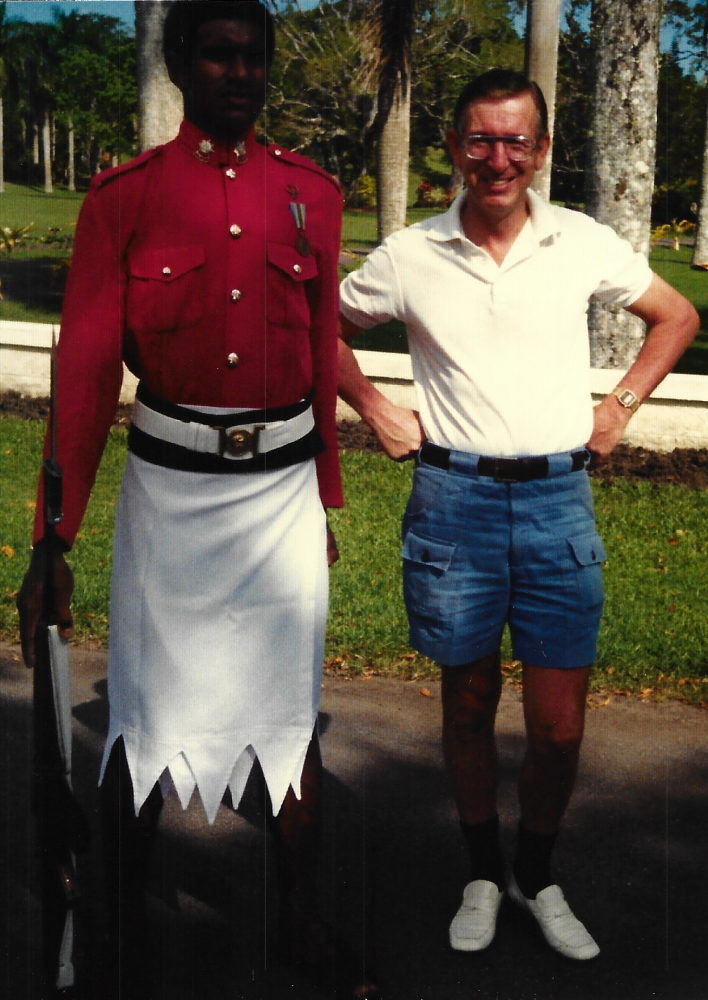 This was a time before Fiji became a popular tourist destination and we could enjoy the Fijian Islands without crowds. We travelled with CFIB Board member Bob Morrow, who had a former business partner living in the capital city called Suva. In the photo, you can see a typical Fijian who has Polynesian, Melanesian and East African roots.
 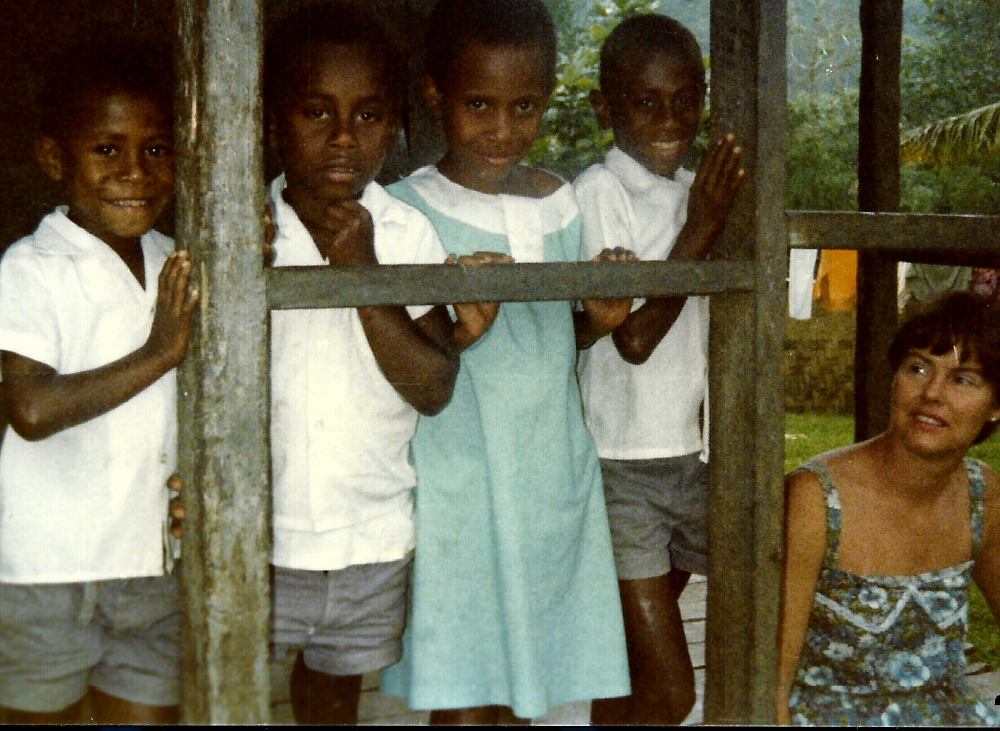 I love the photo of Mary at a local school not far from our hotel. These are the children of Fijian's public servants. But the real numbers of young people are the children of Indian couples brought over originally to harvest sugar cane. This is the history of so many of the South Pacific Islands.
Fijians controlled the army and the civil service, but Indians controlled most of the commerce. They talked about racial harmony when we were there, but with the large numbers of Indian children being educated, it was just a matter of time when Indians would be in the majority and try to control the government. And in later years, that is what happened. 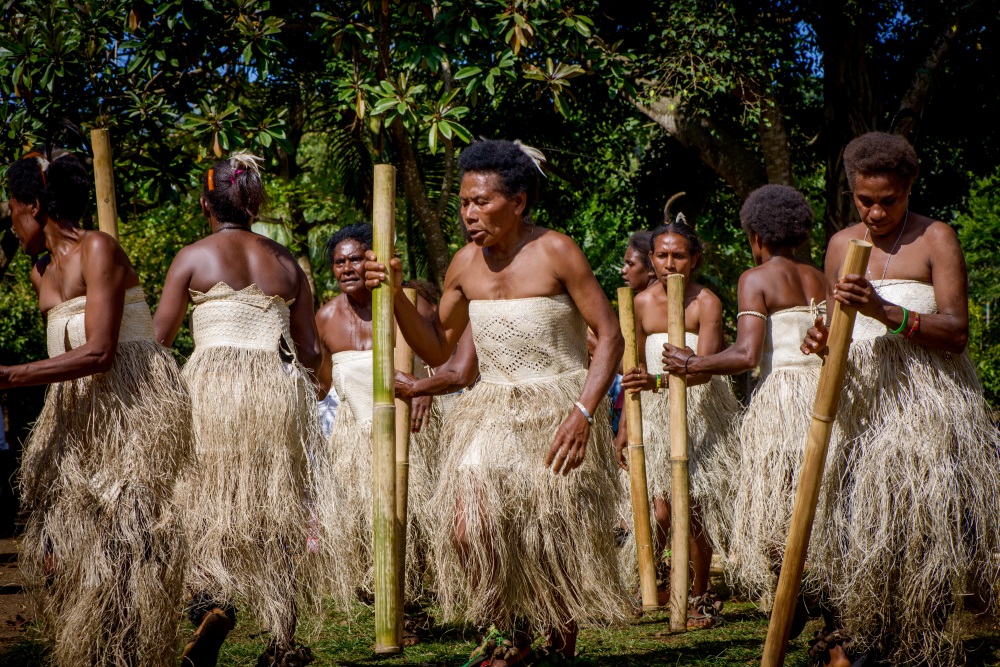 We enjoyed the tourist shows that promote their history. And we found it hilarious to see a plastic copy of a bone that was used to pick out the flesh from human skulls on sale everywhere. Apparently, the missionaries, when they became accepted in the mid-1800s, successfully killed cannibalism as a widespread practice. But we were also told that the missionaries were extra tasty.
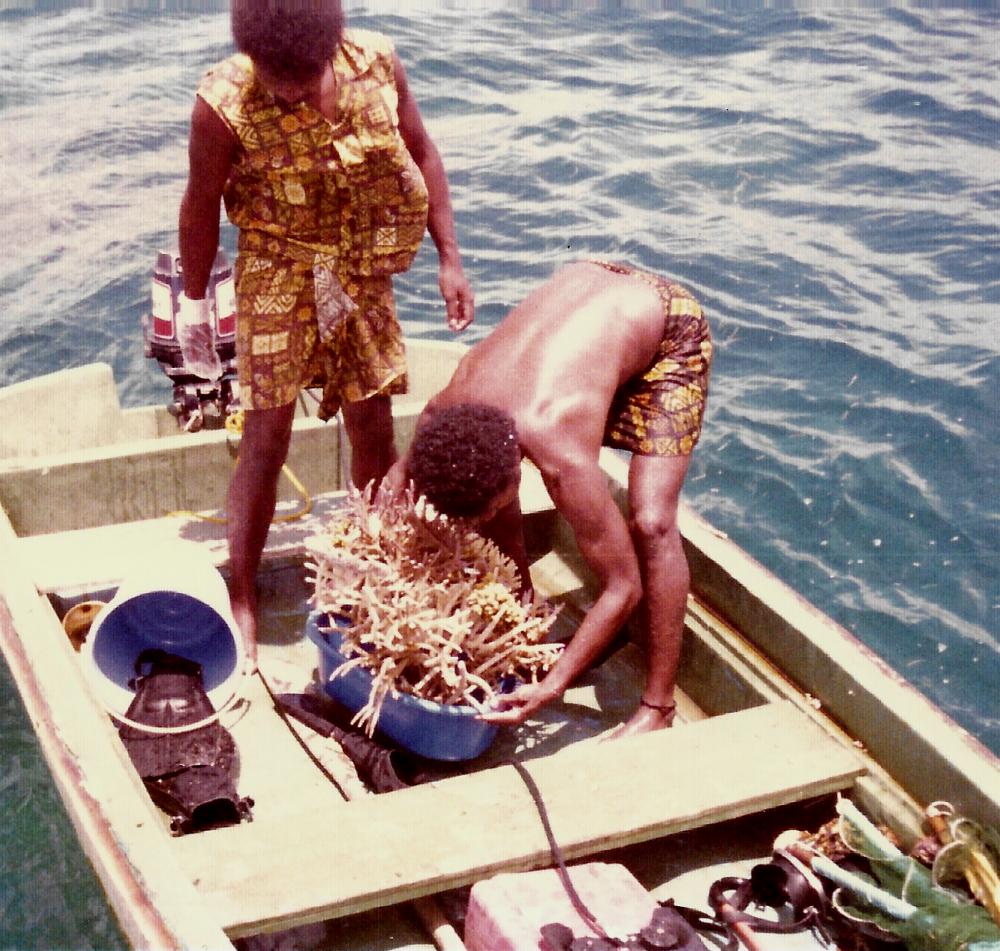 Fishing was a vibrant industry. In the photo, fishermen are seen with their catch of crabs. Moving across Fiji, we could see their famous mahogany forests, and a massive reforestation project stretching for at least twenty miles. One of the great secrets to rebuilding an economy is to plant trees.
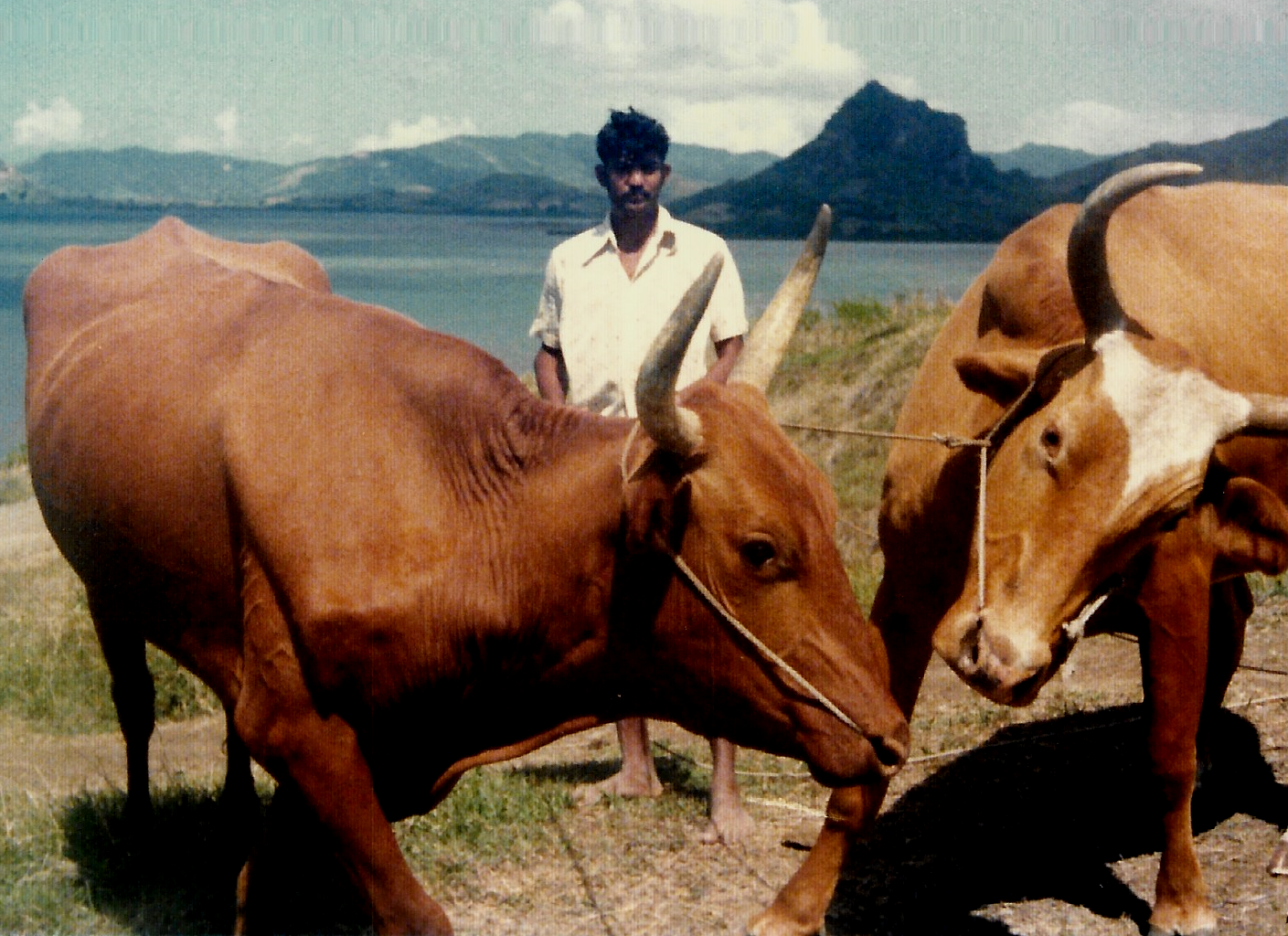 We stopped to talk to a farmer with two bulls that he rents out. He spoke both English and Hindi. He said he had five children and their favourite past time is going to the movies.
On Saturdays, Indian children were lined up to see their favourite Bollywood movie. I chatted with a group of them, and when we discovered a movie that we had all seen, they became enormously excited and animated.
09-06 Fiji 1980
(blank) » John Bulloch » 09 Around the World » 01 Seriously Younger »