It was 1909. My grandmother came home from work to collect her three year-old boy from a nursery, only to discover that he and five others had died of diphtheria and all had been buried in an unmarked grave. A story that haunted me all my life.
Years later my mother hired private detectives to find the grave of her half-brother, but to no avail.
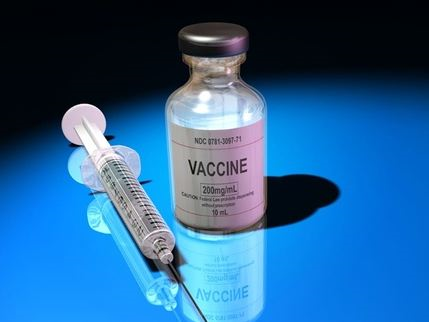
And how lucky for my mother that her kids were all vaccinated against this dreaded disease along with polio, tetanus and other “nasties”.
It seems today’s young people do not have either the experiences or memories of disease that our generation did, and are ready to jump on the anti-vaccine bandwagon as if it was a new religion.
My memories are all unpleasant. Like having measles, chicken pox, mumps and German measles all in one year. It was 1942. My brother and I seemed to live in our bunks. Measles was an especially miserable experience. That yukky, itchy rash that covered my body.
And during the measles epidemic that swept through Toronto, the public school I attended was shut down for two weeks. No measles vaccine then. Not like today, when children can be protected from a vast range of childhood diseases.
Everyone is familiar with flu or influenza being so much nastier than a cold, but influenza was a pandemic following WW1, and spread around the world killing something like 50 million people.
Almost everyone the age of my grandparents knew someone who died from what was called the Spanish Flu. In our family, it was the brother of my Irish grandfather who emigrated to California after the Great War, and died a year later.
Pandemics are scary forms of mass disease, caused by bacteria and viruses that are highly infectious. Today with the way the world is integrated by travel and trade, infectious diseases are a global threat.
I recently became aware of the dangers of vaccinations. They do not always work and there can be unexpected complications.
My wife and I, despite having our annual influenza vaccinations, were hit with the flu in California and were out of it for about a month. We both had nosebleeds which we never get. Nosebleeds, as a rule, should not have anything to do with the flu. Mary spent two days in a San Jose hospital and received a bill for $53,000 US.
Getting back to pandemics, if you like to read Ken Follett novels, one of my favourites is The World Without End. This one is about sword fighting, sex and the Bubonic Plague in the 14th century. The Plague was also called the Black Death and killed somewhere between 40 and 70 million, mostly in Europe.
The reason I consider vaccines a dangerous challenge is because vaccines will be required to deal with threats related to diseases, spread by immigrants and refugees, dislocated because of rising oceans and widespread drought. It is called climate change.
They will bring with them new diseases and old diseases. We must remember that diseases like HIV/Aids and malaria, which are global killers, do not have any vaccines at present.
We lost our boy to HIV/Aids at age 35. Finding vaccines to control and prevent the spread of disease is a dangerous challenge for the world. And to families like ours, it is personal.
08-10 Vaccines
(blank) » John Bulloch » 08 Dangerous Challenges »
By John Bulloch