The US needs a peace agreement with North Korea for many reasons. Of course, their nuclear capability is the big threat. But the US also needs to free up about 25,000 armed services personnel for action in areas where new threats are developing.
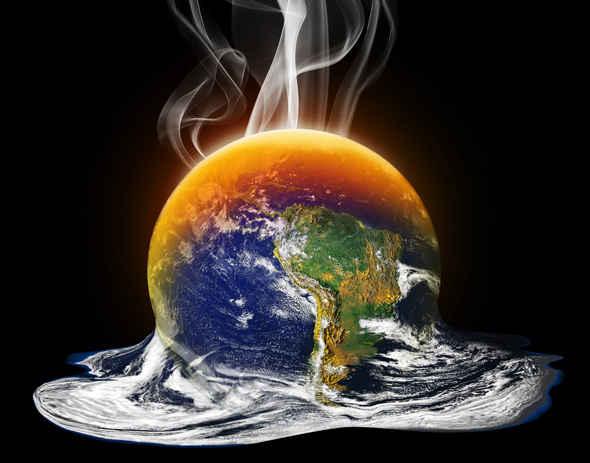
And the big threat is climate change because it’s making unstable parts of the world more unstable. It is not just my opinion. The US military considers climate change to be a national security threat.
We can call climate change a disrupter because it is changing development patterns around the world and development impacts politics. And politicians naturally are taking advantage of public skepticism. Everywhere, they are playing the climate change dynamic to support their own agendas.
At some point the public will no longer buy their partisan agendas. Something cataclysmic will happen that will pull people together. Like people padding canoes on the streets of Miami. That ‘coming together’ phenomenon is what you experience in wartime.
But climate change is, more importantly, a dangerous challenge because it will be a source of conflict. At least, an indirect source of conflict.
Here’s a story. Not too many of us are interested in the civil wars underway in the Darfur region of the Sudan. Hell, I had to check the map to be sure just where Sudan was situated. It is south of the Sahara Desert in central Africa.
But Darfur is being called the first climate change war. Here is what is happening. Starting with higher temperatures, low yield crops follow, then people take up arms fighting for something to eat. Simplistic? Yes, but it tells us about the future, and the need for Canada’s peacekeepers and the US military.
And it does not help if climate threats in undeveloped areas of the world are also places where populations are exploding, diseases are spreading, water sources are drying up and political leaders are on the take. It’s a conflict cocktail.
Not hard, as well, to see future conflicts when nations share a river and the river is in danger of shrinking. Like the Okavango River shared by Botswana and Namibia.
Much harder to see conflict at home over issues of climate. In Canada we have two provinces governed by social democratic governments, who philosophically want people to stop using fossil fuels. But Alberta is a tar sands giant and its government wants to sell its oil to the world. And that means going through a British Columbia port. Well, BC folks are not too keen on that plan.
For those that have followed the news, the threat from British Columbia holding up the pipeline because of court challenges has forced the Federal Government to nationalize the project. A $7 billion solution to a home-grown climate conflict.
And future conflicts are to be anticipated in the US where you have California and smaller states dependent on water from a Colorado River that is in danger. The economic threat comes from run off from mountain snow packs that are shrinking.
Will we have desalination plants costing billions producing water for states that do not have access to salt water? Looks like California will be required to “Make America Wet Again”.
It is interesting to discover that a movie called Blue Gold was produced in 2008 that predicted a generation of water wars. They put the blame on multi-national corporations. More left-wing politics than science.
My focus is on Asia where I have made wonderful friendships over the years in places like Thailand, Indonesia, Malaysia and India. Their climate fear is dealing with one rice crop per year rather than two. And our fear is boat loads of refugees trying to land on our shores.
Although I believe the major solutions to climate change will come from science, I am impressed that the Pope called all the heads of the major oil companies together to ask them to direct their energies to creating alternatives to fossil fuels. An interesting combination of religion and politics.
On balance, I believe that technology will be more effective than politics in dealing with climate threats. Like electric cars replacing combustion engines. And new desalination technologies converting deserts to orchards and vegetable gardens.
Climate threats are a dangerous challenge for the world. But I am hopeful.
08-08 Climate Threats
(blank) » John Bulloch » 08 Dangerous Challenges »
By John Bulloch