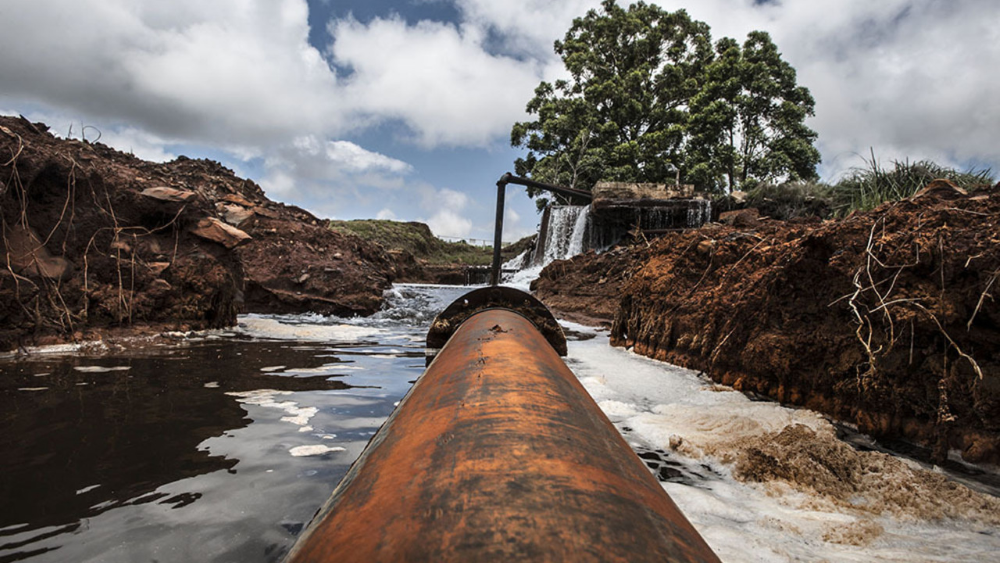
Choosing between economic development or the environment is one of those dangerous challenges. Challenges where you are dealing with winners and losers no matter what you decide to do.
I lived with a great “us vs them” story back in 1975 when I was attending the International Symposium on Small Business in Tokyo. It was just by accident that I developed a friendship with the Governor of the Island of Mindanao in the Philippines.
He was at the conference to meet with Kawasaki Steel who were building a Sintering Plant in Mindanao. It was a dirty process of pre-treating iron ore before it was sent to the blast furnaces in Japan. Lots of “ewey, gooey” spooing into the atmosphere.
I asked the Governor how he could approve such a dirty industrial process poisoning the clean air of his island. And he said quite soberly, “Poverty is worse than pollution.”
Another story everyone should understand is the pollution of the atmosphere with excess quantities of carbon dioxide which acts like a blanket to prevent heat from exiting the atmosphere. And the greatest source of this carbon dioxide is the burning of fossil fuels over time in developed nations like the US.
But who pays for the burning of fossil fuels. Well that is not so simple. If the ocean rises as higher temperatures melt the ice fields of Greenland, the Arctic and the Antarctic, low lying regions like Bangladesh will pay the price the biggest price.
So, we have people and economic development causing environmental damage, but the question of who pays the bills an issue that is not clear.
We spew CO2 into the atmosphere, deforest the countryside, pollute our lakes and rivers from mining operations, spew chemical effluents from industrial processes, construct tall buildings and sprawling cities, develop massive acreage for agriculture and on and on the story goes.
It is about environmental damage associated with population growth and all that is required to support that growth.
In the “sintering story” we have a prosperous nation protecting its environment by sending its dirty technology to an undeveloped nation.
In the CO2 story we have developed nations that have filled the atmosphere with a gas that is causing climate change. And some are paying a bigger price than others.
Within modern industrial nations it is even more complex an issue. If one government regulates and curbs industrial development to minimize environmental damage, the next government, with support from its worst polluters, cancels all those environmental regulations. It’s a dirty game with the public being the losers.
The net result of this kind of politics has been the development around the world of Green Parties. Political parties dedicated to protecting the environment.
And a Green Party is part of the coalition government of British Columbia in Canada that is holding up if not killing a pipeline designed to take heavy oil from Alberta to the coast.
And does everyone remember the massive BP oil spill in the Gulf, which President Obama called the worst environmental tragedy in US history?
The world population is over 7 billion and heading to 10 billion by 2050. And if your heart is ruling your mind you would hope that those 10 billion will all enjoy clean water, income to feed their children, sanitation, and a decent life.
But when your mind kicks into gear, you realize that the price of reducing global poverty will be environmental damage on a global scale.
So, we should not be surprised that the societies of the affluent nations will want to protect both their high standard of living and their environmental safeguards.
Screw the rest of the world. What Kawasaki steel was doing back in 1975 was quite logical. Export environmental damage, if you can.
Unfortunately, or fortunately we all can’t do that. The environment is everyone’s dangerous challenge.
08-05 Environmental Damage
(blank) » John Bulloch » 08 Dangerous Challenges »
By John Bulloch