It is difficult trying to explain what is legal and what is not legal when it comes to the issue of the “right to an education”.
We have treaties ratified by groups of nations that enshrine the right to an education. Then there are a whole range of UN resolutions associated with the right to an education with a special focus on women’s rights. And, of course, nations can pass laws that future governments can change. This is a mushy form of legal protection to the right to an education.
But having the right by law does not guarantee that children will receive a good education. There is the issue of money to fund schools, books and teacher training. Nothing is simple.
When I was a child of six I was enrolled at the Palmerston Public School in downtown Toronto. It was 1939 and large numbers of European Jews, frightened by the rise of Hitler in Germany in 1933, had emigrated to Canada.
Most spoke no English. I was in a classroom of children all learning English but speaking home languages like Polish and German.
My father moved to a northern area of Toronto after the end of my grade one schooling so I could make friends with children that spoke English and attend a school where everyone spoke English in the classroom.
In later years father said the poor teachers at Palmerston Public School, just did not have the training to work with children who did not speak English. They were given an impossible task.
In modern times the right to an education is for the most part a global initiative. Although we do have nations like Nigeria and Afghanistan were these rights are not guaranteed.
What is happening in North America in the period 2010 to 2020 is that the bulk of the immigration is coming from Latin America, and they are all educated people.
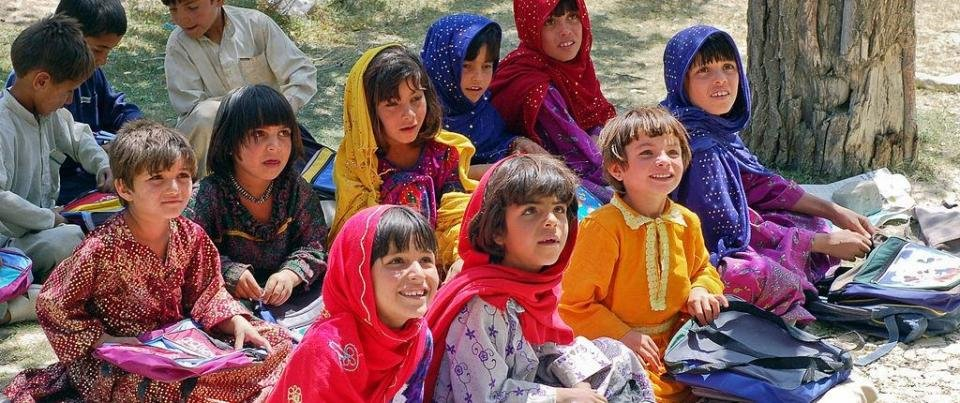
The photo shows a group of children receiving quality education in their home country. And with an education these kids are more likely to get a job when emigrating to the United States or Canada.
I saw this kind of phenomena after the fall of the Soviet Union when a collective effort was organized in Europe and North America to educate the former Soviet citizens in market economics, entrepreneurship, business and the English language.
But to the surprise of many, the big interest was in learning English so they could emigrate to nations like the UK, Canada or the US.
This issue was a subject of much debate in Canada, a debate that is still going on in the United States. The question was just how immigrants performed compared to the natural populations.
Well Canadian government officials told us that in every category, such as school grades, test scores, job performance, incomes generated and taxes paid, immigrants outperform those born in Canada. I am sure it is the same in the United States.
The reality for all developed nations is that affluence results in smaller families that do not provide enough younger workers to fund the welfare state. So, immigration and the “browning” of society, as a result of a new racial population mix, is in all our futures.
Thank goodness education is a right and not a privilege in most of the developing world.
Yes, I believe in “edumacation”.