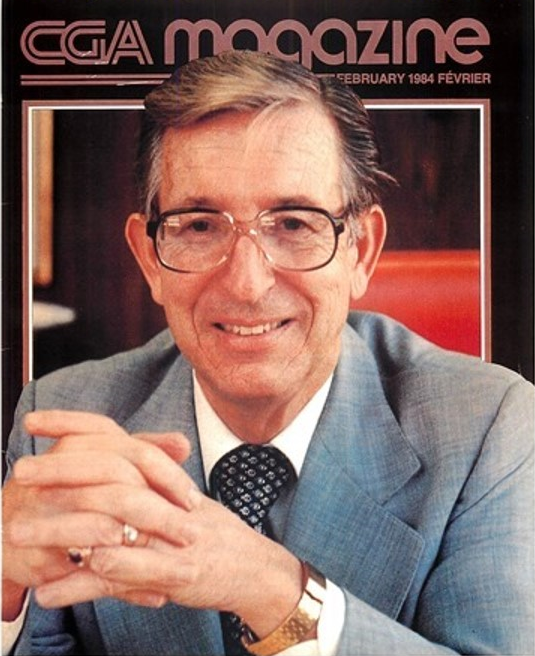
 Bob Morrow was a founding member of the Board of CFIB and a hands-on activist member of the Canadian Council for Fair Taxation. He died on January 20th, 2017. He played a strategic role in the history of CFIB. He was a friend.
I was on the Jack Webster show in January 1970, attacking the Benson White Paper on Tax Reform, and Bob Morrow was following my commentary at home. He said to his wife Stacie that this fellow John Bulloch just doesn’t have it quite right. His wife told him to call me at the TV station and that is what he did. We met and agreed to work together. It was the beginning of a relationship that lasted 25 years.
Suddenly I had a serious spokesman for the Council out in BC, and after the huge rally in Toronto, our next big rally was in Vancouver. Bob told his 800 small business clients to show up. About half of them did. His company called Morrow and Partners was a large successful CGA firm. Bob was a tax specialist and a developer. He became an FCGA or today an FCPA.
When we formed the Canadian Federation of Independent Business in 1971, Bob was a founding member of the Board and a member of the Executive Committee. We did not have provincial spokespersons in place until 1980, so all during the 70s, Bob served as our BC spokesperson.
The first thing we learned is that once you become a spokesperson, the media and government will contact you on a range of business issues, so we were continually faxing policy material to him that had nothing to do with taxation. It was in the 70s that it became obvious that developing future legislative staff who could serve as spokespersons would take about four years of training.
In order to strengthen his understanding of all the issues associated with small-scale development, Bob accompanied me to international small business conferences where we both made valuable contacts. We learned that no organization was ever able to develop voluntary membership without a personal call, so they all stopped growing when they could not hire sales personnel who could make a living. The key to growth, we agreed in the 1970s, was renewal rates.
In 1977 when I suggested to the Board that we build a head office in Toronto, Bob was made the Chairman of the Building Committee and stick handled the whole project. The building came in on time and on budget. And within six months after completion, the building was fully leased. He told the Board that the Building would give us a great return on our investment in terms of a floor of occupancy that would be effectively rent- free.
When the government introduced the National Energy Program in 1980, two directors suggested we sell the building and use the resources to destroy the Trudeau government. Bob showed strategic leadership. Firstly, he reinforced the fundamental premise at CFIB that our opposition or support on an issue would be proportional to the direction of the membership and that the vote against the National Energy Program was strong but not strong enough to declare all-out war.
But the second key point he made, which was very historic, was that at some point after John ‘s lifetime, a CFIB Board is going to be frustrated about its inability to grow and will do something stupid. And the only way they would be able to deal with the crisis they will create would be to draw on some serious financing using the building as collateral. “The building,” he said “was about the next 100 years.”
Two years later we started to formalize a succession planning process and a big part of that process was to ensure that we develop succession internally. In every case where there had been a crisis in a mature advocacy organization, Boards had hired their own CEO from outside.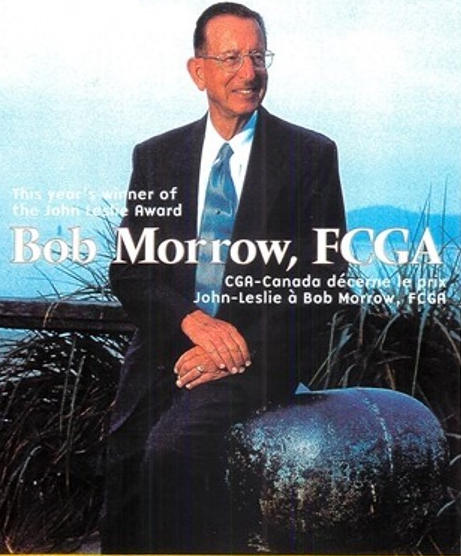 Bob received may honours from his profession. He was not just a strategic member of our Board serving for 25 years, but a great Canadian.
As a young sailor In WW2, he was thrown into the sea three times, twice because of German torpedoes and once because of a ramming by a British aircraft carrier. He could never understand why he had survived.
02-12 Tribute to Bob Morrow
(blank) » John Bulloch » 02 Understanding Advocacy »