Talk about high finance. Michael Wilson as the Minister of Finance was bold and competent, but controversial. The real excitement was with his budgets of 1985 and 1987.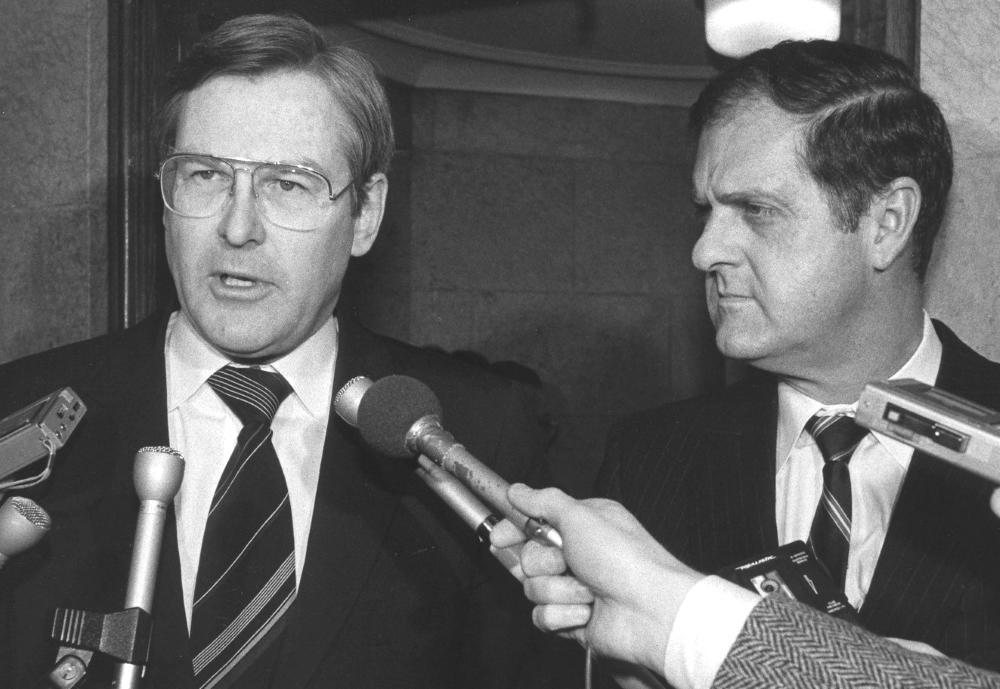 In our pre-budget submission of 1985, there was enormous media interest in the kinds of changes Wilson was supporting as well as our recommendations. We wanted a rollover of capital gains so that businesses could be passed tax-free from one generation to the next.
What we got was a $500,000-lifetime exemption from capital gains taxes designed to encourage massive public investment in businesses of all sizes. We knew this was a Wilson issue and not something from his officials because we knew the officials wanted to have 100% of capital gains included in income and not the 50% we had won back in 1971.
We spent much energy over the next few years protecting this benefit for investments in small business corporations, what they called CCPCs or Canadian Controlled Private Corporations.
In 1987, Michael Wilson went for broke with a White Paper on Tax Reform which essentially proposed fewer exemptions but lower tax rates. He proposed going from ten tax brackets to three, but wanted to have 2/3rds of capital gains included in income. If that wasn't controversial enough, he wanted to replace the manufacturer's sales tax with a new value-added tax like they had in Europe.
Where Wilson's approach was different from that of Benson with his attempt to make major changes in the tax system, Wilson was upfront about how he would use tax reform to raise taxes. He said he would raise $5 billion in corporate taxes and reduce personal taxes by $10 billion. The lower personal taxes on Canadians were designed to soften the blow of the new value-added tax which was called the GST or Goods and Services Tax.
The lower personal taxes on individuals were given out before the implementation of the GST so they were not a sufficient bribe. Moreover, introducing a federal sales tax on top of a provincial retail sales tax was a political disaster. There is just no way to soften the blow when governments want to do something that the public will oppose, no matter how just their cause might be.