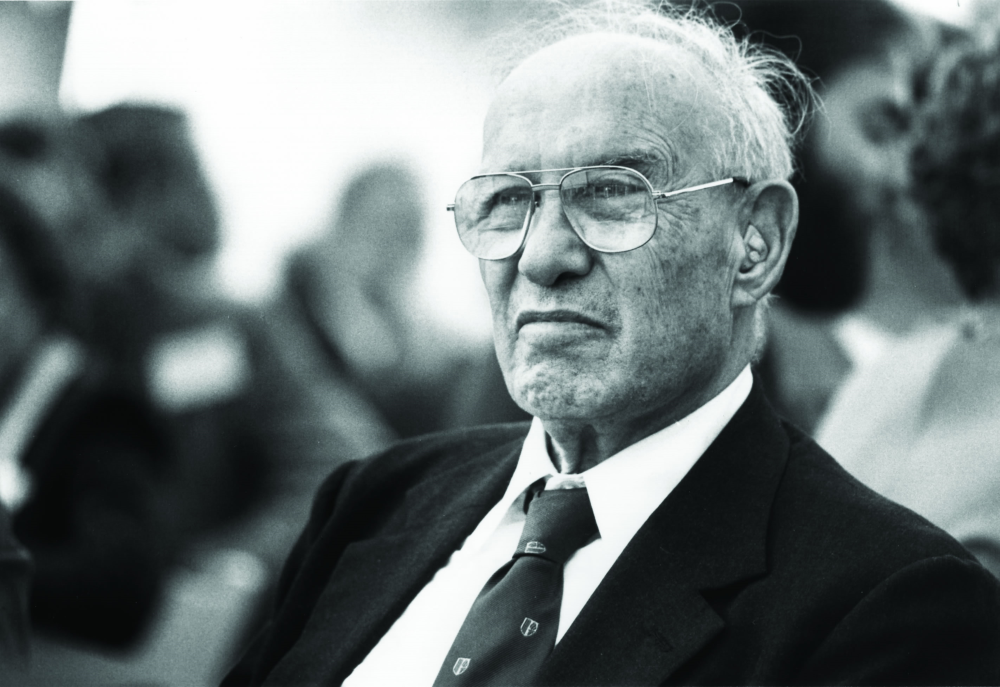
 Peter Drucker was the pioneer of today’s global economy. He was the leading management consultant of his day and an advisor to governments around the world.
We met in 1977 in Seoul, Korea where he was the keynote speaker at a world conference. He laughed when I told him that three of his books were compulsory reading when I was an MBA student.
His message was that corporations should not focus on selling finished products. Instead they should market and produce products via branch offices in places like the Philippines. There they could assemble knowledge-intensive parts from the US and the remaining components from developing nations.
“Asian needs to put its youth to work. And if American business fails to help, all of Asia will go communist.” It was a powerful message. 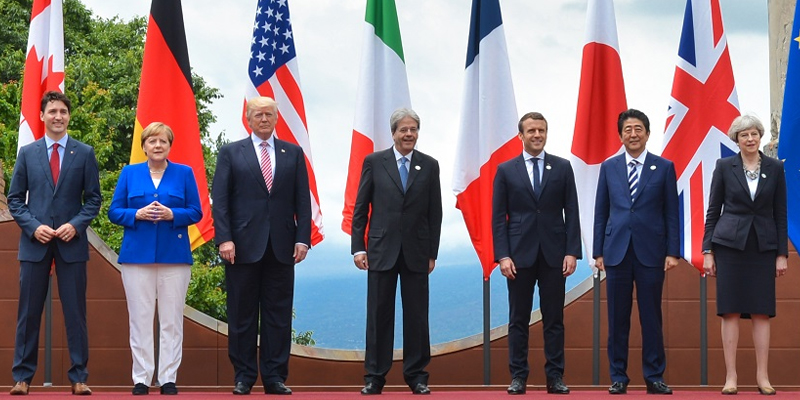 If he was alive today, Drucker would not be a consultant to the Trump administration, that is promoting a form of isolationism that is not only questionable economics, but alienating its traditional allies. And these traditional allies, that are part of the G-7, are the friends America needs to jointly develop and distribute new vaccines and medicines for the world. If there is one thing that is truly global, it’s a virus.
During the Coronavirus pandemic, we are seeing the ugly side of globalism with a large US company being told by the White House to divert its China production of masks to the US, and ignore its other clients. Stories of shipments on the way to Germany, France and Canada being diverted have hit every media outlet in the world. The US, as a leader in international relations, has taken a hit.
And to make things worse, America is outbidding other nations for scarce supplies, and developing nations are getting screwed.
But China is coming to the rescue with free global shipments. A society that clearly understands the politics of strategic generosity. They want people to forget that they lied about the virus and held back important information.
China’s behaviour is not a surprise to me. It was only a year ago that my doctor told me to stop using my Chinese Valsartan medication because it contained a cancer causing impurity. And that China had not provided accurate testing results on the drug.
My own view on the impact of the Coronavirus on international relations will be an attempt by developed nations to become more self-sufficient in the supply of medicines, ventilators and personal protective equipment.
Certainly key groups like the EU and North America can make it happen. The biggest problem is the control of key ingredients by China. It will be the beginning of a new age of trade barriers, so the West can build secure supplier networks.
Most policy wonks know China has designated about ten industries of the future that they want to control. And one is biopharmaceuticals. And doing this is an ugly nationalistic bit of business. It certainly is not about free markets.
But China is not the whole story. What about all those cheap generic drugs made in India? A nation with a leader that is a Hindu nationalist.
Nationalism can be scary. But protecting a nations’ supply of medicines and medical equipment is not scary.
02-04 International Relations
(blank) » John Bulloch » 21 Quirky Virus » 02 COVID-19 Global »
China lied about the virus and fudged the numbers. But it will win the propaganda war by giving free supplies to 80 undeveloped nations.