It is June 2011, and the celebration of our 40th Anniversary has been recognized by the Government of Canada by Designating 2011 as “The Year of the Entrepreneur”.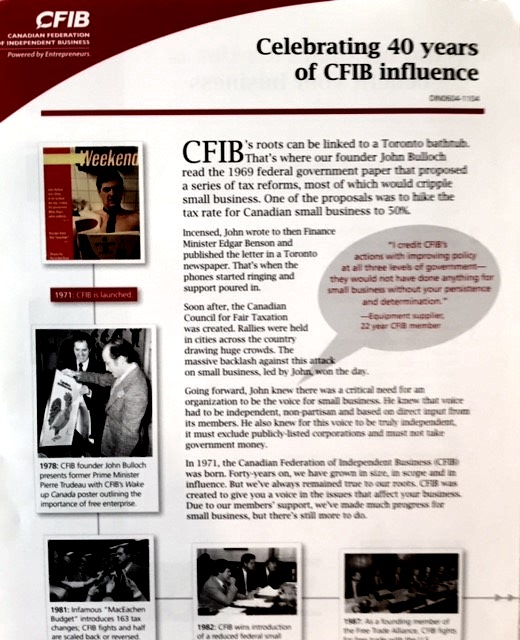 Once again, Catherine Swift as President and CEO supervised some great celebrations. There was a range of special membership hand-outs printed. One is attached. Lots of special media attention, of course, and the field meetings across Canada all had a special flavour.
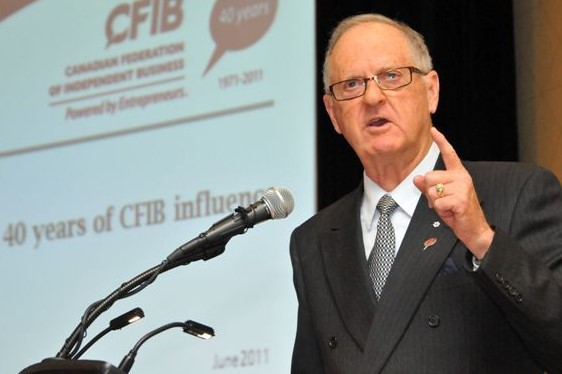 I was the featured speaker at the Annual General Meeting, and in my address, I used family members who had created companies as ways to demonstrate everything we know about entrepreneurship.
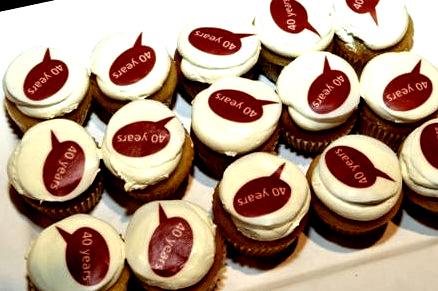 Before we get too serious, the photo of the small cakes promoting our 40th that were part of the anniversary dinner, is a great memory. So many of our suppliers got into the spirit of the celebrations.
 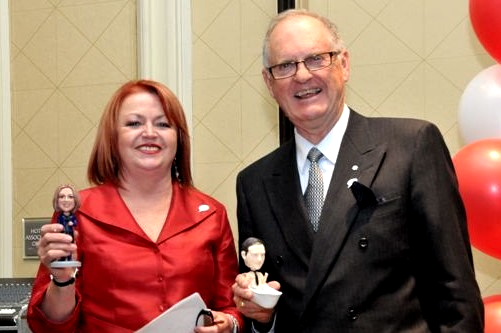 After the dinner, Catherine and I were presented with special "bobble-heads", and mine had me sitting in the bathtub reading the original White Paper on Tax Reform.
In my remarks, I confirmed the critical point I had been making over a period of 40 years; that it is, through entrepreneurs and entrepreneurship, societies accommodate the future.
Members loved the story of my father's great-grandfather who was born Alex McGregor Devine, who wanted to sell his invention to soften calcium deposits in steam engines to the British. But because his mother was the grand-daughter of the Scottish nationalist, Rob Roy McGregor (see the movie), and because the Brits hated Rob Roy, he changed his name from Devine to Devon. He had over a thousand employees working for him in England and Ireland when he died in the early 1900s. But he was technological, international and entrepreneurial in everything he did. And nothing has really changed over the years for successful companies.
Then there is the story of another great-grandfather, John Bulloch, who had two brothers in the linen manufacturing business in Belfast. They could not keep up with the demand in the UK because the supply of cotton had been cut off since the end of the American Civil War. They formed a partnership called Bulloch Brothers that is written up in the Linen Institute in Belfast. With the use of a large warehouse (which they built), Bulloch Brothers sold and marketed all the linen products produced by small Northern Irish manufacturers to the hotel and hospital markets in the UK. They did not employ any of their children, and none of them (and there were over 20) started their own companies.
The third story of entrepreneurship was about another great- grand-father Frederick Littman, on the Jewish side of the family, who had an upholstering business in Romania. It employed all of his eight children. They immigrated to the UK, and five of the eight went on to the US. The eight children had thirty children of their own, and twenty-three started their own businesses.
So many lessons:
Entrepreneurs are made and not born. Small firms incubate small firms. Public policy can impact entrepreneurship. But most importantly, what people think is genetics is really parents and grandparents making the process of starting a business psychologically credible.
09-02 40th Annual General Meeting
(blank) » John Bulloch » 01 My Small Business Odyssey » 09 Special Addresses »