I remember with humor discussing government forecasting with former Finance Minister and Prime Minister of Canada, Paul Martin.
He had a department of economists using the latest computer models of the economy to do economic projections. If the economy was going to shrink, he needed to know well ahead. And yet each year the economic projections of the members of the Canadian Federation of Independent Business were always more accurate and reliable than the work of the experts.
The lesson is not to fear new technologies. Sometimes they perform miracles, sometimes they help and sometimes they are useless. And they always are in a state of flux. Their applications will continue to grow and continue to disappoint.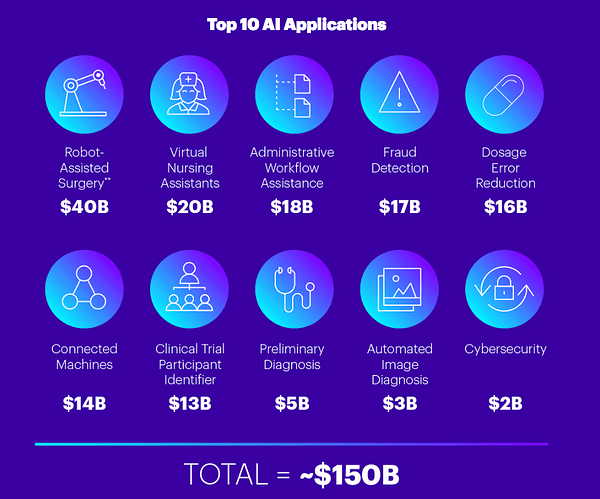 Artificial Intelligence is a growing field of technology that will hopefully make all economies more productive. Their applications are in every sector.
I do not believe the projections by the alarmists that it will be the end of job growth, and require societies to implement some form of guaranteed annual income. We just do not know that much about it, despite all the studies and projections.
It is supposed to be hot in medical applications like diagnosing diseases. Well, I am sure a machine could diagnose my diabetes and prescribe appropriate medications. But, I still like to shake the hand of my doctor, someone who is continually reading those medical journals.
Strictly speaking, AI is a branch of computer science that attempts to simulate human intelligence. And when it is implemented in a machine like a driverless car, it performs tasks that require human intelligence.
Where it differs from traditional concepts of globalism is that it can replace jobs of more educated people like medical and engineering technologists.
So much about traditional changes in manufacturing has been about cheaper labor. Like being able to make a remote control device for $10 in China instead of $60 in the USA.
Or about developing robots because of a shrinking population and shortages of workers.
Now those robots will do more than replace welders on the assembly line, they will be used, with the help of AI. to replace the cook in the company cafeteria.
Oops. This system just corrected a spelling mistake. And without my permission. Bloody AI.
03-04 Artificial Intelligence (AI)
(blank) » John Bulloch » 20 Quirky Climate » 03 Technology »
Globalism is changing and it is more than robots replacing humans or finding cheaper sources of labor. International activity of every kind is also changing because machines are being developed than can perform tasks that require human intelligence.