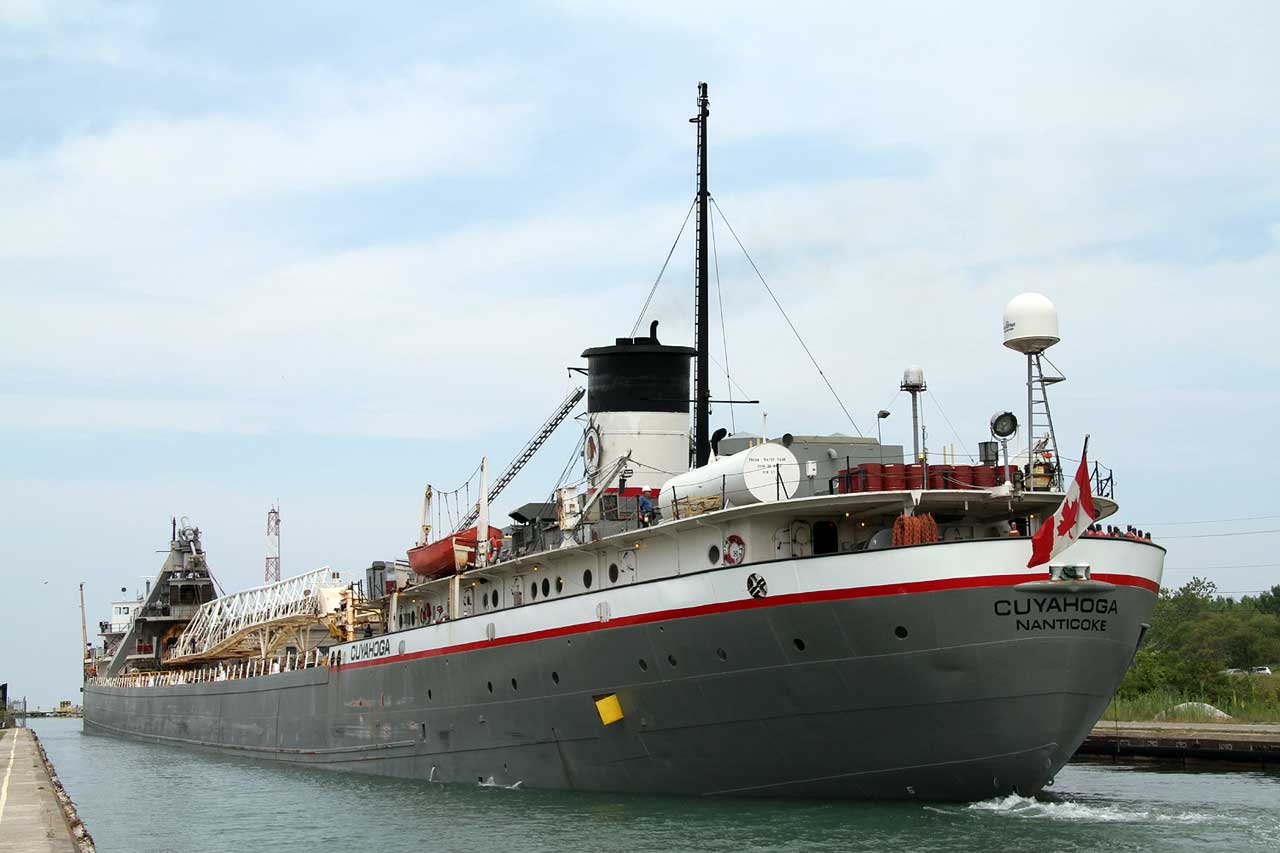
 It was 1958 and the beginning of my first job as a lubrication engineer, working from Imperial Oil’s Hamilton office. My initial instructions were to call once a week on the “ship’s chandler” in Port Colborne, next to the Welland Canal.
This is where ships could pick up a wide range of stores, including lubricating oils and greases. But more importantly, I was able to learn something about the shipping business.
Like ships coming in from the St. Lawrence Seaway with iron ore and leaving with grains. Like small ships powered by diesel and large ships powered by bunker fuel. That dark, hot, gooey stuff.
Shipping is a quirky business, and the shipping companies do not like delays going through the canals because it means speeding up later. And speed means burning more fuel and sending more “poo up the flue”.
New global shipping rules in effect in 2020, require that ships everywhere use bunker fuel which have low levels of sulphur. Not good news for Canada and the tar sands. Refineries using their crude will have to remove most of the sulphur before they can sell the bunker to the shipping companies and cruise lines.
Getting back to 1958, the only good stuff that came out of the chimneys of those ships was carbon dioxide. The smell of the other stuff is hard to explain, unless you are old enough to remember what it was like to use a quirky outhouse instead of an inside toilet.
Also, in 1958 lake levels were low which meant that ships had to reduce their loads to get though the shallow parts of their shipping lanes. Predicting water levels is a quirky business.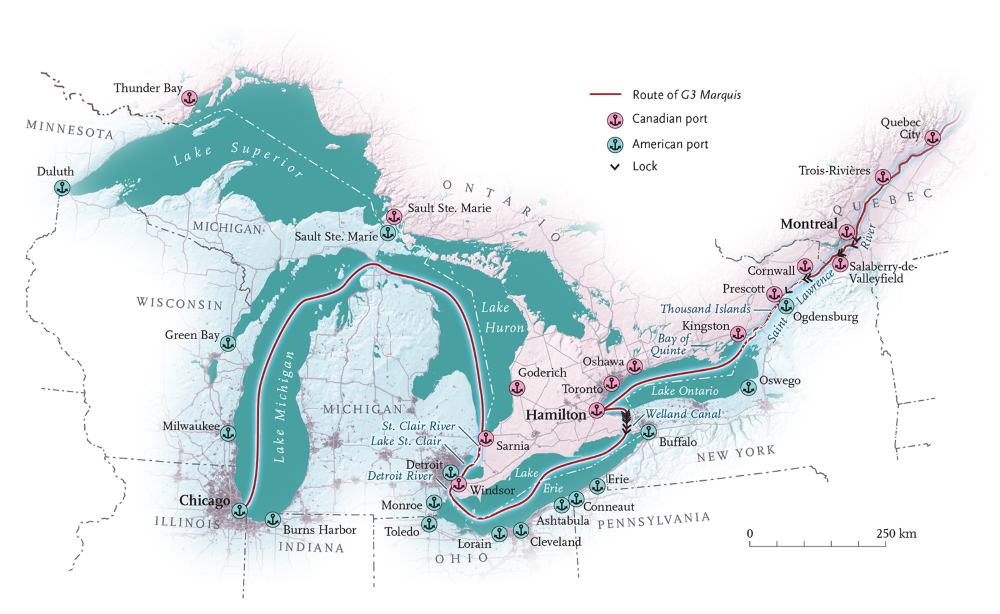 These issues are important because the most recent projections based on scientists figuring out climate change are for higher levels of water on the Great Lakes. The map of the great lakes system shows the cities and population at stake. It also shows the shipping lanes with some carriers that operate solely within the Great Lakes, and others that function internationally.
With water shortages in hot areas of North America, we can envisage a population surge around the lakes because they hold 20 percent of the world’s fresh water.
But the story is more than shipping and population growth. How about sport fishing and tourism? Too bad we can’t eat those fish, which were contaminated before climate change.
What is dangerous about higher lake water levels is extreme weather. I had a summer home on a massive body of water for 40 years, and if you did not have a wall at the shore line, a storm in the spring, when water levels are high, could result in the front of your cottage disappearing.
So, living in the Great Lakes area should make you a climate winner, but living right on the water will be a little quirky.
01-02 The Great Lakes
(blank) » John Bulloch » 20 Quirky Climate » 01 Real Quirky »
Higher water levels will drive trade and tourism. But weather projections are quirky.