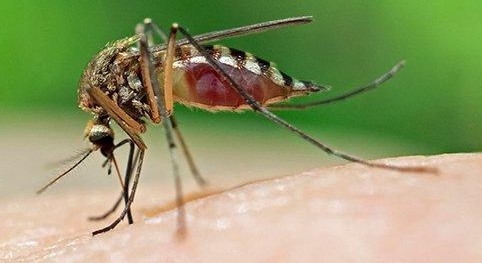
 If you have lived in cottage country as a child, you know a lot about mosquitoes. Every time it rained and little puddles were created in the forest you knew the mosquitoes had a new place to breed.
We had a kindly neighbour who had a machine that sprayed DDT and every month the spray created a cloud that did a number on the mosquito population.
DDT has been replaced by new forms of insecticides that are not as effective but still do a job. Not a surprise holidaying in Florida to discover the whole areas was sprayed during the night.
This was all before we knew anything about climate change and vectors like mosquitoes that carry deadly diseases. The climate change story is all about things moving north. Not just beetles and mosquitoes, but reptiles, amphibians, grasses, shrubs and trees.
This means places like Miami, are not just threatened by rising oceans but by diseases carried by mosquitoes, normally found only in the tropics.
Vectors include more than mosquitoes. There are ticks and sandflies that also carry diseases. One bite is all it takes. Some new infectious diseases are already showing in Florida that in the past were common only in places like Guatemala. 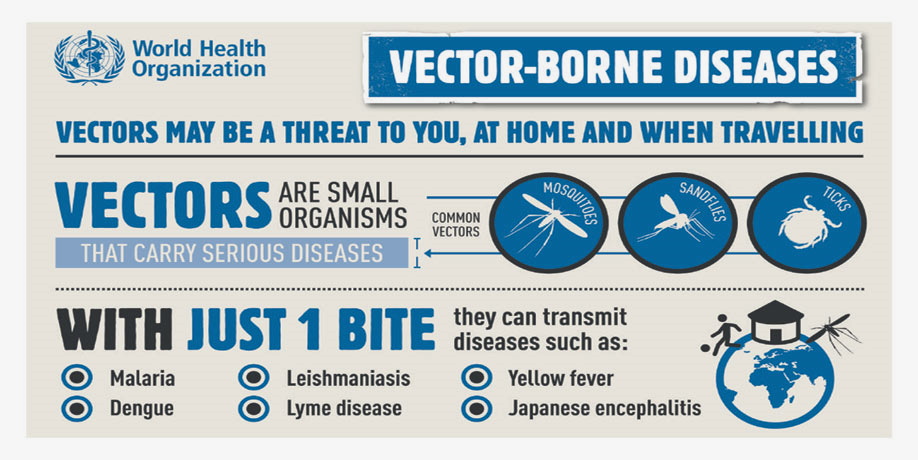 The chart shows clearly the vectors that commonly carry infectious diseases.
We have to take this threat seriously. In terms of climate change and infectious diseases, vector borne diseases are the greatest threat. Something like a billion people are hammered each year and one million die.
Again, the issue is complexity. We may have something like 18 species of mosquitoes that can carry infectious diseases, but what we do not know is how mosquitoes can mutate. They are a very adaptable insect.
01-03 Vector
(blank) » John Bulloch » 12 Israel » 01 Understanding »
There are mosquitoes, ticks and sandflies that can carry infectious diseases. And they are all moving north as our climate warms. This means places like Miami are not just threatened by rising oceans but by diseases normally found only in the tropics.