The scientists at the Ministries of Agriculture around the world must be busy. They are dealing with arid areas becoming more arid. Growing seasons that are up to three weeks longer. And both less precipitation and more precipitation. Climate change has complex implications.
For about 40 years I have enjoyed cottage life on Lake Simcoe in Ontario, and bought vegetables at what is called Holland Marsh, one of the most fertile vegetable growing areas in the world. Of course, Holland Marsh pulls its massive needs for water from the Lake.
No surprise that about 2/3rds of the water we draw from lakes, streams and aquifers is used to irrigate fruits and vegetables.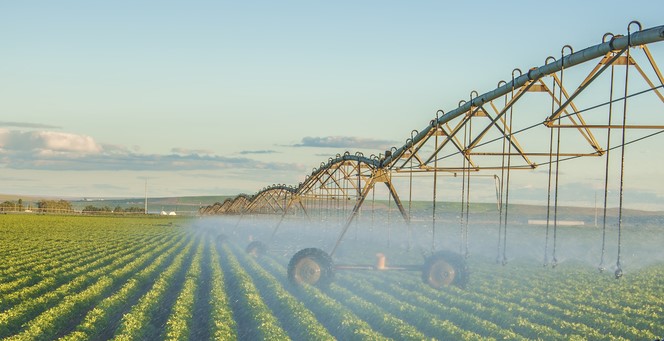 We could see sprinkler irrigation systems like the photo, and of course the amount of water used and when depends on the crops and the soil. Techy stuff. Different vegetables grow at different depths and therefore have different water needs.
Lots of potatoes grown in this area and all are watered using sprinkler systems. It seems that those vegetables with shallow root systems need regular water sprinkling.
Vegetables with deep root systems like corn do not need regular watering. That is why corn is so easy to grow in your own vegetable garden.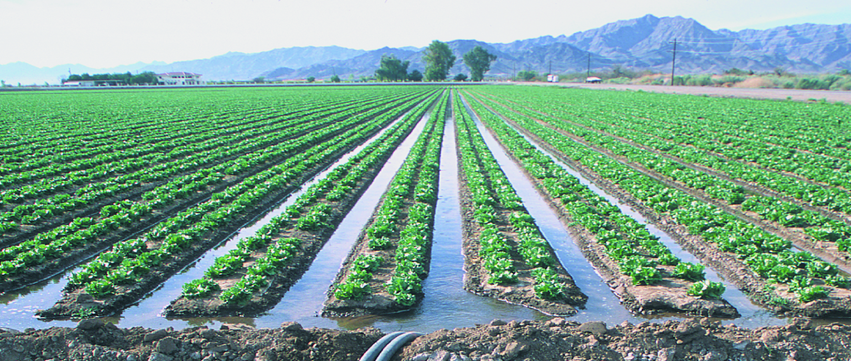 It is also common in visiting farms that specialize in strawberries to see a form of surface irrigation with water poured down trenches like the photo.
The more exciting new technology developed by Israel is called drip irrigation, which feeds water by hoses or pipes on the surface or below the surface in controlled drips. A critical technology for areas of the world that are water-stressed.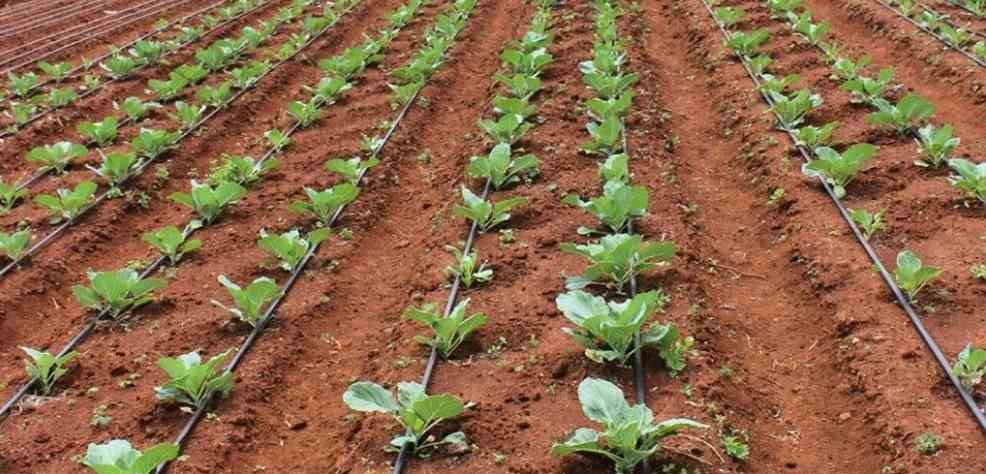 The photo shows drip irrigation on the surface. This technology can also feed liquid nutrients. And in arid and semi-arid parts of the world like the Mediterranean, we are combing special crops with special soil and now drip irrigation to cope with decreasing supplies of water.
Another technology that is exploding in its application is desalination. It looks like desalinated water combined with drip irrigation is the future for a world dealing with climate change, agriculture and water scarcity.
03-02 Irrigation
(blank) » John Bulloch » 20 Quirky Climate » 03 Technology »
It should be no surprise that about 2/3rd of the water we draw from lakes, streams and aquifers is for the irrigation of crops. And that as the planet warms, the demands for irrigation will increase. Surface irrigation, sprinkler irrigation and drip irrigation.