In the world of climate change, there is a public focus on replacing the internal combustion engine with battery power. And another focus on replacing gas and coal fired power generation with renewables.
What the media stories don’t cover is called “carbon capture” because it is all so techy. Some industrial processes like cement and steel send massive amounts of CO2 into the atmosphere but alternatives to fossil fuels are almost impossible to conceive. The answer is to find a process to remove the CO2 content from the gases that go up the flue.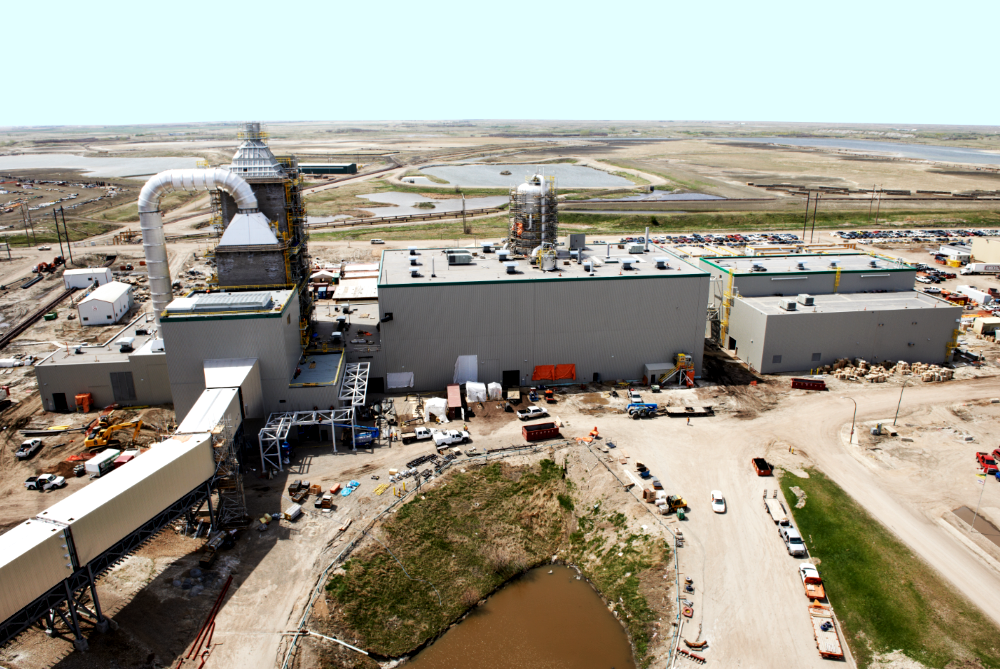 This process can also be used at power plants using coal or natural gas. The photo is from Estevan, Saskatchewan, Canada. It is a coal power plant with carbon capture. The CO2 that is removed is stored deep in the ground.
What is so interesting is that carbon capture technologies are being heavily funded by major oil companies who want to protect their markets. Whether you are passing gases with CO2 through fluids, sponges, membranes or crystals, the issue is finding a process that is economically feasible.  What will make carbon capture more economical is finding uses for the CO2 instead of storing it underground. How about combining CO2 with waste products to make fertilizer pellets. Or sending the CO2 into a giant greenhouse.
The big worry of the fossil fuel industry is that at some point all the financial institutions that provide their capital needs will pull out their investments. Their campaign to save the future of fossil fuels is “Don’t divest, decarbonize.”. 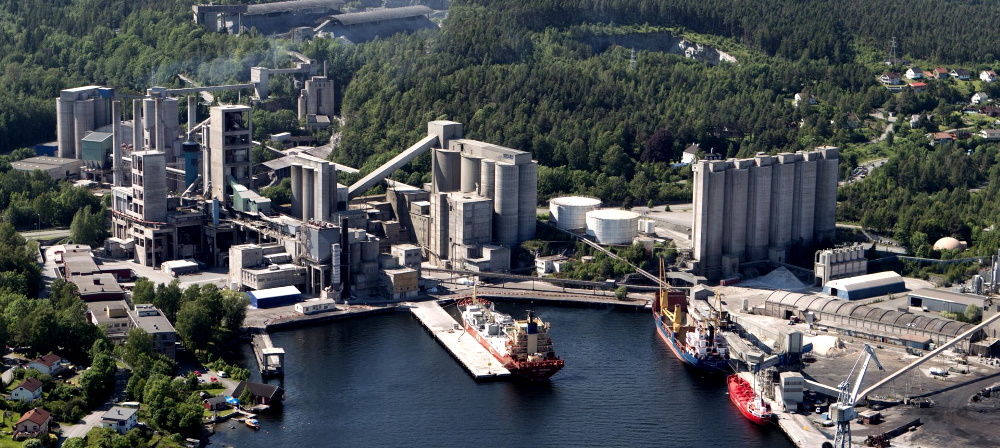 The major operation in this photo is a cement plant in Brevik, Norway with a carbon capture and storage facility.
Norway, like Canada, the US and China are heavily into carbon capture technologies. The world is watching, and something like 20 major projects are under development around the world.
What most people do not realize is the enormity of the challenge replacing fossil fuels, on the one hand, and the danger if we don’t.
Nothing is more important than changing what we drive, how we heat our homes and how we power our appliances.
But it is not impossible to assume that up to 15% of the successful removal of CO2 from the atmosphere will come from carbon capture developed and funded by the oil industry.
03-14 Carbon Capture
(blank) » John Bulloch » 20 Quirky Climate » 03 Technology »
There are energy-intensive industries like cement and steel that put large amounts of CO2 into the air that cannot use an alternative to fossil fuels. The answer is to filter out the CO2 from the smokestacks. It is called carbon capture.