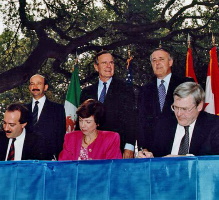
 The 1992 signing of the draft of the new North American Free Trade Agreement was a moment in history. The key players in the photo are President Carlos Salinas de Gortari of Mexico, President George H W Bush of the US and Prime Minister Brian Mulroney of Canada.
I was a member of the Prime Minister’s Task Force on Trade at the time, and found it enormously educational. The whole project was created by President Bush, who was trying to find a long-term solution to the illegal entry of Mexicans into the US. Neither Canada or Mexico were pushing for a trade deal.
This agreement was upgraded under President Trump’s watch in 2020 with much fan fare, and is now called the USMCA agreement.
What makes this agreement important is that it will grow significantly because of the trade war between China and the US. So many European, Japanese, South Korean and American companies supplying the American market from China will have to relocate to avoid US tariffs. Mexico will be a winner.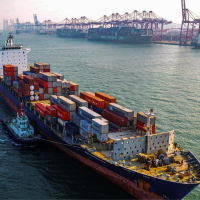 So much of world of trade is about distributing low-cost manufactured goods via monster retailers like Wal-Mart. We should anticipate this form of global trade to decline.
Trade is being impacted by the trade war, but by lots other events. The general decline in trade has more to do with the global decline in domestic demand. 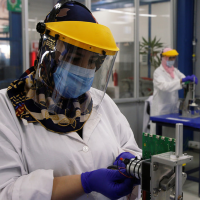 Governments are not sitting idle, but are creating new demand by becoming self-sufficient in the production of equipment and medicines to support public health. The photo shows a new company producing medical equipment.
This will result in more domestic production of other manufactured goods. We should remember that the same companies making medical equipment are also making things like car parts.
But the bigger worry is that the virus will come back in a mutated form, which will mean weak domestic demand and trade will be a mid-term and not a short-term worry. The key is the timeline on the production and distribution of a vaccine.
The Spanish Flu, we should remember, came back in two mutated forms. When it hit my mother as a child in 1919, they did not even know it was Spanish Flu. The Spanish Flu was something the soldiers brought home in 1918.
The intelligent public debate is how nations will replace reduced levels of consumer spending and trade over the next two or three years. Infrastructure on roads and bridges? A basic universal income? Or how about investment spending on renewables.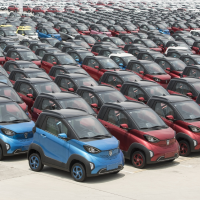 China is not sleeping during this time of transition. They know their exports are going to go in decline. So they are planning to further support its growing electric vehicle industry. They are also investing heavily in wind and solar.
The reality is that both the pandemic and climate change are transformational in that they will change patterns of spending and production. And they can be self-supporting. Both will encourage domestic demand. Both will encourage investment spending.
And one of the things you learn about investment spending studying economics is that you get more income and job creation from corporate investment spending that spending by governments and consumers.
A slow down in global trade is not a tragedy.
01-04 Trade
(blank) » John Bulloch » 24 Quirky Economics » 01 Unknowable Times »
The pandemic is slowing domestic demand and trade. Smart governments will encourage investments in renewable energy.