 It was 1949 and I am 16 years of age. And I’m not supposed to go to the movies or listen to the radio. Plymouth Brethren religious stuff. But I sneaked down to the old Imperial Theatre in Toronto to see Gregory Peck in Twelve O’clock High.
This was the beginning of my romance with what could be called “war movies” or “combat movies”. And over time, I certainly recognized their propaganda value in selling a nation’s agenda. But how educational.
I must have a collection of at least twenty great war movies, and they all serve to make me sensitive to the issues associated with war and peace.
With a grandfather that served in WW1, I love my copy of the “Paths of Glory” with Kirk Douglas. It was the first time, I learned to doubt the potential capability of military commanders. And I saw what trench warfare was about. And how about “Lawrence of Arabia” to help us understand the role of Turkey in WW1.
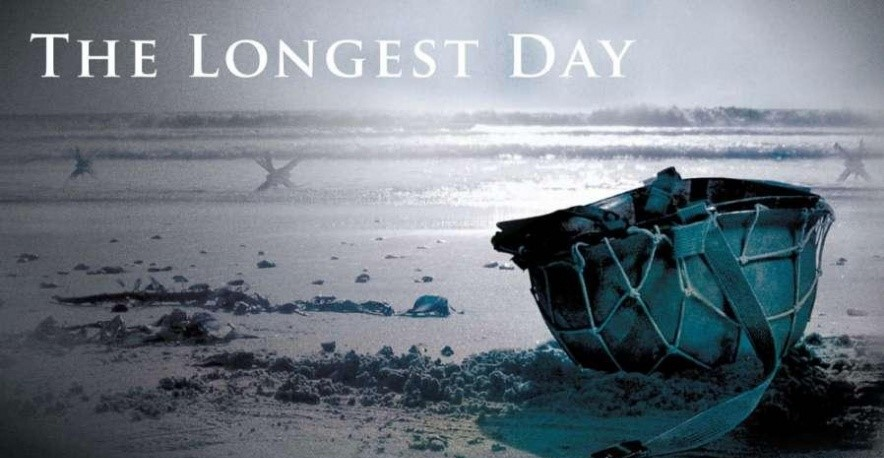
My favourite drama from WW2 is “The Longest Day” with a host of stars. It helped me understand the enormity of the invasion of France by the Allies. The photo is the one used to promote the film.
Other WW2 favourites, are “The Battle of the Bulge” with Henry Fonda and Robert Ryan; and “Patton” with George C Scott. And, then in the Pacific the movie “Midway” with Henry Fonda and Charlton Heston. They don’t get any better than these three, unless it is the “Guns of Navarone” with Gregory Peck.
The Vietnam War of the 1950’s and 60’s gave us a couple of ugly films that clearly showed the US as the defeated party, whether that was the intention or not. I will never forget taking my father and mother-in-law to see the Deer Hunter in 1978 and going to see Apocalypse Now in 1979. These two are not in my collection.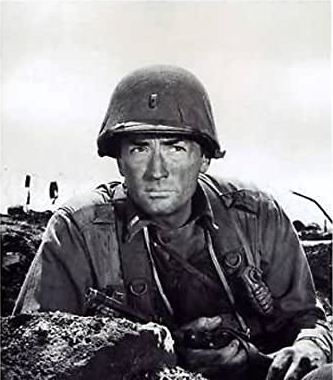 And then it’s the 1950’ and the futility of war is again shown clearly in the Korean war flick called “Pork Chop Hill” with Gregory Peck.
A lesson today is that only politics and diplomacy can replace war when it comes to the never-ending Korean conflict.
What I have found interesting in my movie collection is that there is very little effort to show religion as the basic cause of conflict, even though it is used as a tool to promote or oppose conflict.
This is important because conflict today in the middle east can quickly be shown as a battle between the two branches of the Muslim faith: Sunni Islam vs. Shia Islam. I won’t even try to explain these two branches of a world faith anymore than I will try to explain the tensions between Protestants and Catholics in history.
What hope does a non-historian have in understanding the never-ending sources of conflict in the world. So often, the basis for conflict and the economic winners and losers are not obvious. Conflict is complex.
But hats off to the US film industry as a power for educating the masses, reminding us of our past and hopefully preventing war in the future.
That’s the way I see it anyways.
09-03 The Movies
(blank) » John Bulloch » 25 Quirky Opinions » 09 War and Peace »
The movie, The Longest Day, tells the story of the invasion of France. Love WW2 movies. You always know the good guys from the bad guys.