 It was 1956, and I am a newly graduated engineer under training as a lubrication engineer with Imperial Oil, but emotionally dragged into the drama referred to as the Suez Crisis. It was an early exposure to the broad societal issue of War and Peace.
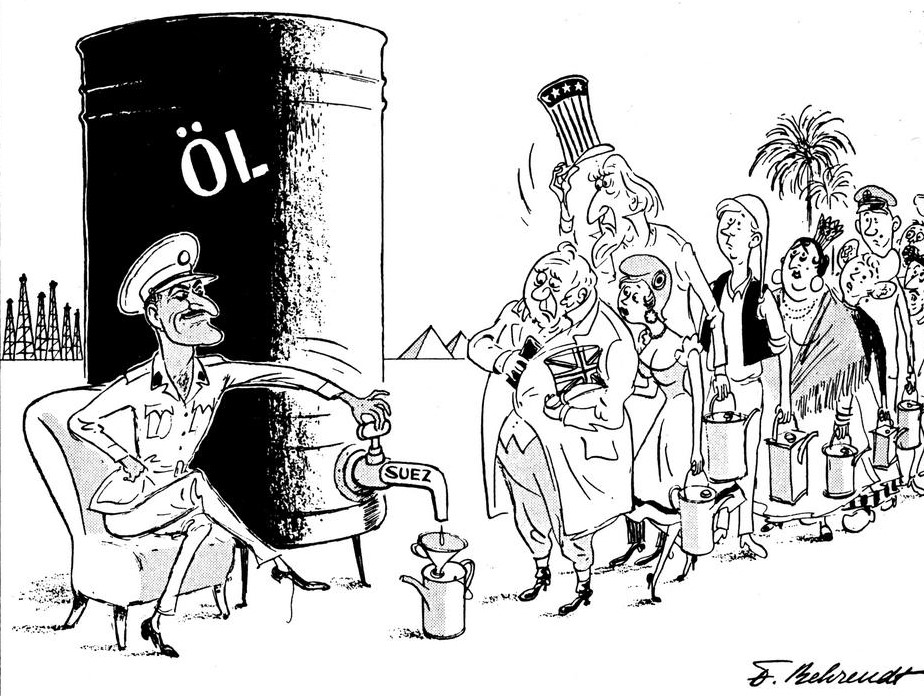
When President Gamal Abdel Nasser of Egypt nationalized the Suez Canal in July 1956, it made headlines all over the world. The assumption, as shown in the cartoon, was that he had the power to shut off the supply of oil because the bulk of middle east oil went through the Suez Canal to western markets. Britain felt particularly under threat.
This was big drama In the UK at the time, because the construction and management of the Suez Canal had been the responsibility of a French and British company. Nasser claimed he would compensate the owners, but that he needed the long-term revenues from the Canal to finance Egyptian economic development.
My first lesson as a young man was that wars are about economic power. In this case Nasser was not only trying to control the Canal but was buying weapons from Russia.
Israel invaded Egypt and that was followed by an invasion by Britain and France. It was obvious that the three nations were working together. And the big news at the time was that nether the US or Canada were informed of their intensions. President Eisenhower of the US was seriously angry.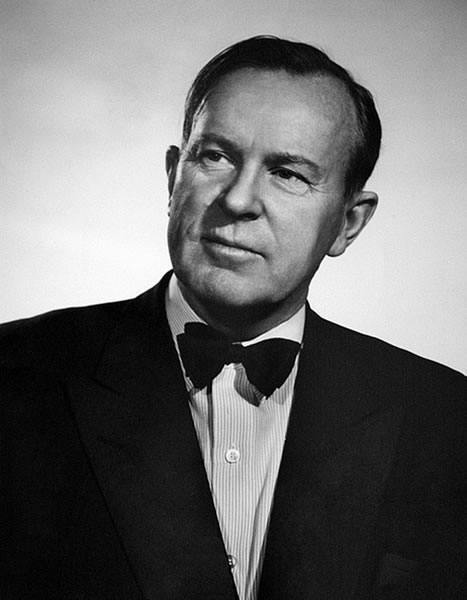 At the time Lester Pearson was Canada’s Secretary of State for External Affairs and headed Canada’s delegation to the UN. He proposed as a solution to the Suez Crisis, that the UN create a large-scale peacekeeping mission, that he called a “peace and police force” to stabilize the area between Israel and Egypt. His proposal was accepted by the UN General Assembly.
I remember at the time being so proud of Lester Pearson and so proud of the United Nations. At the time, I did not even think of Pearson as a Liberal cabinet minister. He was just a great Canadian. Pearson won the Nobel Peace Prize in 1957.
As a young person, it seemed obvious that war and conflict seemed to be part of our nature. But the actions of Lester Pearson convinced me that our greatest defense against the dangers of conflict and war is to be found in coalitions of like minded societies and enlightened leadership.
Perhaps I am a little idealistic. Perhaps the enlightened leadership of a modern “Lester Pearson” that is needed so badly does not want to enter the chaotic world of politics.
That’s the way I see it anyways.
09-02 The Suez Crisis
(blank) » John Bulloch » 25 Quirky Opinions » 09 War and Peace »
Israel, Britain and France invade Egypt. Lester Pearson of Canada suggests a peace-keeping force to the UN. And he wins the Nobel Peace Prize.