 It was a bit of a shock watching pigs being butchered on the streets of Hong Kong in the 1970s. And how about dog carcasses hanging in butcher shops in Seoul, Korea. And will I ever forget the open urinals on the street of a major city in Italy.
And during a trip to China we asked where our washroom was in our hotel, and they said the hole in the shower was also your toilet. And asking our guide about a public announcement in Tiananmen Square, she explained that it was about “not spitting”.
And perhaps our biggest shock, in those early years, was in Taipei, Taiwan, and observing young people in public parks drinking Cobra venom. It was supposed to make them more “virile”.
Now, there are McDonalds everywhere, so tourists can easily find a good cup of coffee and a clean washroom. And the culture in these major cities is more homogenized with local shops replaced by Gucci stores. And those hotels in China are all now world class.
Let’s face it, tourism is more of a harmonizer and integrator than those so-called evil multi-national corporations that are taking away those manufacturing jobs.
So, our positive examples above are about globalism replacing nationalism. Simplistic, of course.
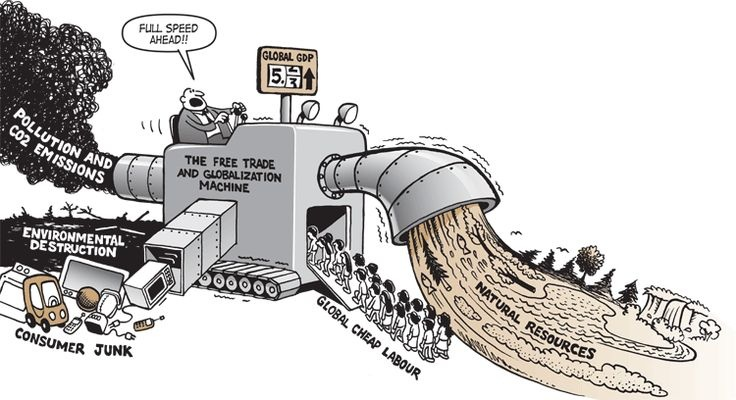
On the other hand, not everyone agrees about the benefits of global tourism and trade. The cartoon above beautifully demonstrates how the issue has been simplified and politicized.
The only time, so called globalism, made my angry was when I was approached by a child in Columbia trying to sell me a single cigarette. Apparently, they want to earn money to buy Coca Cola. And yet, they could buy a dozen oranges for the price of one Coke.
It is easy to think of the global multinational corporations integrating their operations around the world. But you can’t really function in any nation without having facilities there of some kind. It is modern outsourcing.
These corporations naturally prefer to function without tariffs and restrictions because they add costs to their operations and the prices they charge for their products and services.
As someone who has served on government advisory committees under both Conservative and Liberal governments, I have been impressed with how business leaders do serious long-term planning. Just the opposite of politicians.
And manufacturing is so much more complex than selling things like grains or minerals. A manufactured component has techy parts and standard parts. And the standard parts must be made in a low-labour cost nation if their final products are to be globally competitive.
So, when you install an engine into an automobile in Detroit or Ontario, you know that some of the work was done in Mexico or China, some in the US and some in Canada. 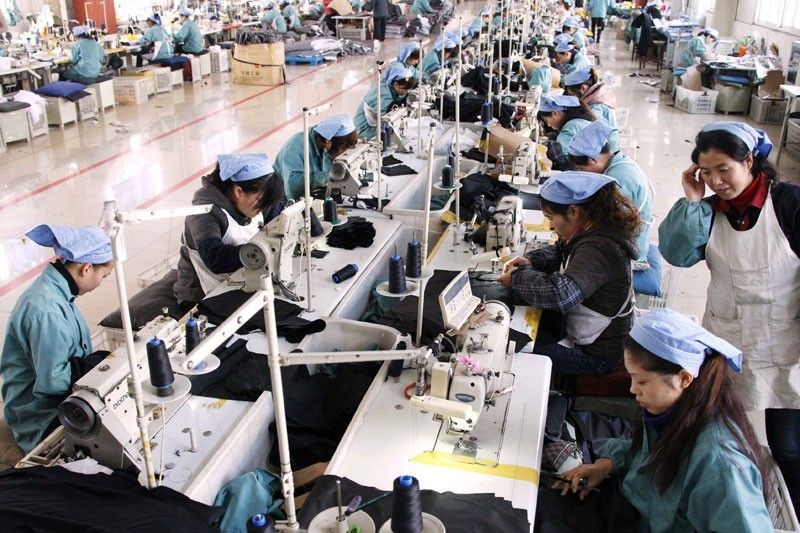 I became very interested in what are called “contract manufacturers” as truly global companies. My son-in-law was a major executive in one of these corporations. They have manufacturing facilities all around the world, and take over the manufacturing function for large and mid-sized corporations.
So, if the US, for example, wants to put tariffs on goods imported from Mexico they will shift the production for their clients to another nation not subject to tariffs.
And taking the position of the anti-globalists, do these firms pay less taxes? Yes. Can they end run government rules and regulations? Yes. Do they exploit nations with lower labour costs? Yes. Do they pay huge salaries to their top people? Yes, but as a percentage of sales they pay them less than large domestic companies.
On the other hand, do they provide cheaper products and services to the ultimate consumer? Yes. Do they upgrade the economies of the world? Yes. Do they homogenize the cultures of the nations where they function? Not really. Go into the country-side of so many of these developing nations were multi-nationals function and you find their cultures are intact.
Certainly, nationalist forces opposed to globalism exist everywhere. And proponents of the current global development model are having to modify how they function on a continuous basis. It looks like the so-called global economy is becoming more regional in nature.
Here is an example of the forces at work taking an example of what in our home we call the “clicker”. You know the remote-control device that changes the TV channel.
The company that makes them in China sells them to every TV producer around the world for $10 US. They would sell for $60 US if they were made in America.
The big issue, of course, is the extent consumers are nationalistic and willing to pay an extra $50 to “jiggle, jiggle” their television sets. And we are not talking about the cost of the TV unit.
Despite all the international organizations and agreements that set the rules to facilitate international trade, it is my experience that corporations just function in ways that are in their best interests. I cannot see any kind of global philosophical business conspiracy.
Conspiracies are found more in politics which is about perception and emotion rather than reality.
That’s the way I see it anyways.
05-01 Nationalism
(blank) » John Bulloch » 25 Quirky Opinions » 05 Globalism »
Pigs butchered on the streets of Hong Kong. Well hidden today. Tourism is the big globalizing influence.