The issue of climate change did not engage me until I was on a cruise to the Antarctic Peninsula in 2009. And it was a discussion period with seven scientists from the Polish Research Centre that made me a believer.
What made them so convincing was their view, and they called it a minority opinion, that the process of the warming of the climate was caused by more than human activity.
The scary part of their position was that we could do nothing about it. This caught the attention of the audience.
And the consequences? Well massive specie loss, for one. And there was much more, like increased shortages of drinkable water; severe changes in weather patterns; rising ocean levels with consequences for low-lying inhabited areas around the world. It was a sobering moment in my life.
The cruise ship passed a huge ice shelf, something formed in the winter that disappears in the summer. And this one was big enough to serve as an airfield for a 747. It was several miles long and floating out into the ocean.
It was also a massive fresh water source that would melt into the salt water oceans. Such a waste.
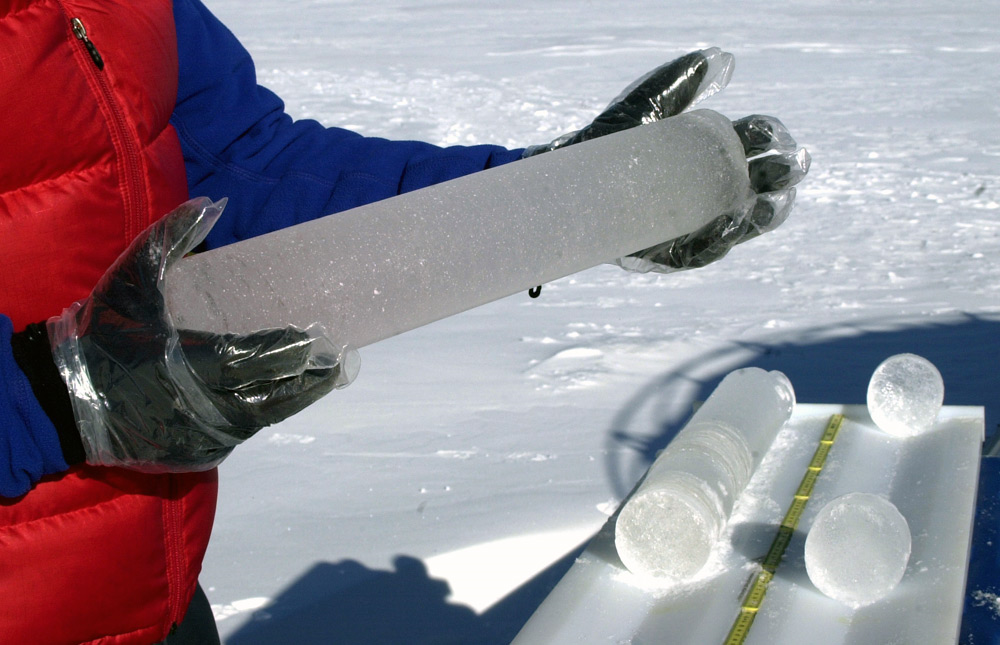
The photo shows the ice cores that these research centres are studying. They are able from analyzing the gases in these cores to determine CO2 and methane levels going back thousands of years.
What this means is that they can measure weather patterns in history which helps them understand the nature of today’s changing weather.
The discussion of global warming caught up the audience in a lot of practical issues. How about salt water seeping into fresh water aquifers in low lying regions of the world. And how about the loss of mountain snow packs that are necessary to replenish water in rivers and lakes.
I never saw such ice and snow, and our visit was to just a small corner of this massive ice continent. But the threat of the ocean rising over time as ice in the polar regions melt was believable.
It was hard following a technical discussion for about three hours. But it did not take a rocket scientist brain to appreciate that as the climate warms, more water evaporates from lakes and oceans. And that warm air can hold more water.
So, it also became believable that in some areas we are going to get more rain and in other areas less rain. But the debate was seriously technical. Like so many issues, only about 20% of the subject matter can be debated publicly.
More flooding and more drought is what we are getting now according to comments from the audience. And the scientists agreed. They said to expect less snow and more rain.
I felt blessed to be living in Canada, which might be one of the few nations that will be winners as the climate warms. Firstly, we have abundant sources of fresh water. And the melting of the Arctic will mean opening the north for shipping and development.
What the scientists referred to as “altered precipitation patterns” was a bit over my head, but the general message is that some of us are going to be lucky and some of us are going to be unlucky as the impact of rising temperatures spills out into our societies.
It wasn’t the threat of rising oceans that frightened me but the impacts for global water shortages.
14-04 Climate Change
(blank) » John Bulloch » 19 Global Issues » 08 Water »