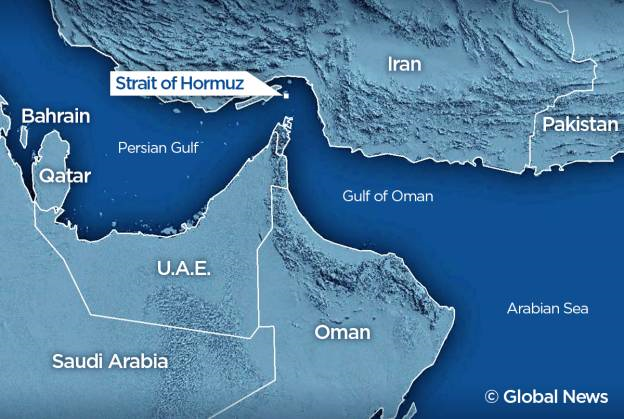
 The Strait of Hurmuz is referred to as a shipping “choke point” where 20% of the world’s crude oil supply must pass. It is a narrow passageway between the Persian Gulf and the Gulf of Oman that is only 21 miles across.
So, if there is any part of the world that is a potential area for energy conflict, this is the area to watch.
The big suppliers of energy through the Strait of Hormuz are Iran, Saudi Arabia, Iraq, the UAE and Kuwait. How about 14 crude oil tankers using this waterway each day. Then there is the monster terminal for the export of LNG out of Qatar.
And the big consumers for Middle East fossil fuels are Europe, India, Japan, China and South Korea.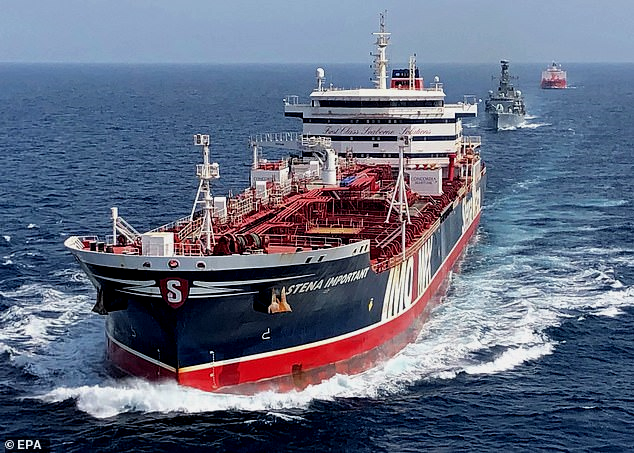 Already, an oil tanker can be seen protected by a British frigate. It is the sign of things to come as a result of new tensions between Iran and the US, with the US assassination of Qassem Soleimani, a top Iranian general.
It is hard to imagine the Iranians trying to kill traffic through the Strait, because they would be hurting themselves, and their new ally, Iraq. Iran, despite US sanctions is still exporting crude oil to China.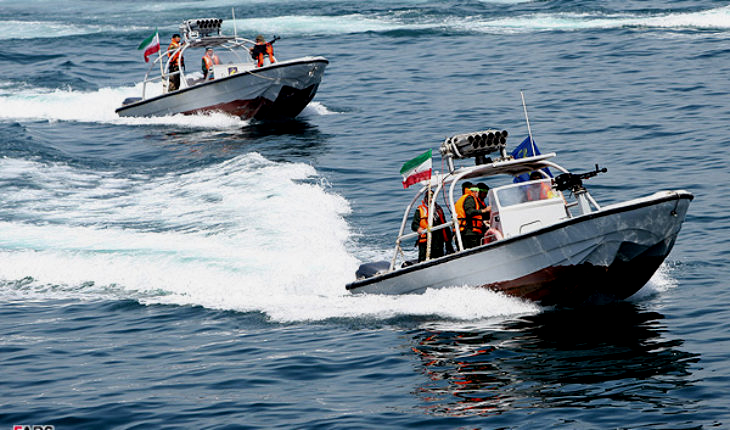 But, as a tactic, Iran could certainly disrupt shipping from time to time and has used heavily armed swarms of small patrol boats to harass shipping.
What is scary about any form of conflict in the Middle East, is that there is an instant impact on global energy prices. Not good news for consumers, but an argument for finding new sources of energy in the Arctic.
And how about political support for additional pipeline capacity in Canada for the export of crude oil from the tar sands.
It is a hostile world with energy conflicts on the minds of global political leaders heavily dependent on Middle East oil and Russian gas.
It will be more than climate change that will spur the development of alternative sources of energy. It will be things like national security combined with low cost solar, wind and nuclear.
10-09 Hormuz
(blank) » John Bulloch » 19 Global Issues » 10 Energy Conflicts »