If there is one simple way to describe future conflicts in the Arctic, it would be “less ice and more traffic”. Climate change is warming the Arctic at twice the rate as the rest of the world. And this means new transportation routes and the exploitation of oil and gas, minerals, jewels and fish stocks.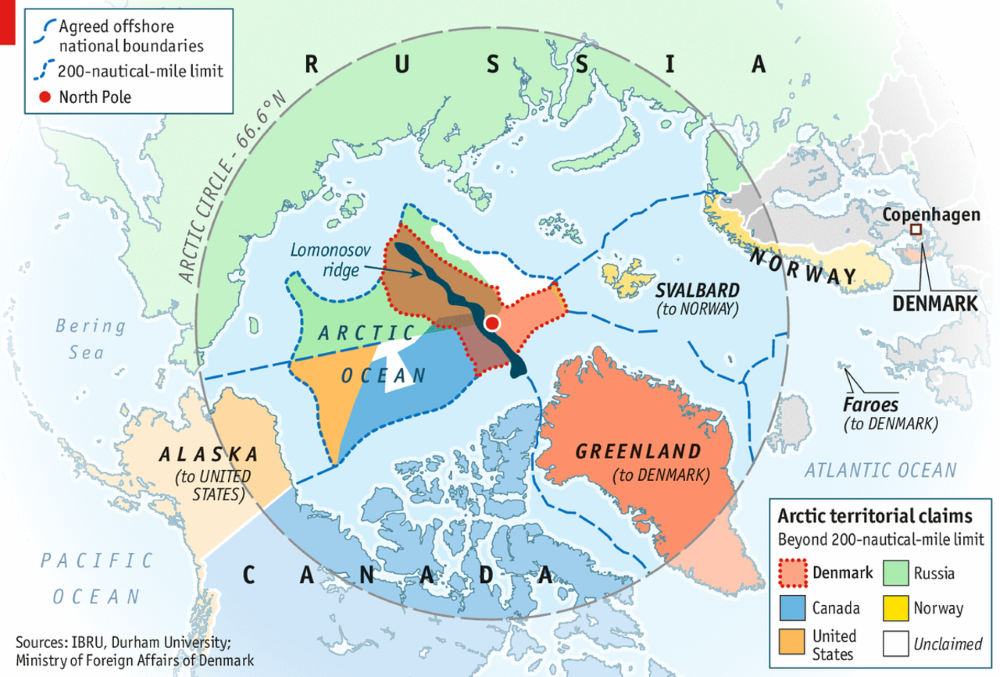 The map shows the Arctic circle and the key players in the region: the US, Canada, Denmark via Greenland, Norway and Russia. These nations lay claim to areas in the Arctic, but ownership and control is fuzzy.
Any student of history knows how strategic the Suez Canal was in reducing traffic around the Cape of Good Hope in South Africa. And it is the same story with the Panama Canal saving shipping around Cape Horn in South America. Well, the Artic represents a new future trade route saving time for shipping between Europe and Asia.
On the one hand we have the world worrying about climate change, and yet the melting of ice in places like the Arctic is going to make monster sources of oil and gas available.
At the present time the big player in the Arctic in terms of oil and gas exploration is Russia. Canada has unlimited oil reserves in the tar sands, so the Arctic is not a priority. But for oil producing nations like the US, Russia and Norway, the Arctic represents the last great energy frontier. Estimates of fossil fuels are in the billions of dollars.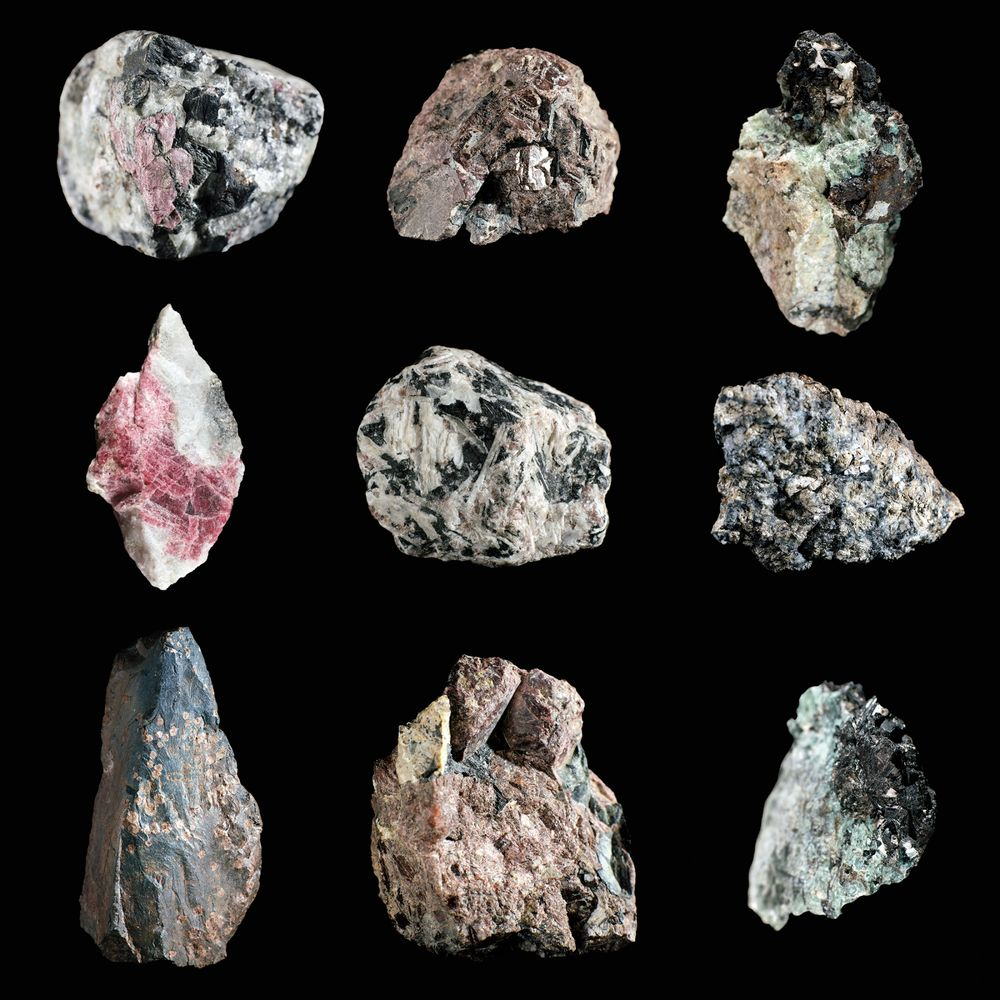 But, it would be my guess that the area for future conflict will be Greenland because it is rich in what is called rare earth metals. These are things you never read about like cerium and lanthanum. And how about praseodymium. Well these rare metals are strategic in developing alloys used in everything from jet engines to smart phones.
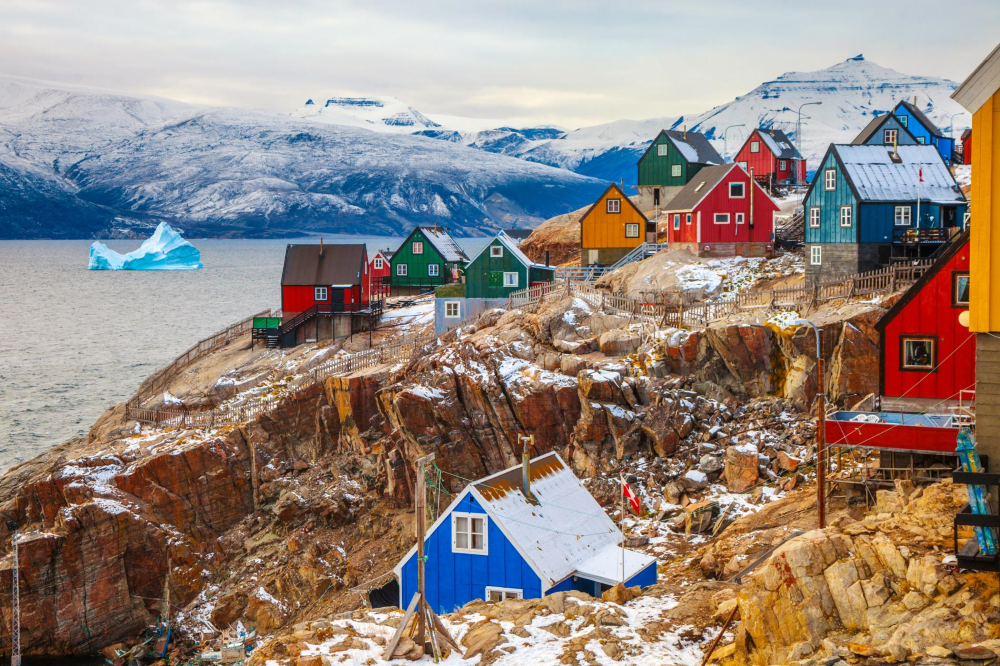 Our visit to Greenland in 2009 was educational. Already the temperatures in Southern Greenland were in the ‘70s F during the summer months. Tourism and especially fishing were booming. The warmer ocean waters were drawing large new stocks of mackerel and herring into Greenland waters.
In August of 2019, President Trump made a public offer to Denmark to purchase Greenland. What was that about? Well, Greenland is a semi-autonomous nation but with a domestic constituency pushing for full independence.
What Trump was doing was telling the world and China, in particular, that Greenland is strategically important to the US. Not just in terms of new trade routes, but more importantly as a source of rare earth metals. At present China controls most of the world’s supply.
And the subtle part of Trump’s message was for Greenland to remain part of Denmark, which has been a US ally going back to WW2. An independent Greenland with heavy Chinese investment in fishing ports and airports would be a threat to US national security.
10-08 The Arctic
(blank) » John Bulloch » 19 Global Issues » 10 Energy Conflicts »