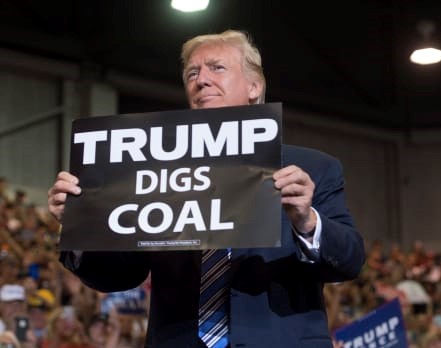
 During the 2016 Election, Trump said he would save the coal industry in the US, but all his machinations to remove environmental protections and stir development have failed. And why? Because in the long-run, technology and economics will always overpower politics. And natural gas, and renewables like solar and wind are cheaper.
In fact, when you examine the top ten coal producing companies in the US, six have declared bankruptcy.
Nevertheless, loving coal was a smart political move by Trump and his advisers, because coal, despite being in long-term decline, is still being mined in something like 25 states. And the big producers like Wyoming, West Virginia, Kentucky, Pennsylvania and Illinois are all strategic states for winning over the non-college educated male workers, which was Trump’s political strategy.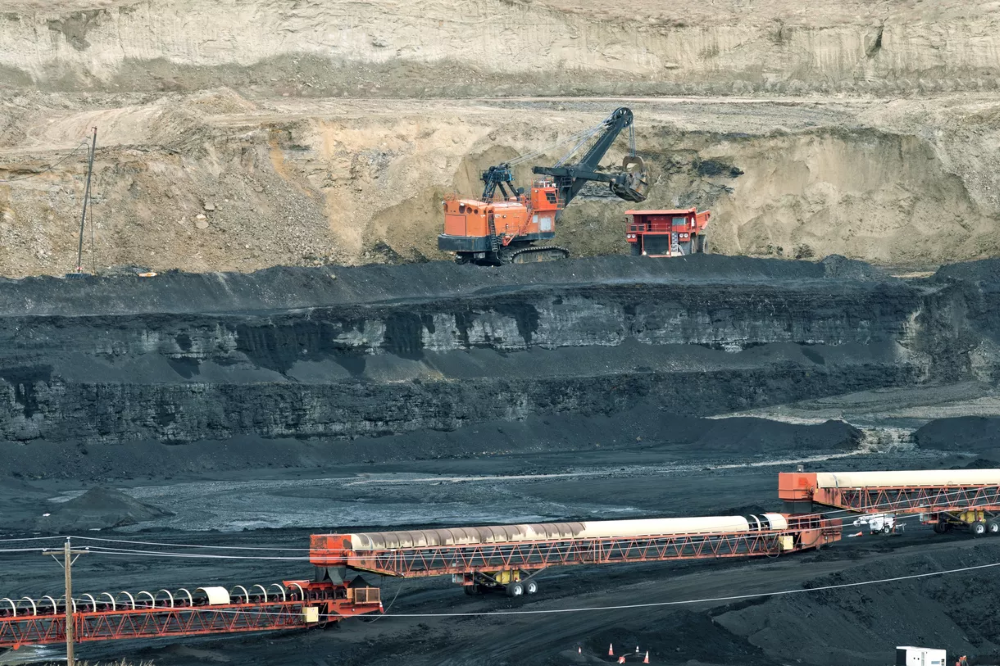 The photo of a strip-mining operation in Wyoming shows the magnitude of the coal business and the heavy equipment that is required.
One of my summer jobs as an engineering student was acting as a mechanic’s assistant in a plant that repaired monster off-road equipment like the truck in the photo. The tyres were seven feet in diameter and my boss had arms as thick as my legs. When he asked for a large wrench, and I mean a seriously large wrench, I could only drag it over to him with two hands.
And a little research indicates that a CEO of one of the US companies that went bust contributed a million dollars to a Political Action Committee or PAC that was supporting Trump’s election. And this same person seemed to have written all of Trump’s speeches on climate change. Love American democracy.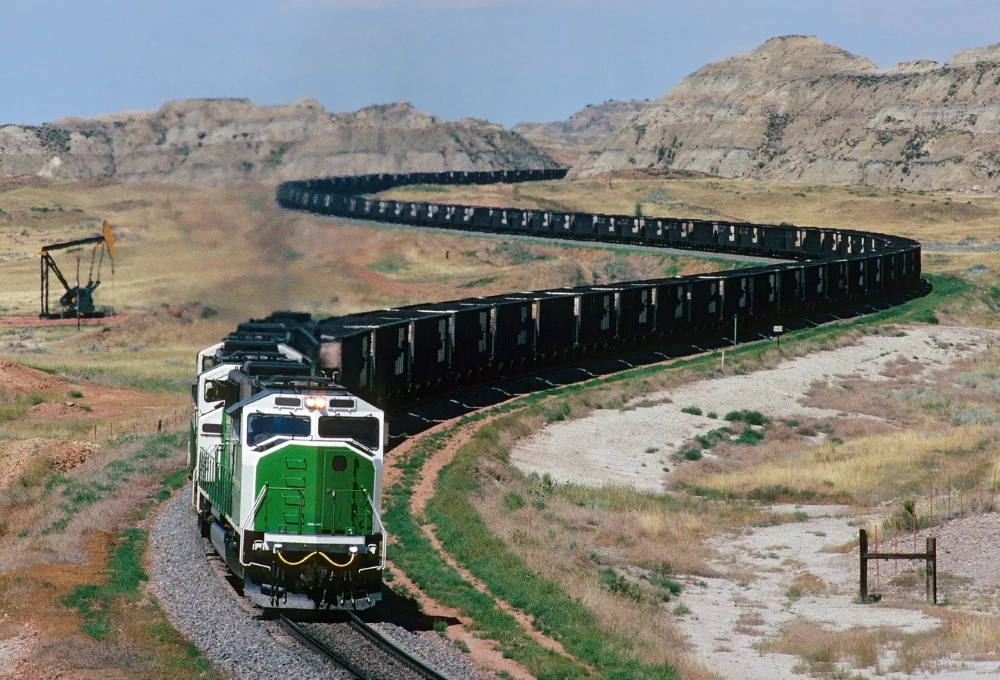 What is so particular about the coal industry in a nation like the US is the huge investments that have been made in infrastructure to move coal, mostly by rail but also via oceans. The US rail system is efficient and low- cost.
But getting the monster reserves of US coal to export markets is another issue. The debate five years ago was about the lack of shipping ports on the Pacific Coast. This has been the same kind of climate change debate in Canada about building pipelines.
The debate today, however, is about the sudden shrinking of international demand for US coal from about 500 million tons a couple of years ago to about 100 million tons today. The big buyers are all in Asian and include Japan, India, China South Korea and Taiwan.
What is happening is that they are all installing renewables not because they are green but because they are cheaper. The revolution in the global economy and the threat to coal ls really linked to the installation of solar and wind right where they are needed.
What is so scary about China is that their major industries do not always act on what is economical. If there is any form of conflict between China and the US, they will just stop buying US coal regardless. And those close to the US like Canada will also get screwed.
06-03 The US
(blank) » John Bulloch » 19 Global Issues » 03a Coal »