A mega solar project in Dubai has just been approved with a projected cost of electrical energy of less than 2 cents US per kilowatt-hour (KWH). This project is using conventional silicon photovoltaic technology.
Most of the new large solar projects around the world bring in energy in the range of 3-10 cents.
This news is significant because most electricity produced today using fossil fuels like coal and natural gas bring in energy in the range of 5-17 cents per KWH. So solar is getter cheaper than fossil fuels everywhere. 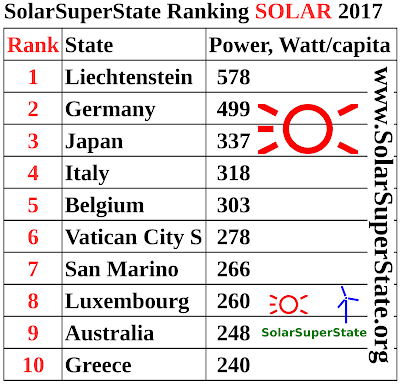 More news. In terms of solar being used to generate power, I never expected Australia to rank in the top ten users per capita. They are huge exporters of coal, like Canada. So, their politicians, like our politicians, must sell coal and love the environment at the same time.
The US and China are big solar users, but the per capita ranking tells us a lot more about the politics and public acceptance of solar energy in these nations.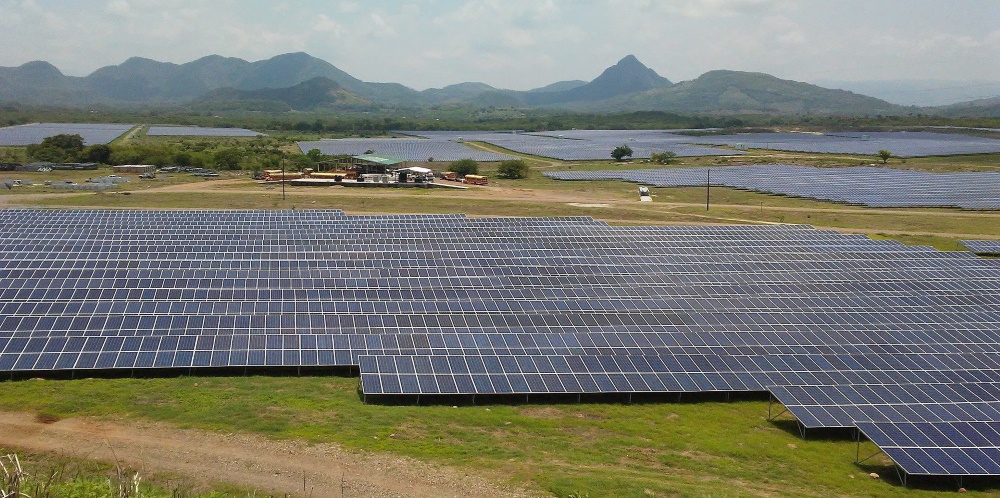 And, who would believe a developing nation like Vietnam would be so aggressive in adapting solar technologies. The photo is a Vietnam solar park, one of 61 under construction.
This news story really gives the public some insight into the explosive growth and potential size of the solar market. It is huge beyond imagination.
A company with new and better technology can go from a small firm to a large firm almost overnight. It is about commercializing the technical breakthroughs at universities and research labs.
This leads us to another news story. A company called Oxford Photovoltaic, which is a research arm of Oxford University in England, has now raised over $100M US to fund the production of new “perovskite” solar cells.
The question raised by the public funding of this innovative company is whether perovskite solar “is the technology of the future”.
Perovskite is a man-made material that acts just like silicon in conventional solar cells, but is lighter, cheaper, flexible and more efficient in transferring energy from the sun into electricity.
This means it can be put on the rooves of cars as easily as on the rooves of homes.
The Oxford PV solar cell is a bit of a hybrid. A product that combines perovskite cells with silicon cells. They are building production facilities in German, one of the world leaders in using solar technologies.
There is another message here. A UK solar company with facilities in Germany? And GE, a US company with innovative wind technology, building wind turbines in France?
All this suggests that the new technologies associated with renewables are transformational. And that the 2020s will be the decade of renewables replacing fossil fuels, not because of the environment but because of the economics.
05-09 News
(blank) » John Bulloch » 19 Global Issues » 06 Solar »