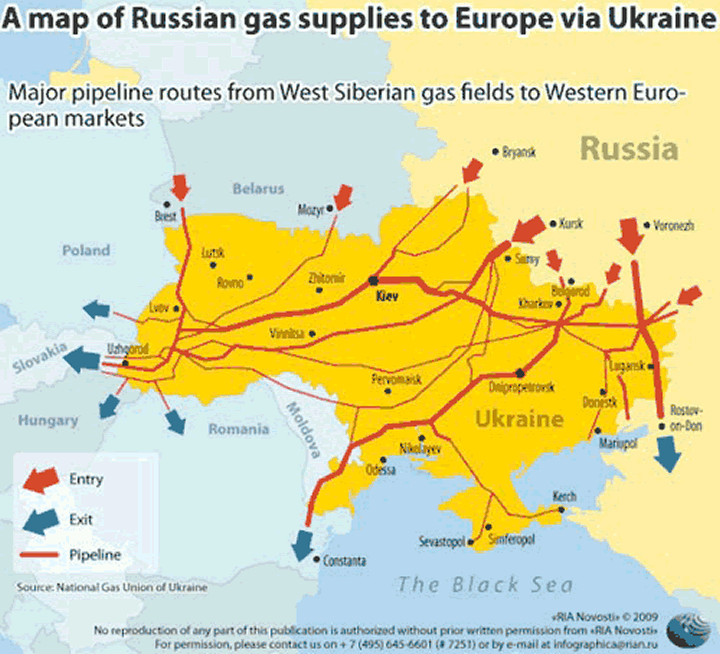
 The map of the Ukraine shows pipelines bringing natural gas from Russia to Europe and illustrates the basis for the resurgence of the Russian economy under President Putin.
He is using oil and gas strategically to build alliances, with natural gas being supplied to key nations like Japan, North Korea and China.
It is a shock comparing Russia to Canada, two nations with similar resource-based economies. Canada could be experiencing its own resurgence if it could get pipelines from Alberta across British Columbia to the coast.
And how strategic it would be if China were dependent on oil from Canada rather than Iran.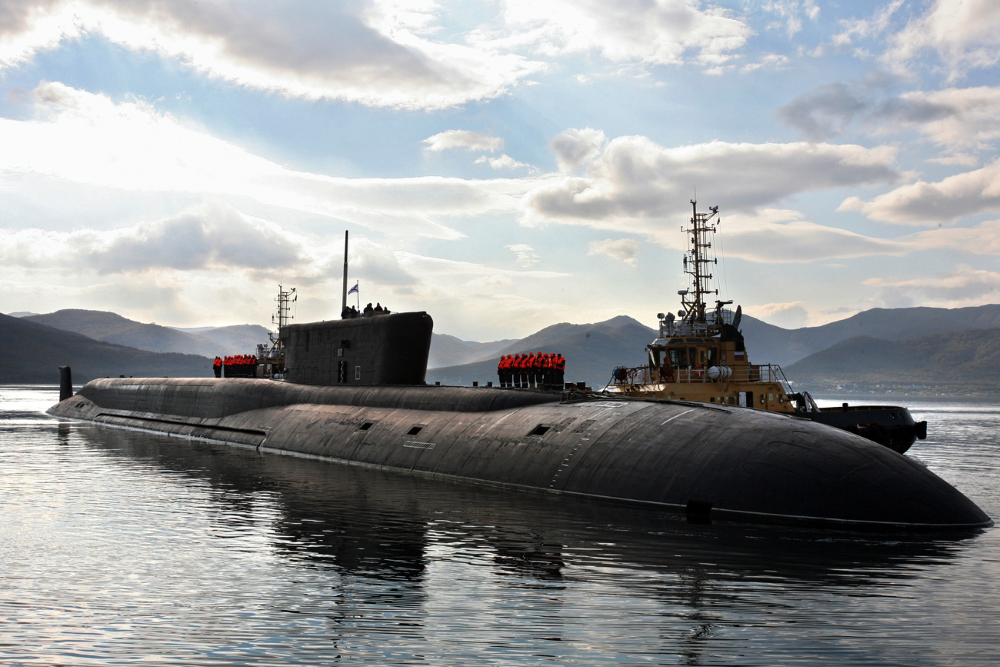 The fact that Russia is also a military power (next only to the United States), does not make much economic sense. It is an issue of massive waste. These nations should be partners, not rivals.
It seems obvious to my devious mind that each nation has its own military-industrial complex that needs an artificial enemy to keep public money rolling in. Nothing like spending a billion dollars on a nuclear submarine.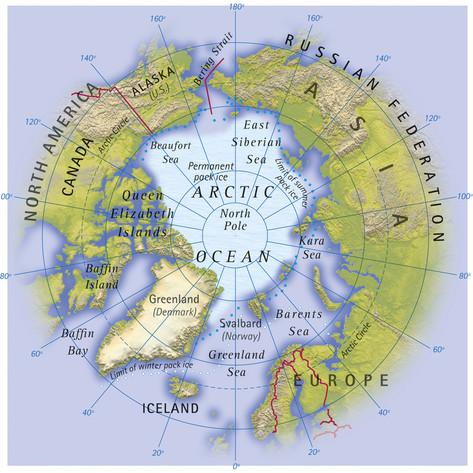 To me, the real development in the future will be in the Arctic, where climate change is creating a new ocean and easy access to massive discoveries of fossil fuels, plus resources like nickel, gold and platinum. The map shows who the big players are: the US, Canada, Denmark and Russia.
They should be partnering to protect the area from China, who will see the North as a strategic new trade route.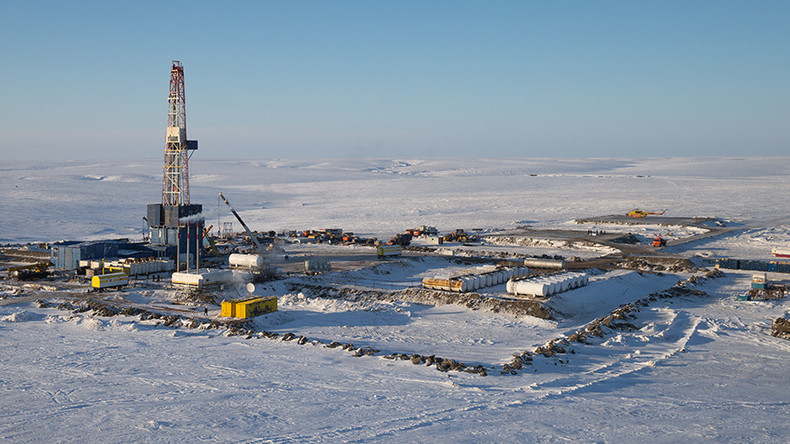 At the present time, Russia is making significant investments in the Arctic, and the photo shows current oil explorations.
From recent visits to both Iceland and Greenland, they see themselves as future ports for both tourism and investment spending. Yes, looking at the implications of climate change, the north is a winner.
I love the story of massive stocks of mackerel moving north into Greenland waters as a result of the warming of the Arctic ocean. It is a new food source for a growing population.
At present, the West is setting up Russia as an enemy and using the annexation of Crimea as a political tool to put restrictions on the growth of the Russian economy.
Crimea only became part of the Ukraine when the USSR collapsed in 1991. When my wife and I were in Odessa in 1987, Crimea was not only a part of the Soviet Union but the location of the Russian Black Sea Fleet. And, importantly, Crimea’s population is 60 per cent Russian.
In my mind, the Russian annexation of Crimea is no different than the US invasion of Grenada in October 1983. Both nations claimed to be protecting their native populations, but both countries were primarily concerned with issues of national security.
It would be my judgement call that if there is to be another "cold war" it should be with China and not Russia. The north is the key geopolitical force that will change our relationships with both Russia and China.
And what about "climate change"? Well, climate change is opening up the north, but at the same time, it will flood the world with new sources of fossil fuels. So, efforts to slow down the effects of climate change are unlikely to be effective.
03-01 Russia
(blank) » John Bulloch » 13 Russia » 03 The Resurgence »