Date Carnegie’s 1936 book, How to Win Friends and Influence People, was compulsory reading when doing my MBA in the 1960s. Apparently, it is one of the most widely read books in the world. I especially remember the focus on leaders being good listeners.
Well, during my career as an advocate for small business, I have met over a dozen Canadian ambassadors. And they were all students of Carnegie promoting Canada’s interests abroad.
It would be my judgement call that there is no position in government more challenging than serving as a nation’s ambassador. The Canadian ambassador in Finland, to give an example, told me he spoke three languages fluently but was finding Finnish almost impossible to learn. And he was spending an hour a day taking lessons.
My meetings with ambassadors and their staff over the years were about helping Canadians find sales and investment opportunities. But our embassies have political objectives that are just as important as economic objectives.
Any embassy in Finland, for example, would have Russian speaking staff that gathers Russian intelligence. And intelligence gathering is both overt and covert.
At a meeting with the Canadian Ambassador in Moscow, I was warned that my hotel roomed was bugged. This seemed not only undiplomatic but hilarious because the door of my hotel room was so poorly made that all you had to do was stand out side to hear everything we were saying.
Ambassadors are also global players, being involved in every kind of international forum imaginable. So, they all attended the International Small Business Congress if it was held in their country. Many held receptions for Canadians at the Congress.  There is a great diplomatic story of how the West began formal relationships with Communist China. It was ping pong. Chinese and Americans competing in ping pong opened the door to President Nixon visiting China. So not all relationships are formal in nature. In many ways Canadians travelling abroad serve as ambassadors.
The difficult issue of the day is trying to understand whether China is a competitor or an adversary. Their diplomatic initiatives are as complex as the nation itself.
Here’s what I mean. They are lending money all over the world building ports and railways. And the diplomatic message is that this is about building economic partnerships. But if a country cannot pay its bills, China owns strategic transportation infrastructure that can pose a threat to other nations.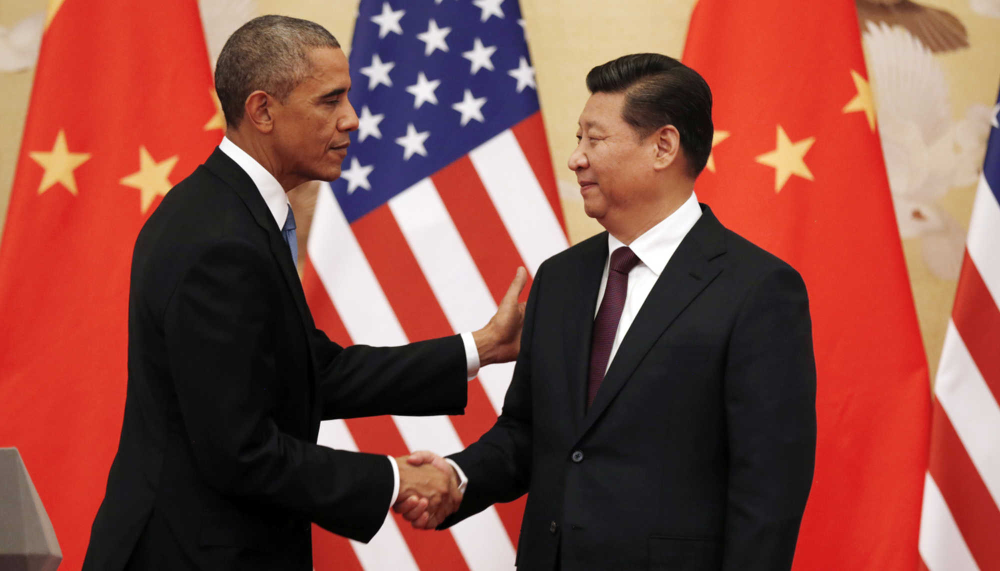 Then we have the friendly face of President XI Jinping creating diplomatic wins all over the world. This all began as a result of a successful meeting with President Obama.
Now, under President Trump, we are engaged in a trade war. I use the word “we” because US-China conflicts spill over into Canada. China is now restricting our exports because of our trading relationships with the US. The message is clear. Nations will become partners of the US or partners of China, but not both.
Study carefully what China is doing globally because their global initiatives are all strategic. It is a Chinese funded sport-centre in Grenada and loans for ports and railways. And Grenada is close to oil-producing Venezuela. Then there are 300 million Chinese learning English and English is the dominant language in trade. And China with its monster investments in Pakistan poses a future threat to India. And India is China’s biggest competitor next to the US.
Chinese diplomacy looks economic and it is. But their long-term ambitions are political. The proof? All key economic decisions made by large corporations, whether public or private are directed by the Central Committee of the Communist Party.
Real diplomatic friends do friendly things. They do more than smile and shake hands. Ask those Canadians rotting in Chinese jails.
05-01 Understanding
(blank) » John Bulloch » 16 Cold Wars » 05 Diplomacy »